Sporns Olaf, Kötter Rolf
Department of Psychology and Program in Cognitive Science, Indiana University, Bloomington, Indiana, USA.
PLoS Biol. 2004 Nov;2(11):e369. doi: 10.1371/journal.pbio.0020369. Epub 2004 Oct 26.
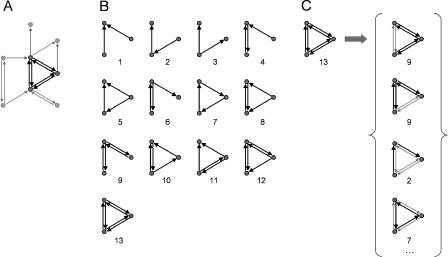
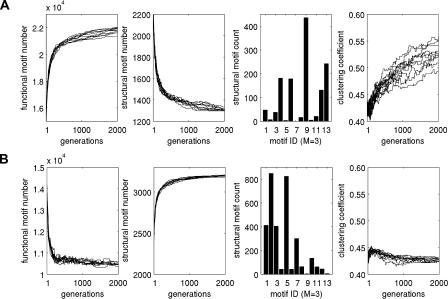
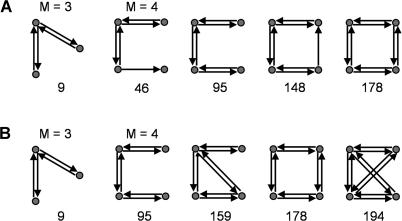
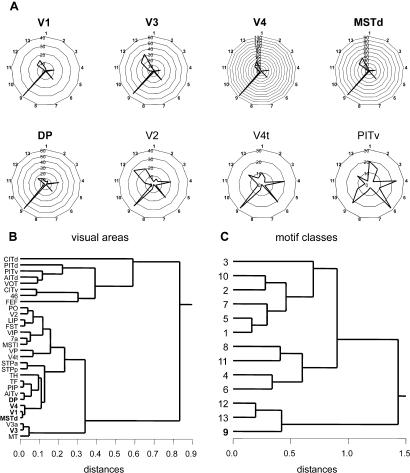
Complex brains have evolved a highly efficient network architecture whose structural connectivity is capable of generating a large repertoire of functional states. We detect characteristic network building blocks (structural and functional motifs) in neuroanatomical data sets and identify a small set of structural motifs that occur in significantly increased numbers. Our analysis suggests the hypothesis that brain networks maximize both the number and the diversity of functional motifs, while the repertoire of structural motifs remains small. Using functional motif number as a cost function in an optimization algorithm, we obtain network topologies that resemble real brain networks across a broad spectrum of structural measures, including small-world attributes. These results are consistent with the hypothesis that highly evolved neural architectures are organized to maximize functional repertoires and to support highly efficient integration of information.
复杂的大脑已经进化出一种高效的网络架构,其结构连通性能够产生大量的功能状态。我们在神经解剖学数据集中检测到特征性的网络构建模块(结构和功能基序),并识别出一小部分数量显著增加的结构基序。我们的分析提出了一个假设,即大脑网络在最大化功能基序的数量和多样性的同时,结构基序的种类仍然很少。在优化算法中使用功能基序数量作为成本函数,我们获得了在广泛的结构测量中类似于真实大脑网络的网络拓扑结构,包括小世界属性。这些结果与以下假设一致,即高度进化的神经结构被组织起来以最大化功能种类并支持高效的信息整合。