Roers Axel, Siewe Lisa, Strittmatter Elke, Deckert Martina, Schlüter Dirk, Stenzel Werner, Gruber Achim D, Krieg Thomas, Rajewsky Klaus, Müller Werner
Dept. of Dermatology, University of Cologne, Josef Stelzmann Str. 9, 50931 Cologne, Germany.
J Exp Med. 2004 Nov 15;200(10):1289-97. doi: 10.1084/jem.20041789. Epub 2004 Nov 8.
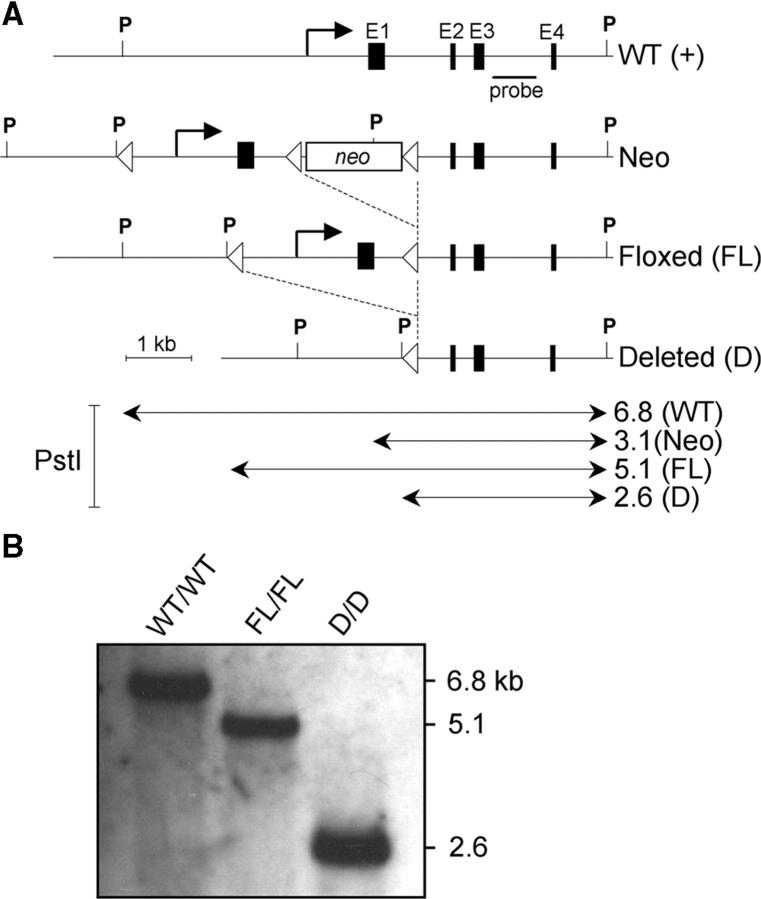
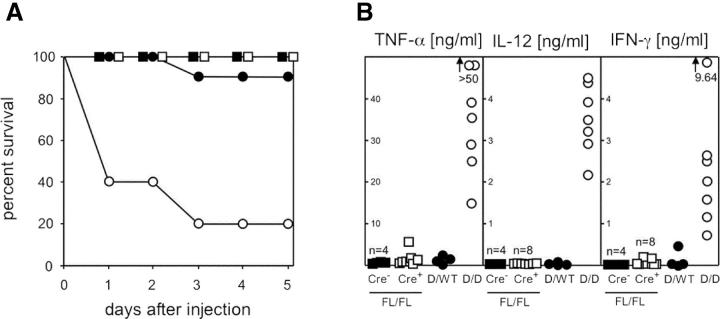
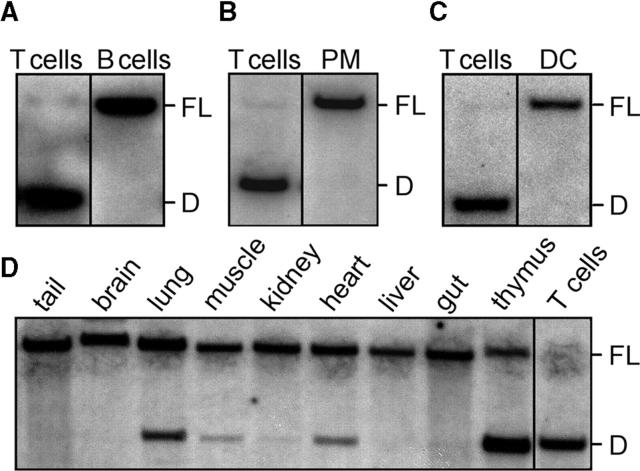
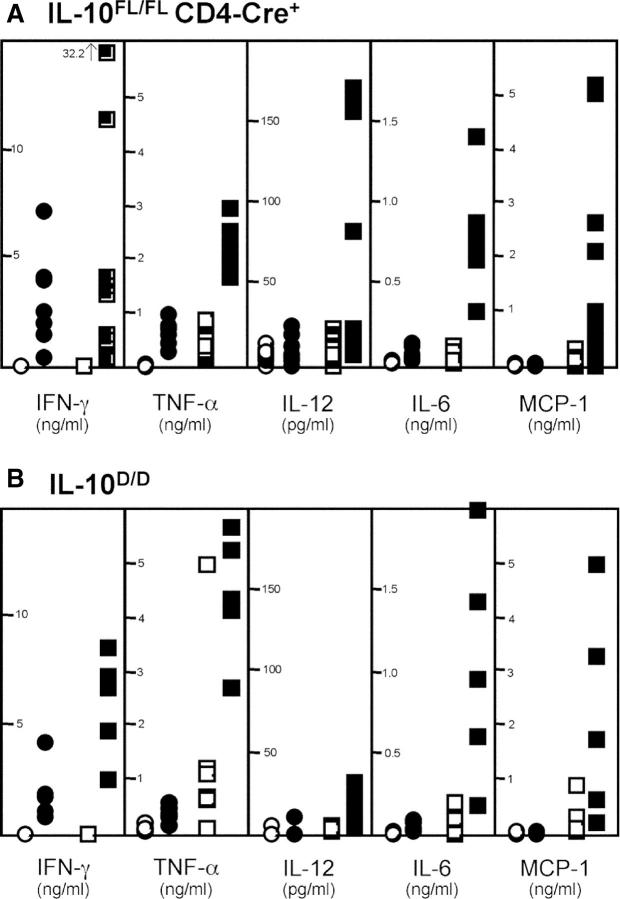
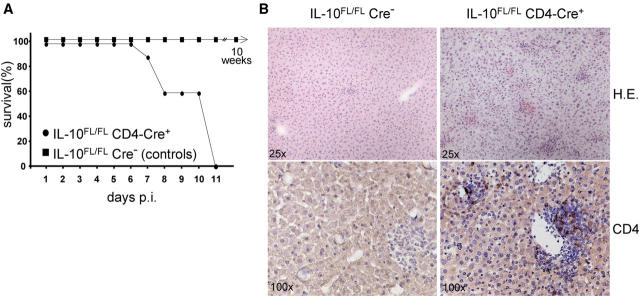
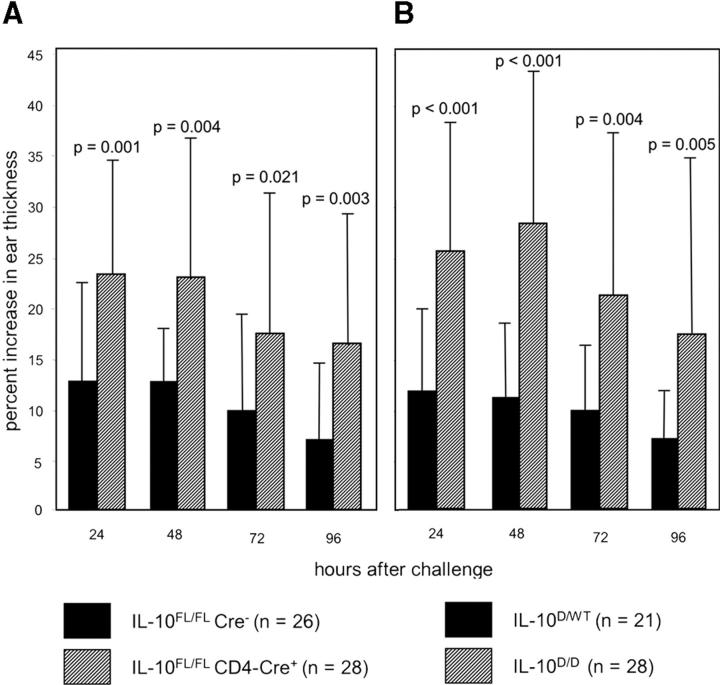
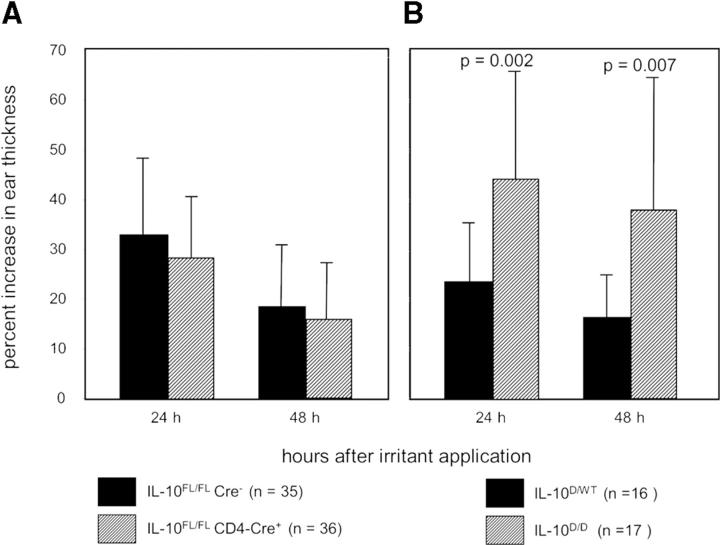
Interleukin (IL)-10 is a regulator of inflammatory responses and is secreted by a variety of different cell types including T cells. T regulatory cells have been shown to suppress immune responses by IL-10-dependent, but also IL-10-independent, mechanisms. Herein, we address the role of T cell-derived IL-10 in mice with an inactivation of the IL-10 gene restricted to T cells generated by Cre/loxP-mediated targeting of the IL-10 gene. Splenocytes from this T cell-specific mutant secrete increased amounts of proinflammatory cytokines after activation in vitro compared with show enhanced contact hypersensitivity reactions, and succumb to severe immunopathology upon infection with Toxoplasma gondii. Despite intact IL-10 genes in other cell types, the dysregulation of T cell responses observed in the T cell-specific IL-10 mutant closely resembles the phenotype in complete IL-10 deficiency. However, in contrast to complete IL-10 deficiency, sensitivity to endotoxic shock and irritant responses of the skin are not enhanced in the T cell-specific IL-10 mutant. Our data highlight the importance of T cell-derived IL-10 in the regulation of T cell responses and demonstrate that endotoxic shock and the irritant response of the skin are controlled by IL-10 from other cell types.
白细胞介素(IL)-10是炎症反应的调节因子,由包括T细胞在内的多种不同细胞类型分泌。已表明调节性T细胞通过依赖IL-10以及不依赖IL-10的机制来抑制免疫反应。在此,我们通过Cre/loxP介导的IL-10基因靶向作用,研究了IL-10基因仅在T细胞中失活的小鼠中T细胞衍生的IL-10的作用。与野生型相比,这种T细胞特异性突变体的脾细胞在体外激活后分泌更多的促炎细胞因子,表现出增强的接触性超敏反应,并且在感染刚地弓形虫后易发生严重的免疫病理反应。尽管其他细胞类型中的IL-10基因完整,但在T细胞特异性IL-10突变体中观察到的T细胞反应失调与完全缺乏IL-10时的表型非常相似。然而,与完全缺乏IL-10不同,T细胞特异性IL-10突变体对内毒素休克的敏感性和皮肤的刺激反应并未增强。我们的数据突出了T细胞衍生的IL-10在调节T细胞反应中的重要性,并表明内毒素休克和皮肤的刺激反应受其他细胞类型的IL-10控制。