Mutter George L, Zahrieh David, Liu Chunmei, Neuberg Donna, Finkelstein David, Baker Heather E, Warrington Janet A
Department of Pathology, Brigham and Women's Hospital, Boston, MA, USA.
BMC Genomics. 2004 Nov 10;5:88. doi: 10.1186/1471-2164-5-88.
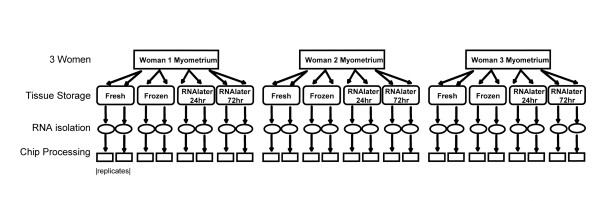
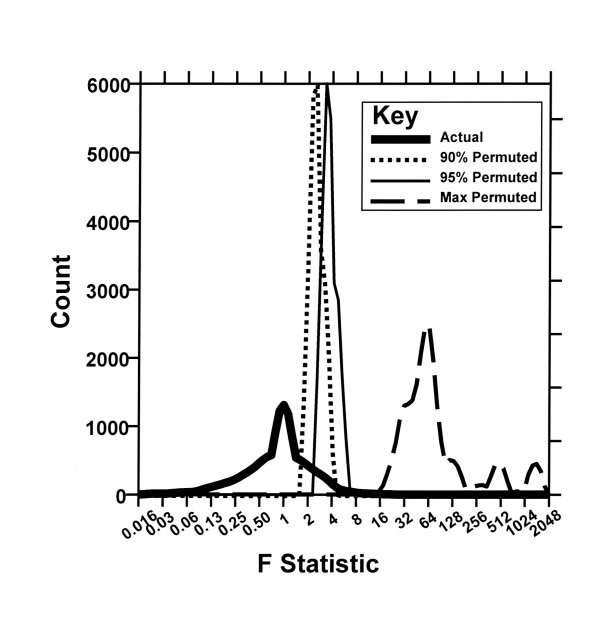
Primary human tissues are an invaluable widely used tool for discovery of gene expression patterns which characterize disease states. Tissue processing methods remain unstandardized, leading to unanswered concerns of how to best store collected tissues and maintain reproducibility between laboratories. We subdivided uterine myometrial tissue specimens and stored split aliquots using the most common tissue processing methods (fresh, frozen, RNALater) before comparing quantitative RNA expression profiles on the Affymetrix U133 human expression array. Split samples and inclusion of duplicates within each processing group allowed us to undertake a formal genome-wide analysis comparing the magnitude of result variation contributed by sample source (different patients), processing protocol (fresh vs. frozen vs. 24 or 72 hours RNALater), and random background (duplicates). The dataset was randomly permuted to define a baseline pattern of ANOVA test statistic values against which the observed results could be interpreted.
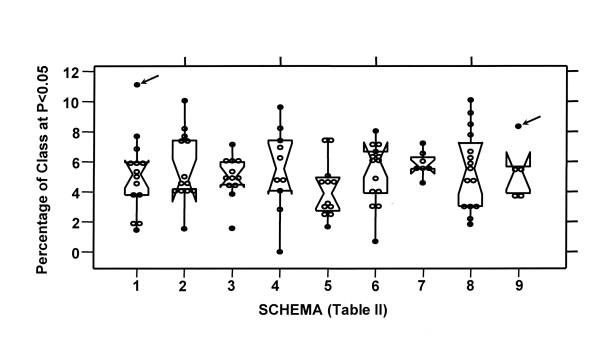
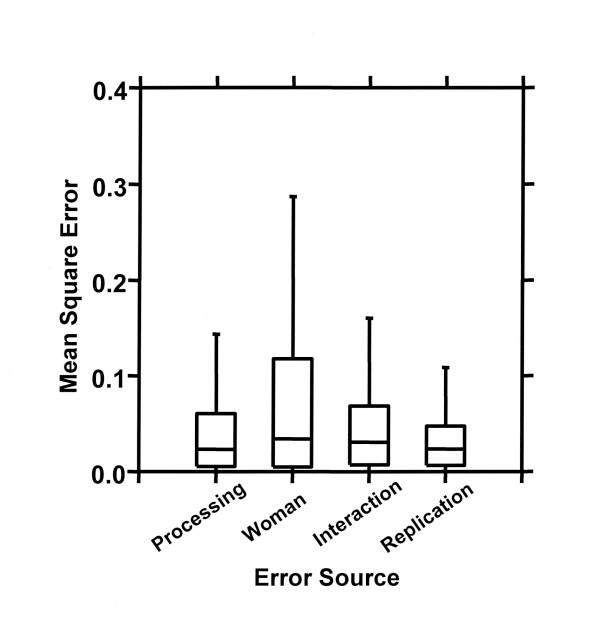
14,639 of 22,283 genes were expressed in at least one sample. Patient subjects provided the greatest sources of variation in the mixed model ANOVA, with replicates and processing method the least. The magnitude of variation conferred by processing method (24 hours RNALater vs 72 hours RNALater vs. fresh vs frozen) was similar to the variability seen within replicates. Subset analysis of the test statistic according to gene functional class showed that the frequency of "outlier" ANOVA results within each functional class is overall no greater than expected by chance.
Ambient storage of tissues for 24 or 72 hours in RNALater did not contribute any systematic shift in quantitative RNA expression results relative to the alternatives of fresh or frozen tissue. This nontoxic preservative enables decentralized tissue collection for expression array analysis without a requirement for specialized equipment.
原代人体组织是发现表征疾病状态的基因表达模式的一种非常宝贵且广泛使用的工具。组织处理方法仍未标准化,这引发了关于如何最佳储存采集的组织以及如何在不同实验室之间保持可重复性的诸多未解决问题。我们将子宫肌层组织标本进行细分,并使用最常见的组织处理方法(新鲜、冷冻、RNA later)储存分割后的等分试样,然后在 Affymetrix U133 人类表达阵列上比较定量 RNA 表达谱。每个处理组内的分割样本和重复样本使我们能够进行正式的全基因组分析,比较样本来源(不同患者)、处理方案(新鲜 vs. 冷冻 vs. 24 小时或 72 小时 RNA later)以及随机背景(重复样本)所导致的结果变异程度。对数据集进行随机排列以定义方差分析(ANOVA)测试统计值的基线模式,据此可解释观察到的结果。
22283 个基因中的 14639 个基因在至少一个样本中表达。在混合模型方差分析中,患者个体提供了最大的变异来源,重复样本和处理方法提供的变异最小。处理方法(24 小时 RNA later 与 72 小时 RNA later 与新鲜与冷冻)所导致的变异程度与重复样本内观察到的变异性相似。根据基因功能类别对测试统计量进行的子集分析表明,每个功能类别内“异常”方差分析结果的频率总体上不高于偶然预期值。
相对于新鲜或冷冻组织的替代方法,将组织在 RNA later 中常温储存 24 或 72 小时在定量 RNA 表达结果方面不会导致任何系统性偏移。这种无毒防腐剂使得无需专门设备即可分散采集组织用于表达阵列分析。