Lapinsky Stephen E, Wax Randy, Showalter Randy, Martinez-Motta J Carlos, Hallett David, Mehta Sangeeta, Burry Lisa, Stewart Thomas E
Technology Application Unit, Mount Sinai Hospital & Interdepartmental Division of Critical Care, University of Toronto, Toronto, Ontario, Canada.
Crit Care. 2004 Dec;8(6):R414-21. doi: 10.1186/cc2967. Epub 2004 Oct 14.
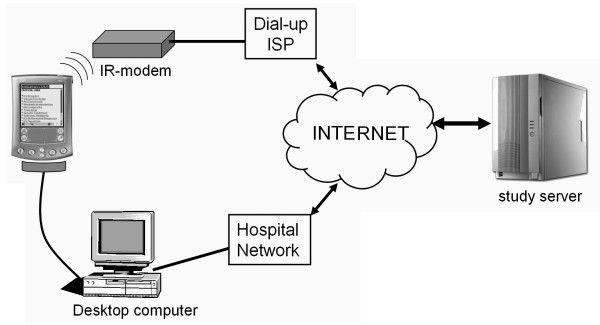
Critical care physicians may benefit from immediate access to medical reference material. We evaluated the feasibility and potential benefits of a handheld computer based knowledge access system linking a central academic intensive care unit (ICU) to multiple community-based ICUs.
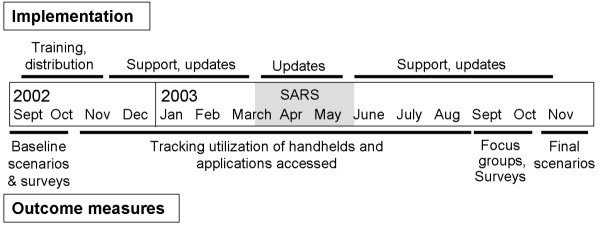
Four community hospital ICUs with 17 physicians participated in this prospective interventional study. Following training in the use of an internet-linked, updateable handheld computer knowledge access system, the physicians used the handheld devices in their clinical environment for a 12-month intervention period. Feasibility of the system was evaluated by tracking use of the handheld computer and by conducting surveys and focus group discussions. Before and after the intervention period, participants underwent simulated patient care scenarios designed to evaluate the information sources they accessed, as well as the speed and quality of their decision making. Participants generated admission orders during each scenario, which were scored by blinded evaluators.
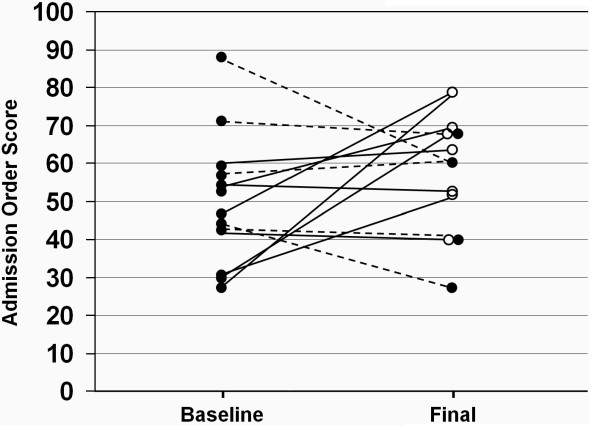
Ten physicians (59%) used the system regularly, predominantly for nonmedical applications (median 32.8/month, interquartile range [IQR] 28.3-126.8), with medical software accessed less often (median 9/month, IQR 3.7-13.7). Eight out of 13 physicians (62%) who completed the final scenarios chose to use the handheld computer for information access. The median time to access information on the handheld handheld computer was 19 s (IQR 15-40 s). This group exhibited a significant improvement in admission order score as compared with those who used other resources (P = 0.018). Benefits and barriers to use of this technology were identified.
An updateable handheld computer system is feasible as a means of point-of-care access to medical reference material and may improve clinical decision making. However, during the study, acceptance of the system was variable. Improved training and new technology may overcome some of the barriers we identified.
重症监护医师若能即时获取医学参考资料,可能会有所助益。我们评估了一种基于手持计算机的知识获取系统的可行性和潜在益处,该系统将一个中心学术重症监护病房(ICU)与多个社区ICU相连。
四家社区医院的ICU共17名医师参与了这项前瞻性干预研究。在接受了关于使用联网的、可更新的手持计算机知识获取系统的培训后,医师们在其临床环境中使用手持设备进行了为期12个月的干预期。通过跟踪手持计算机的使用情况、进行调查和焦点小组讨论来评估该系统的可行性。在干预期前后,参与者经历了模拟患者护理场景,以评估他们使用的信息来源以及决策的速度和质量。参与者在每个场景中生成入院医嘱,由不知情的评估人员进行评分。
10名医师(59%)经常使用该系统,主要用于非医疗应用(中位数为每月32.8次,四分位间距[IQR]为28.3 - 126.8),较少使用医学软件(中位数为每月9次,IQR为3.7 - 13.7)。在完成最终场景的13名医师中,有8名(62%)选择使用手持计算机获取信息。在手持计算机上获取信息的中位时间为19秒(IQR为15 - 40秒)。与使用其他资源的医师相比,该组在入院医嘱评分上有显著提高(P = 0.018)。确定了使用该技术的益处和障碍。
可更新的手持计算机系统作为一种即时获取医学参考资料的方式是可行的,并且可能改善临床决策。然而,在研究期间,该系统的接受度存在差异。改进培训和新技术可能会克服我们所确定的一些障碍。