Davidoff Michail S, Middendorff Ralf, Enikolopov Grigori, Riethmacher Dieter, Holstein Adolf F, Müller Dieter
Institute of Anatomy, University of Hamburg, Germany.
J Cell Biol. 2004 Dec 6;167(5):935-44. doi: 10.1083/jcb.200409107. Epub 2004 Nov 29.
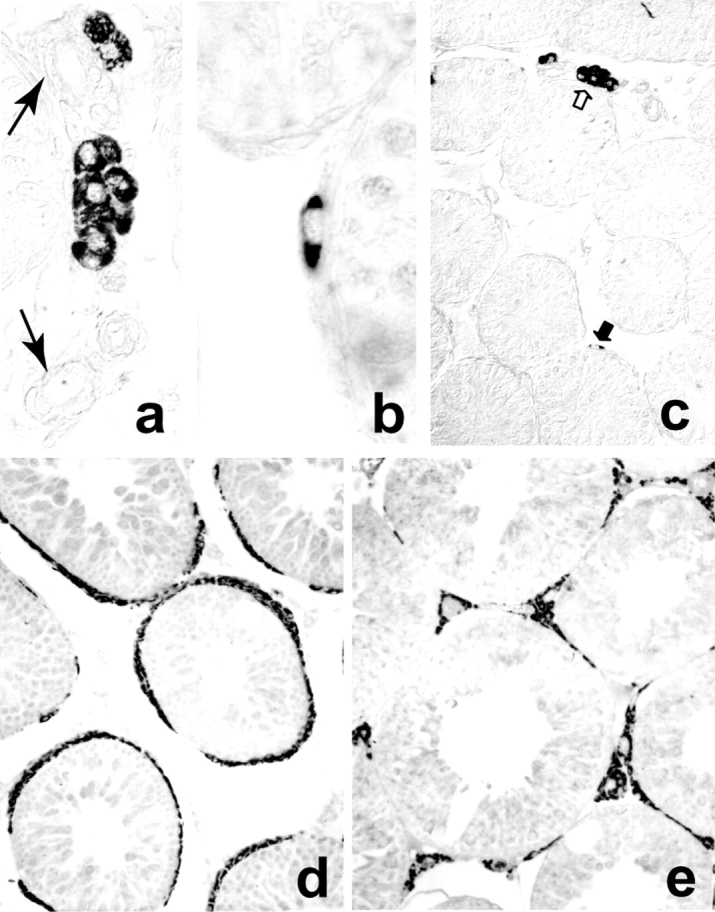
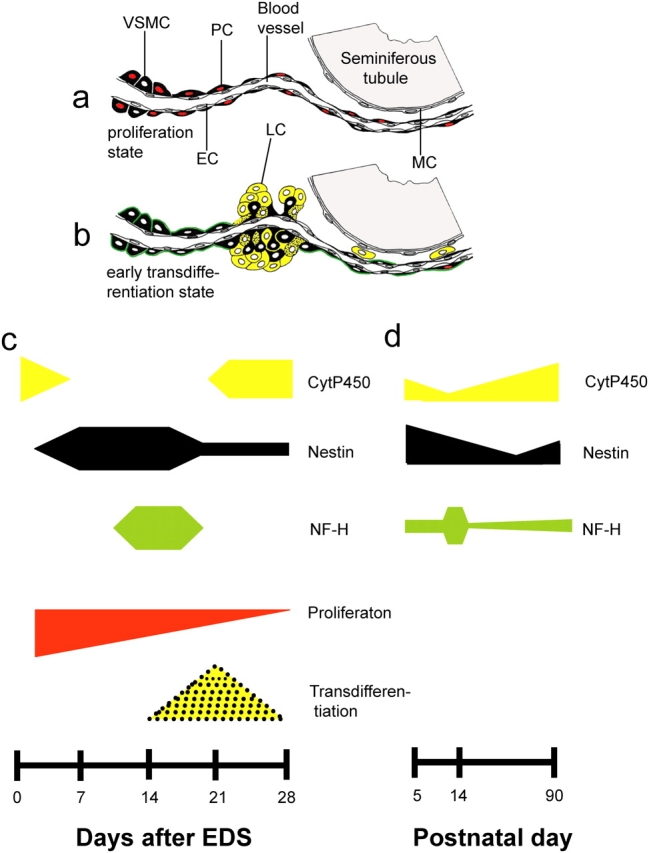
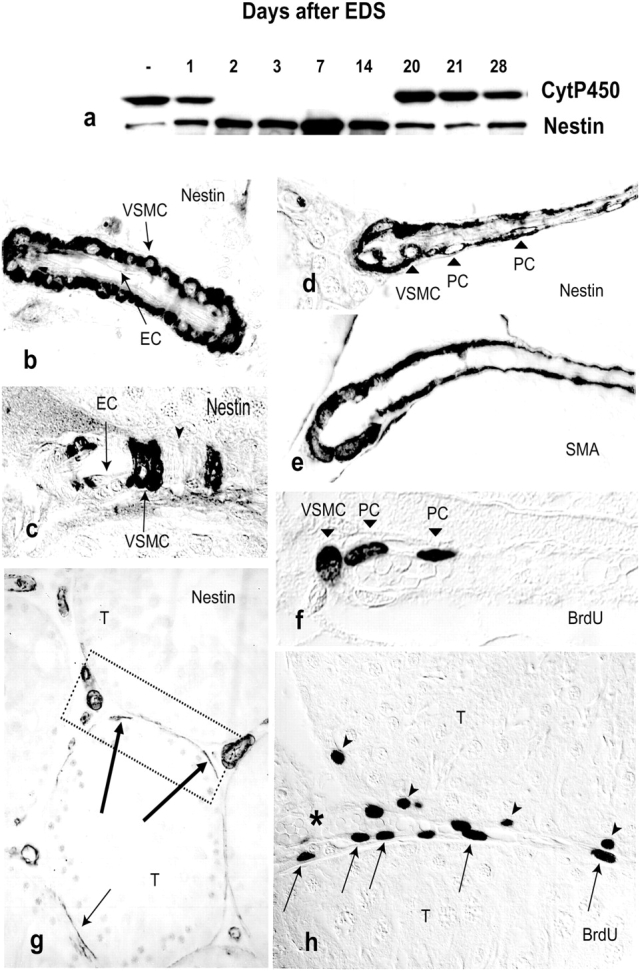
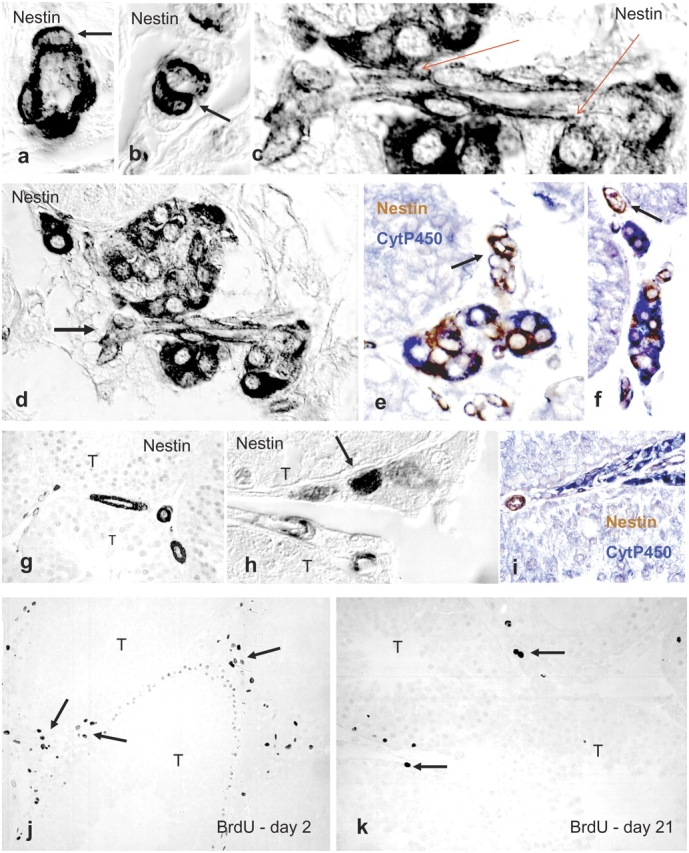
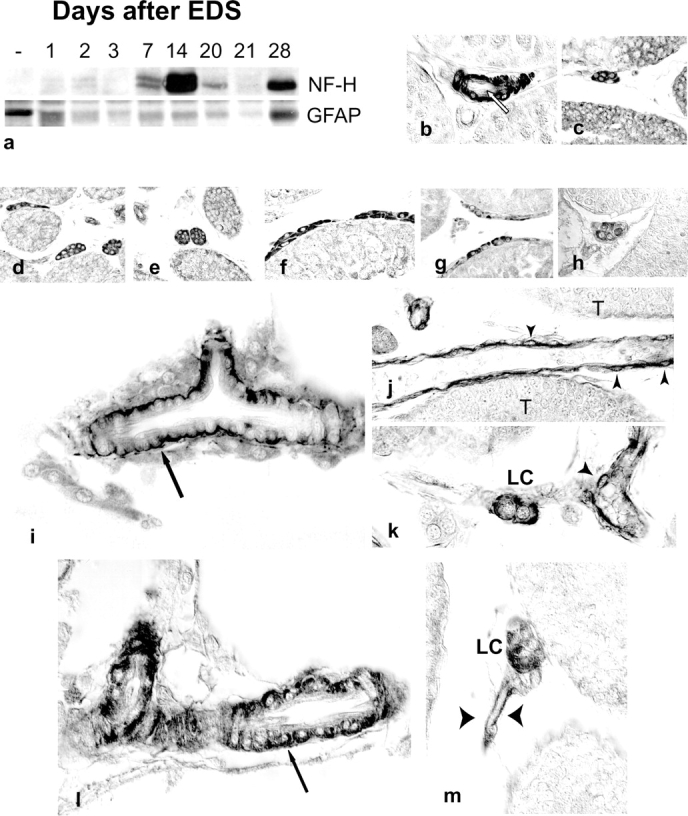
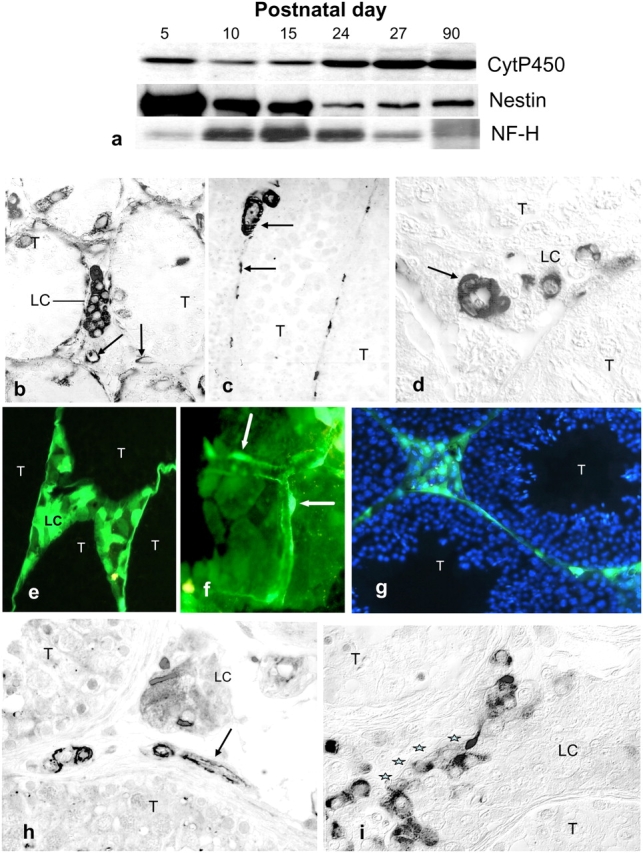
The cells responsible for production of the male sex hormone testosterone, the Leydig cells of the testis, are post-mitotic cells with neuroendocrine characteristics. Their origin during ontogeny and regeneration processes is still a matter of debate. Here, we show that cells of testicular blood vessels, namely vascular smooth muscle cells and pericytes, are the progenitors of Leydig cells. Resembling stem cells of the nervous system, the Leydig cell progenitors are characterized by the expression of nestin. Using an in vivo model to induce and monitor the synchronized generation of a completely new Leydig cell population in adult rats, we demonstrate specific proliferation of vascular progenitors and their subsequent transdifferentiation into steroidogenic Leydig cells which, in addition, rapidly acquire neuronal and glial properties. These findings, shown to be representative also for ontogenetic Leydig cell formation and for the human testis, provide further evidence that cellular components of blood vessels can act as progenitor cells for organogenesis and repair.
负责产生男性性激素睾酮的细胞,即睾丸间质细胞,是具有神经内分泌特征的有丝分裂后细胞。它们在个体发育和再生过程中的起源仍是一个有争议的问题。在这里,我们表明睾丸血管细胞,即血管平滑肌细胞和周细胞,是间质细胞的祖细胞。间质细胞祖细胞类似于神经系统的干细胞,其特征是巢蛋白的表达。利用体内模型诱导并监测成年大鼠全新间质细胞群体的同步生成,我们证明了血管祖细胞的特异性增殖及其随后向产生类固醇的间质细胞的转分化,此外,这些间质细胞还迅速获得神经元和神经胶质细胞特性。这些发现对于个体发育过程中间质细胞的形成以及人类睾丸也具有代表性,进一步证明血管的细胞成分可以作为器官发生和修复的祖细胞。