Kim Felix J, Manel Nicolas, Garrido Edith N, Valle Carine, Sitbon Marc, Battini Jean-Luc
Institut de Génétique Moléculaire de Montpellier (IGMM), CNRS-UMR5535, IFR122 1919 Rte de Mende, F-34293 Montpellier Cedex 5, France.
Retrovirology. 2004 Dec 2;1:41. doi: 10.1186/1742-4690-1-41.
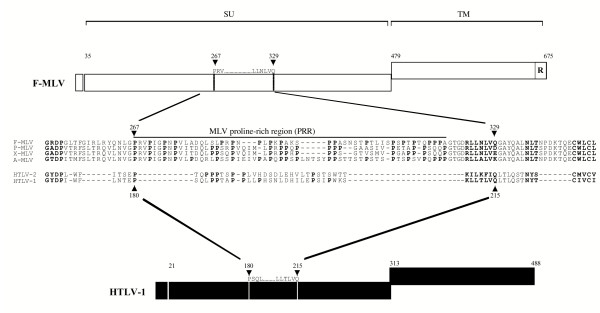
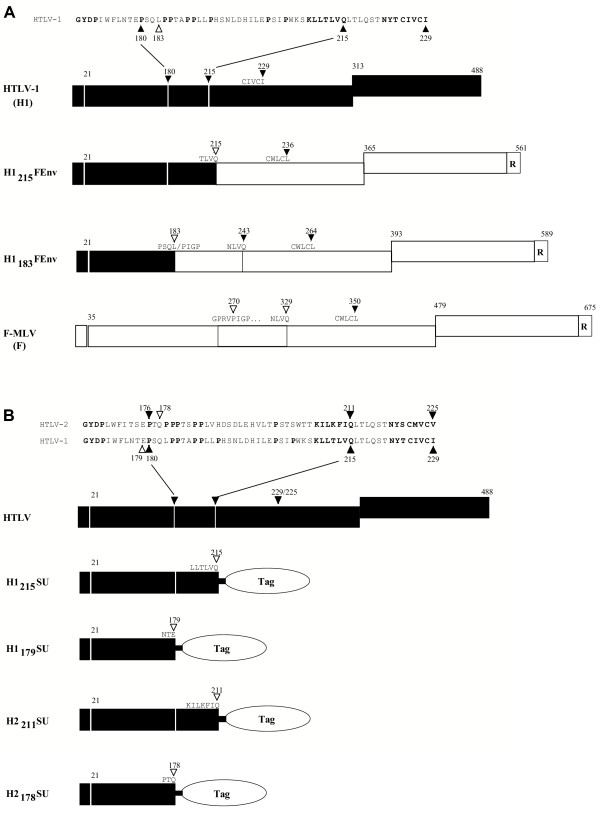
Human T-cell leukemia virus (HTLV) -1 and -2 are deltaretroviruses that infect a wide range of cells. Glut1, the major vertebrate glucose transporter, has been shown to be the HTLV Env receptor. While it is well established that the extracellular surface component (SU) of the HTLV envelope glycoprotein (Env) harbors all of the determinants of interaction with the receptor, identification of SU subdomains that are necessary and sufficient for interaction with the receptor, as well as critical amino acids therein, remain to be precisely defined. Although highly divergent in the rest of their genomes, HTLV and murine leukemia virus (MLV) Env appear to be related and based on homologous motifs between the HTLV and MLV SU, we derived chimeric HTLV/MLV Env and soluble HTLV-1 and -2 truncated amino terminal SU subdomains.
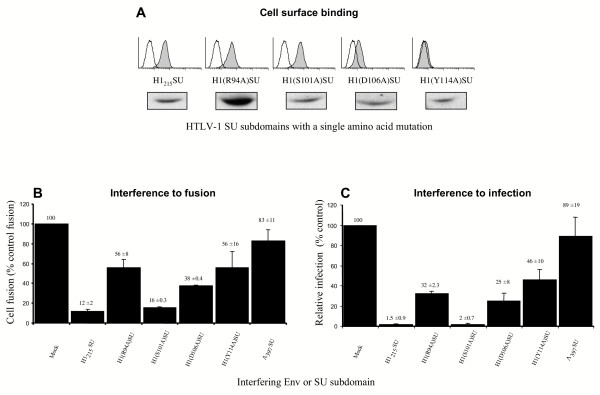
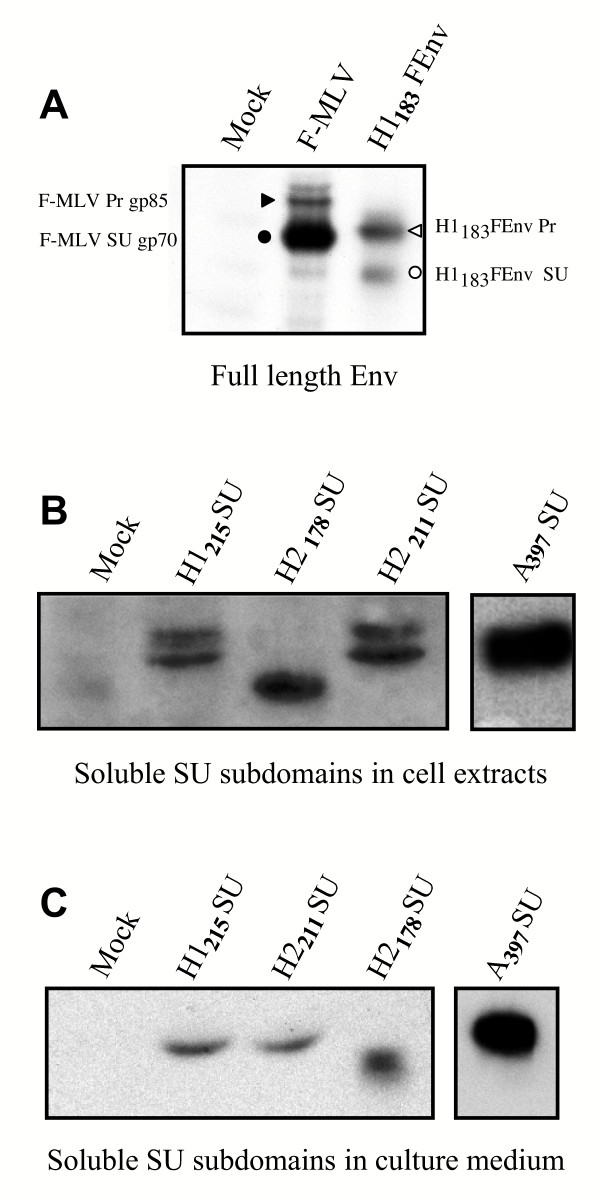
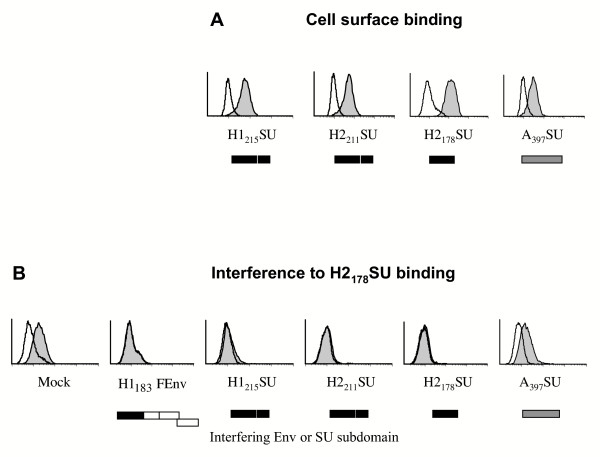
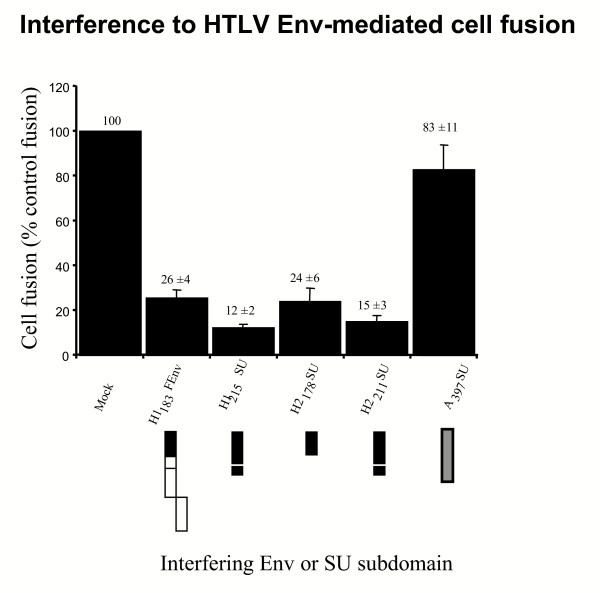
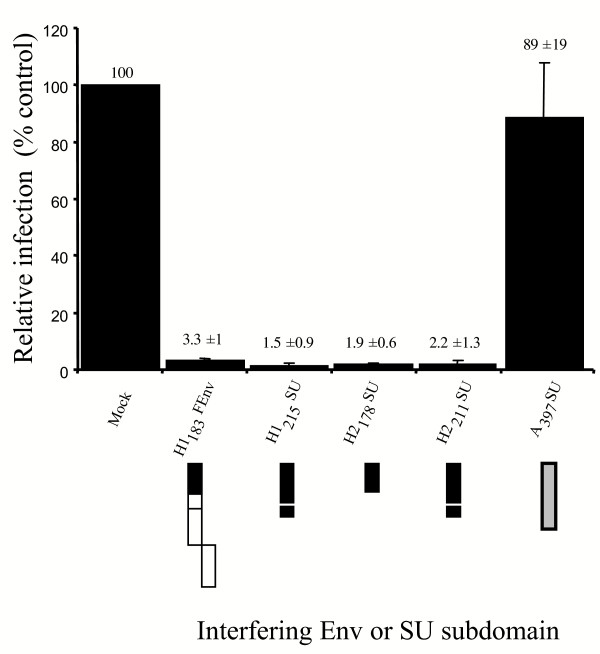
Using these SU constructs, we found that the 183 and 178 amino terminal residues of the HTLV-1 and -2 Env, respectively, were sufficient to efficiently bind target cells of different species. Binding resulted from bona fide interaction with the HTLV receptor as isolated SU subdomains specifically interfered with HTLV Env-mediated binding, cell fusion, and cell-free as well as cell-to-cell infection. Therefore, the HTLV receptor-binding domain (RBD) lies in the amino terminus of the SU, immediately upstream of a central immunodominant proline rich region (Env residues 180 to 205), that we show to be dispensible for receptor-binding and interference. Moreover, we identified a highly conserved tyrosine residue at position 114 of HTLV-1 Env, Tyr114, as critical for receptor-binding and subsequent interference to cell-to-cell fusion and infection. Finally, we observed that residues in the vicinity of Tyr114 have lesser impact on receptor binding and had various efficiency in interference to post-binding events.
The first 160 residues of the HTLV-1 and -2 mature cleaved SU fold as autonomous domains that contain all the determinants required for binding the HTLV receptor.
人类T细胞白血病病毒(HTLV)-1和-2是可感染多种细胞的δ逆转录病毒。Glut1作为主要的脊椎动物葡萄糖转运蛋白,已被证明是HTLV包膜糖蛋白(Env)的受体。虽然HTLV包膜糖蛋白(Env)的细胞外表面成分(SU)包含与受体相互作用的所有决定因素已得到充分证实,但对于与受体相互作用所必需且足够的SU亚结构域以及其中的关键氨基酸的鉴定仍有待精确界定。尽管HTLV和鼠白血病病毒(MLV)的基因组在其他部分高度不同,但HTLV和MLV的Env似乎相关,基于HTLV和MLV的SU之间的同源基序,我们构建了嵌合的HTLV/MLV Env以及可溶性HTLV-1和-2截短的氨基末端SU亚结构域。
使用这些SU构建体,我们发现HTLV-1和-2 Env的分别为183和178个氨基末端残基足以有效结合不同物种的靶细胞。这种结合是与HTLV受体的真实相互作用导致的,因为分离的SU亚结构域特异性干扰了HTLV Env介导的结合、细胞融合以及无细胞和细胞间感染。因此,HTLV受体结合域(RBD)位于SU的氨基末端,紧挨着一个中央免疫显性富含脯氨酸区域(Env残基180至205)的上游,我们证明该区域对于受体结合和干扰是可有可无的。此外,我们在HTLV-1 Env的第114位鉴定出一个高度保守的酪氨酸残基,即Tyr114,它对于受体结合以及随后对细胞间融合和感染的干扰至关重要。最后,我们观察到Tyr114附近的残基对受体结合的影响较小,并且对结合后事件的干扰效率各不相同。
HTLV-1和-2成熟切割的SU的前160个残基折叠成自主结构域,包含结合HTLV受体所需的所有决定因素。