Blando Federica, Gerardi Carmela, Nicoletti Isabella
J Biomed Biotechnol. 2004;2004(5):253-258. doi: 10.1155/S1110724304404136.
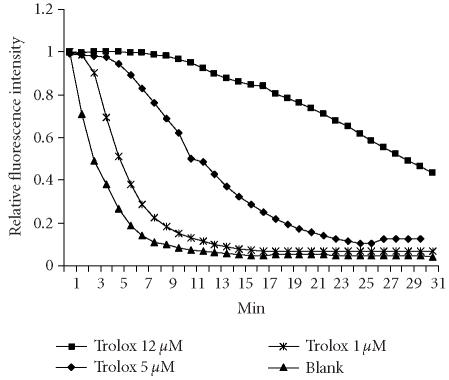
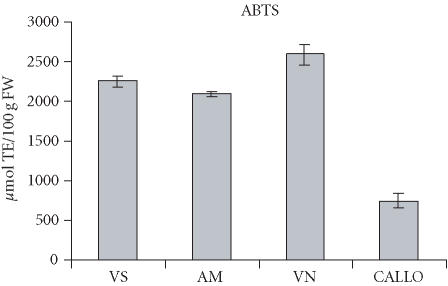
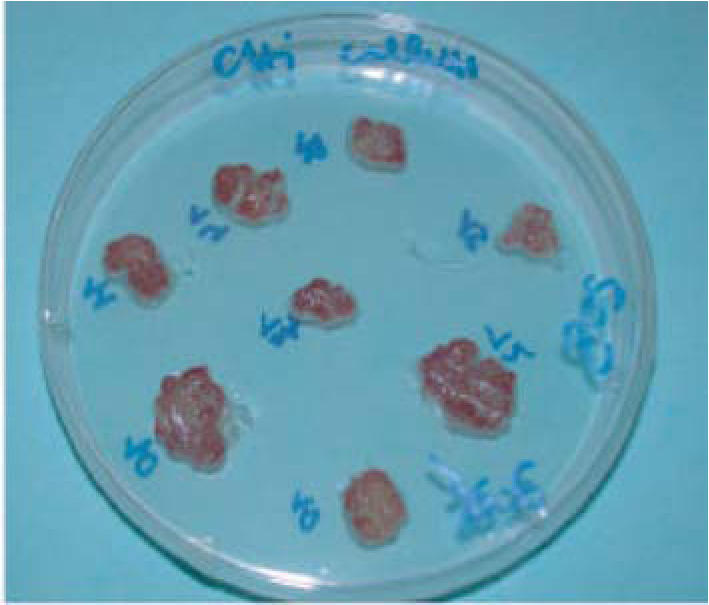
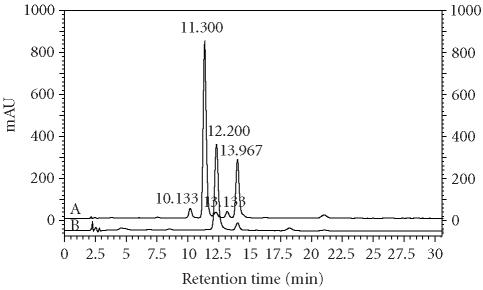
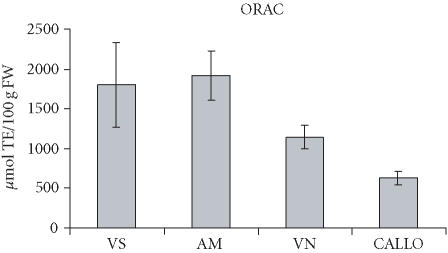
In the recent years many studies on anthocyanins have revealed their strong antioxidant activity and their possible use as chemotherapeutics. The finding that sour cherries (Prunus cerasus L) (also called tart cherries) contain high levels of anthocyanins that possess strong antioxidant and anti-inflammatory properties has attracted much attention to this species. Here we report the preliminary results of the induction of anthocyanin biosynthesis in sour cherry callus cell cultures. The evaluation and characterization of the in vitro produced pigments are compared to those of the anthocyanins found in vivo in fruits of several sour cherry cultivars. Interestingly, the anthocyanin profiles found in whole fruit extracts were similar in all tested genotypes but were different with respect to the callus extract. The evaluation of antioxidant activity, performed by ORAC and TEAC assays, revealed a relatively high antioxidant capacity for the fruit extracts (from 1145 to 2592 $\mu $ mol TE/100 g FW) and a lower one for the callus extract (688 $\mu $ mol TE/100 g FW).
近年来,许多关于花青素的研究揭示了其强大的抗氧化活性以及作为化学治疗剂的潜在用途。酸樱桃(Prunus cerasus L)(也称为酸樱桃)含有高水平的具有强大抗氧化和抗炎特性的花青素,这一发现引起了人们对该物种的广泛关注。在此,我们报告了酸樱桃愈伤组织细胞培养物中花青素生物合成诱导的初步结果。将体外产生的色素的评估和表征与几种酸樱桃品种果实中体内发现的花青素进行了比较。有趣的是,在所有测试基因型的全果提取物中发现的花青素谱相似,但与愈伤组织提取物不同。通过ORAC和TEAC测定法进行的抗氧化活性评估显示,果实提取物具有相对较高的抗氧化能力(1145至2592μmol TE/100 g FW),而愈伤组织提取物的抗氧化能力较低(688μmol TE/100 g FW)。