Watson Peter, Forster Rebecca, Palmer Krysten J, Pepperkok Rainer, Stephens David J
Department of Biochemistry, University of Bristol, School of Medical Sciences, University Walk, Bristol BS8 1TD, UK.
Nat Cell Biol. 2005 Jan;7(1):48-55. doi: 10.1038/ncb1206. Epub 2004 Dec 5.
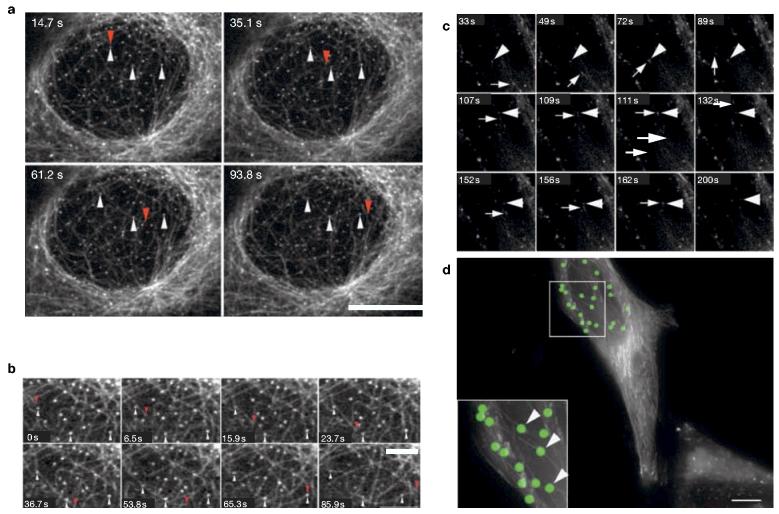
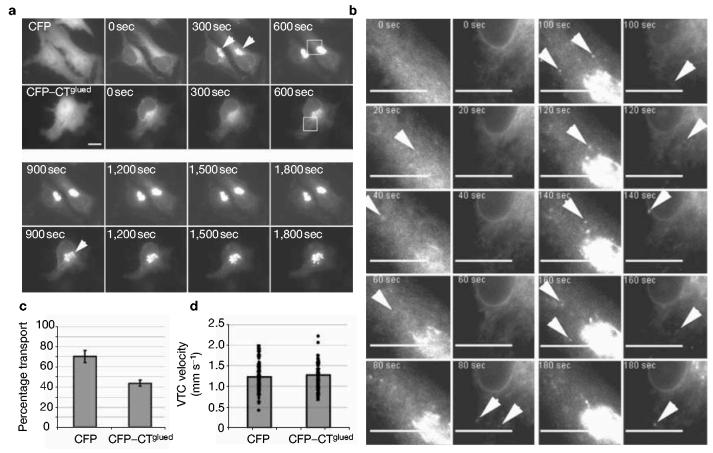
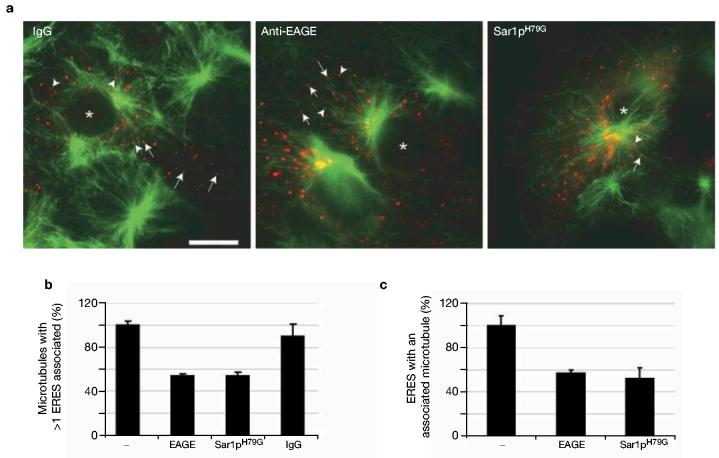
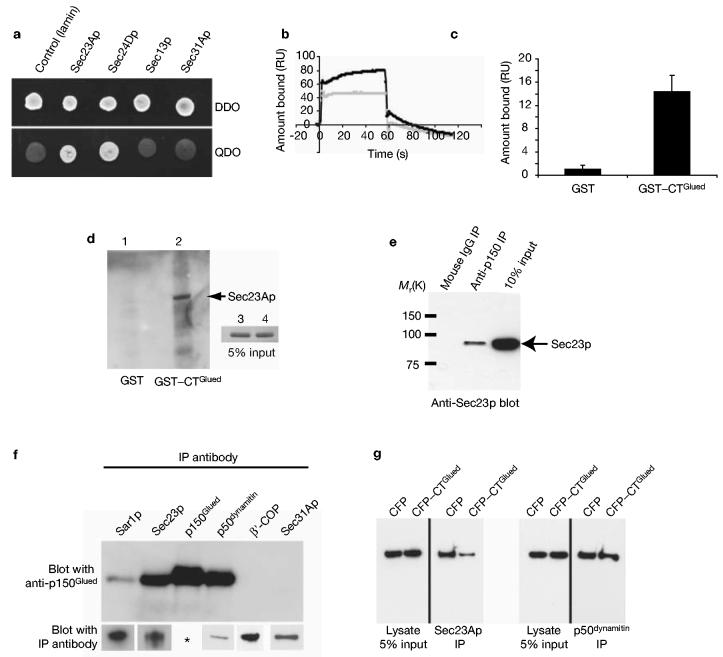
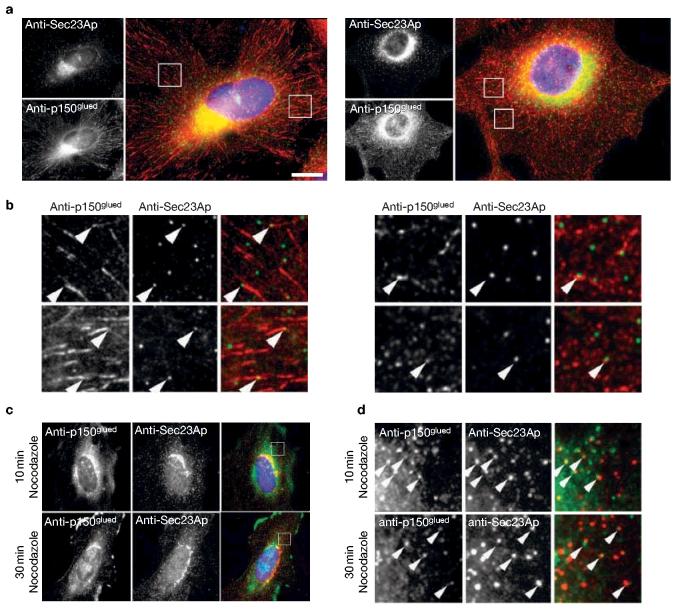
Transport of proteins from the endoplasmic reticulum (ER) to the Golgi is mediated by the sequential action of two coat complexes: COPII concentrates cargo for secretion at ER export sites, then COPI is subsequently recruited to nascent carriers and retrieves recycling proteins back to the ER. These carriers then move towards the Golgi along microtubules, driven by the dynein/dynactin complexes. Here we show that the Sec23p component of the COPII complex directly interacts with the dynactin complex through the carboxy-terminal cargo-binding domain of p150(Glued). Functional assays, including measurements of the rate of recycling of COPII on the ER membrane and quantitative analyses of secretion, indicate that this interaction underlies functional coupling of ER export to microtubules. Together, our data suggest a mechanism by which membranes of the early secretory pathway can be linked to motors and microtubules for subsequent organization and movement to the Golgi apparatus.
蛋白质从内质网(ER)运输到高尔基体是由两种包被复合体的顺序作用介导的:COPII在内质网出口位点浓缩用于分泌的货物,然后COPI随后被招募到新生载体上,并将循环利用的蛋白质运回内质网。这些载体然后沿着微管向高尔基体移动,由动力蛋白/动力蛋白激活复合体驱动。我们在此表明,COPII复合体的Sec23p组分通过p150(Glued)的羧基末端货物结合结构域直接与动力蛋白激活复合体相互作用。功能分析,包括对内质网膜上COPII循环速率的测量和分泌的定量分析,表明这种相互作用是内质网输出与微管功能偶联的基础。总之,我们的数据提出了一种机制,通过该机制早期分泌途径的膜可以与马达和微管相连,以便随后进行组织并向高尔基体移动。