Bensley Robert J, Mercer Nelda, Brusk John J, Underhile Ric, Rivas Jason, Anderson Judith, Kelleher Deanne, Lupella Melissa, de Jager André C
Western Michigan University, Kalamazoo, MI 49008, USA.
Prev Chronic Dis. 2004 Oct;1(4):A14. Epub 2004 Sep 15.
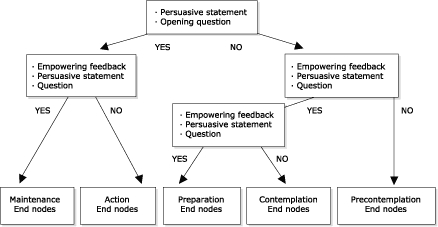
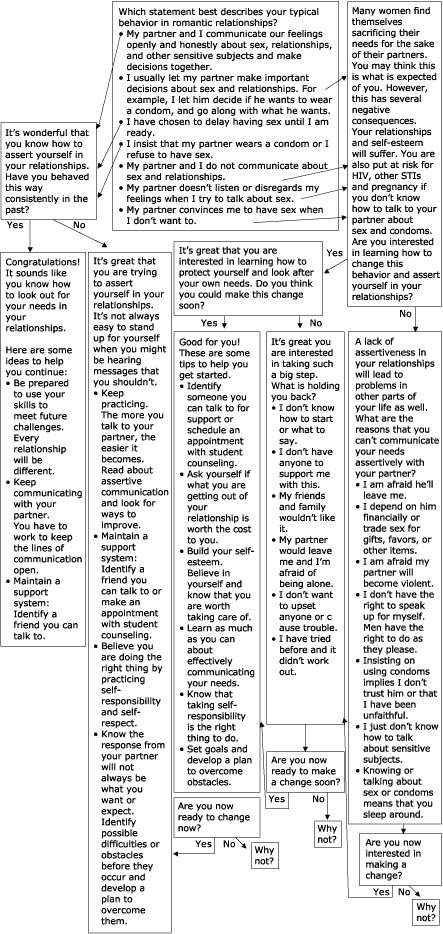
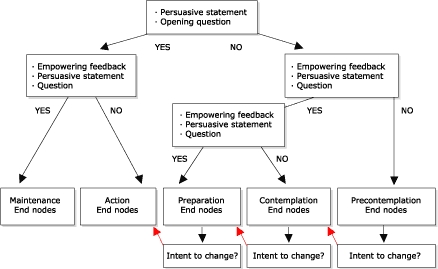
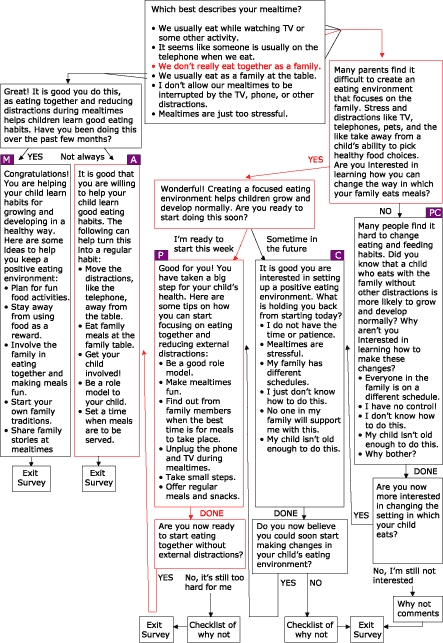
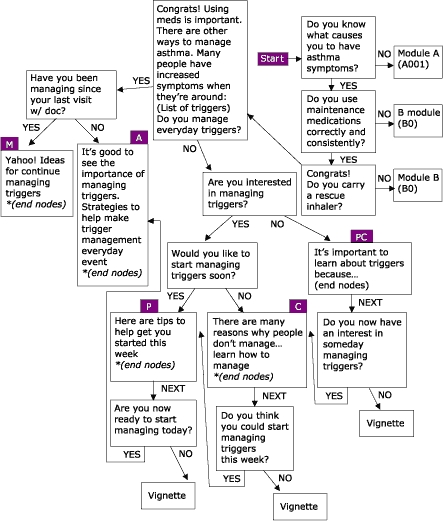
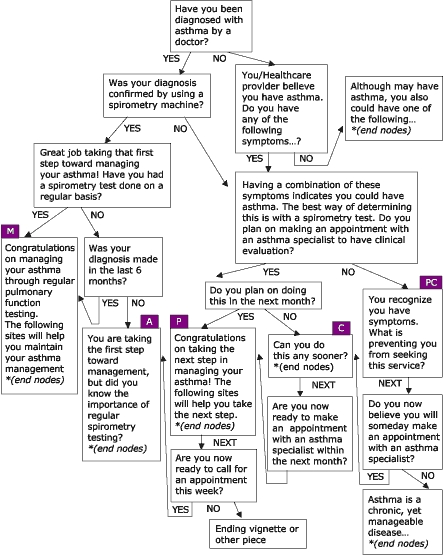
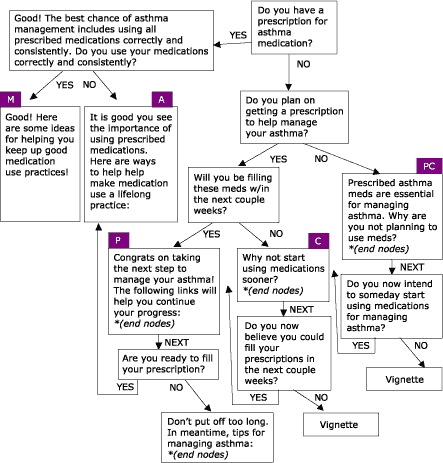
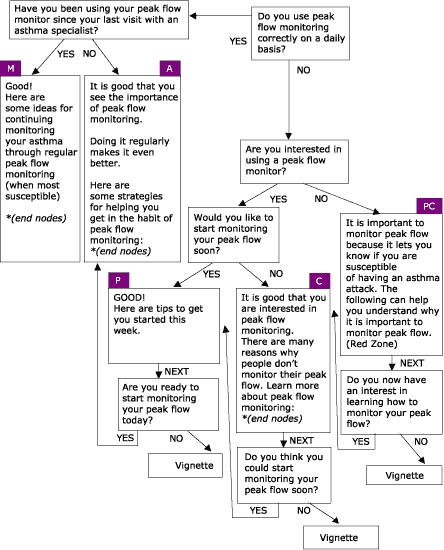
Although the Internet has become an important avenue for disseminating health information, theory-driven strategies for aiding individuals in changing or managing health behaviors are lacking. The eHealth Behavior Management Model combines the Transtheoretical Model, the behavioral intent aspect of the Theory of Planned Behavior, and persuasive communication to assist individuals in negotiating the Web toward stage-specific information. It is here - at the point of stage-specific information - that behavioral intent in moving toward more active stages of change occurs. The eHealth Behavior Management Model is applied in three demonstration projects that focus on behavior management issues: parent-child nutrition education among participants in the U.S. Department of Agriculture Special Supplemental Nutrition Program for Women, Infants and Children; asthma management among university staff and students; and human immunodeficiency virus prevention among South African women. Preliminary results have found the eHealth Behavior Management Model to be promising as a model for Internet-based behavior change programming. Further application and evaluation among other behavior and disease management issues are needed.
尽管互联网已成为传播健康信息的重要渠道,但缺乏理论驱动的策略来帮助个人改变或管理健康行为。电子健康行为管理模型结合了跨理论模型、计划行为理论的行为意图方面以及说服性沟通,以帮助个人在网络上获取特定阶段的信息。正是在特定阶段的信息这一点上,向更积极的改变阶段迈进的行为意图才会出现。电子健康行为管理模型应用于三个示范项目,这些项目聚焦于行为管理问题:美国农业部妇女、婴儿和儿童特别补充营养计划参与者中的亲子营养教育;大学教职员工和学生中的哮喘管理;以及南非妇女中的人类免疫缺陷病毒预防。初步结果发现,电子健康行为管理模型作为基于互联网的行为改变规划模型很有前景。还需要在其他行为和疾病管理问题上进行进一步的应用和评估。