Salhab M, Al Sarakbi W, Mokbel K
St George's and The Princess Grace Hospitals, London, UK.
Int Semin Surg Oncol. 2005 Apr 8;2(1):8. doi: 10.1186/1477-7800-2-8.
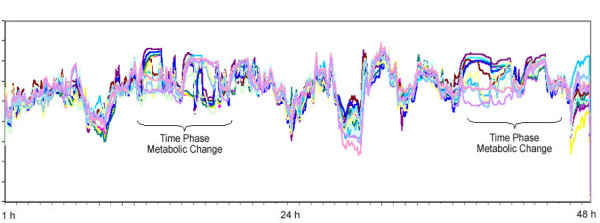
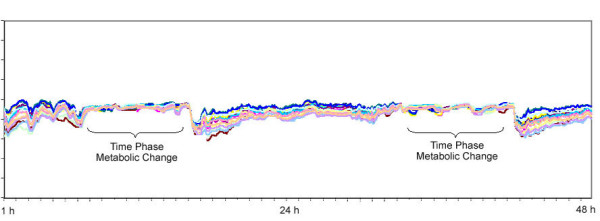
It is now recognised that the breast exhibits a circadian rhythm which reflects its physiology. There is increasing evidence that rhythms associated with malignant cells proliferation are largely non-circadian and that a circadian to ultradian shift may be a general correlation to neoplasia.Cancer development appears to generate its own thermal signatures and the complexity of these signatures may be a reflection of its degree of development.The limitations of mammography as a screening modality especially in young women with dense breasts necessitated the development of novel and more effective screening strategies with a high sensitivity and specificity. Dynamic thermal analysis of the breast is a safe, non invasive approach that seems to be sensitive for the early detection of breast cancer.This article focuses on dynamic thermal analysis as an evolving method in breast cancer detection in pre-menopausal women with dense breast tissue. Prospective multi-centre trials are required to validate this promising modality in screening.The issue of false positives require further investigation using molecular genetic markers of malignancy and novel techniques such as mammary ductoscopy.
现在人们认识到,乳腺呈现出反映其生理机能的昼夜节律。越来越多的证据表明,与恶性细胞增殖相关的节律在很大程度上是非昼夜节律性的,而且从昼夜节律到超昼夜节律的转变可能与肿瘤形成普遍相关。癌症发展似乎会产生自身的热信号,这些信号的复杂性可能反映了其发展程度。乳腺钼靶作为一种筛查方式存在局限性,尤其是在乳房致密的年轻女性中,这就需要开发具有高灵敏度和特异性的新型、更有效的筛查策略。乳腺动态热分析是一种安全、非侵入性的方法,似乎对乳腺癌的早期检测很敏感。本文重点关注动态热分析作为一种在乳房致密组织的绝经前女性乳腺癌检测中不断发展的方法。需要进行前瞻性多中心试验来验证这种有前景的筛查方式。假阳性问题需要使用恶性肿瘤的分子遗传标记和乳腺导管镜等新技术进行进一步研究。