Popov Serguei G, Popova Taissia G, Hopkins Svetlana, Weinstein Raymond S, MacAfee Rebecca, Fryxell Karl J, Chandhoke Vikas, Bailey Charles, Alibek Ken
Advanced Biosystems, Inc., Manassas, VA, USA.
BMC Infect Dis. 2005 Apr 8;5:25. doi: 10.1186/1471-2334-5-25.
Inhalation anthrax is characterized by a systemic spread of the challenge agent, Bacillus anthracis. It causes severe damage, including multiple hemorrhagic lesions, to host tissues and organs. It is widely believed that anthrax lethal toxin secreted by proliferating bacteria is a major cause of death, however, the pathology of intoxication in experimental animals is drastically different from that found during the infectious process. In order to close a gap between our understanding of anthrax molecular pathology and the most prominent clinical features of the infectious process we undertook bioinformatic and experimental analyses of potential proteolytic virulence factors of B. anthracis distinct from lethal toxin.
Secreted proteins (other than lethal and edema toxins) produced by B. anthracis were tested for tissue-damaging activity and toxicity in mice. Chemical protease inhibitors and rabbit immune sera raised against B. anthracis proteases were used to treat mice challenged with B. anthracis (Sterne) spores.
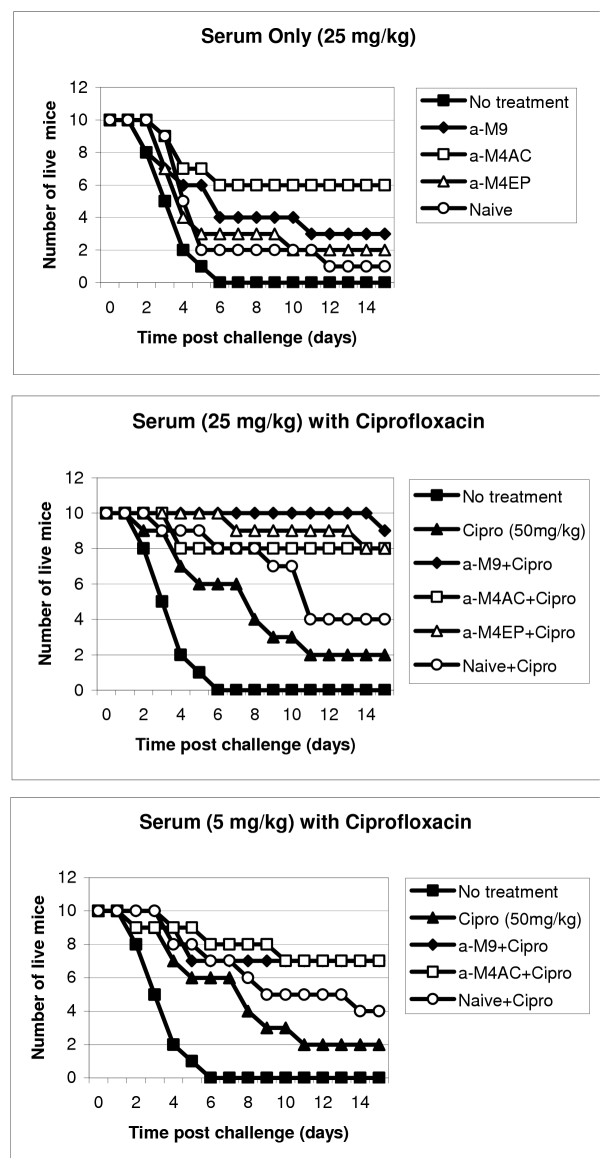
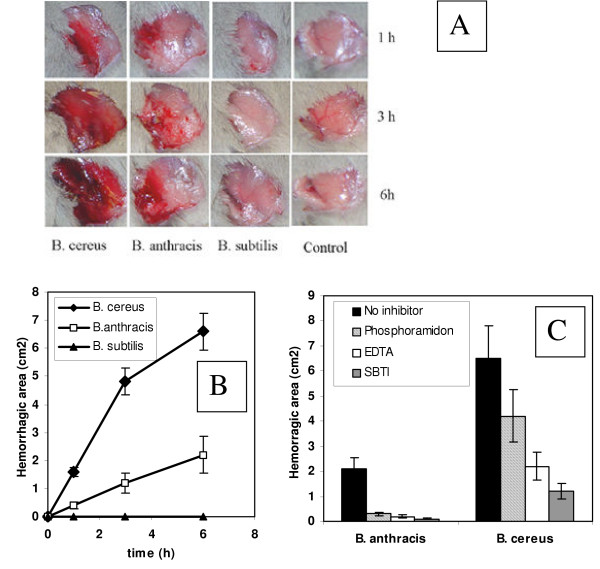
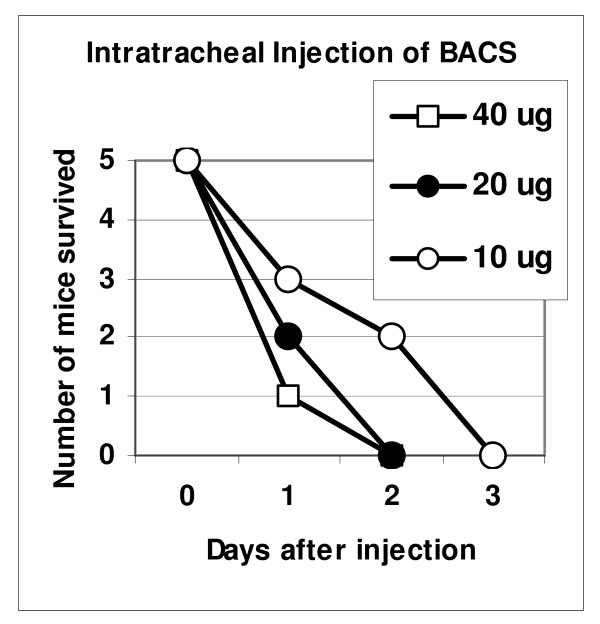
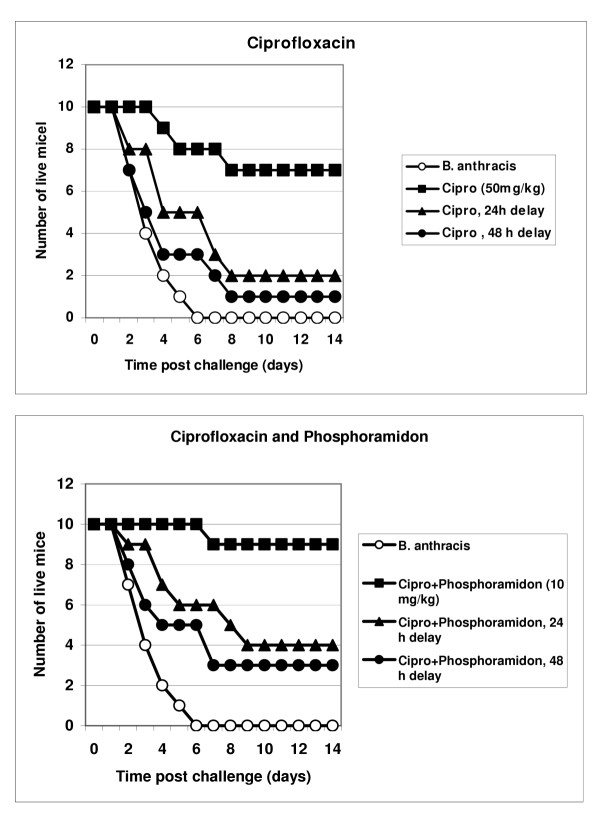
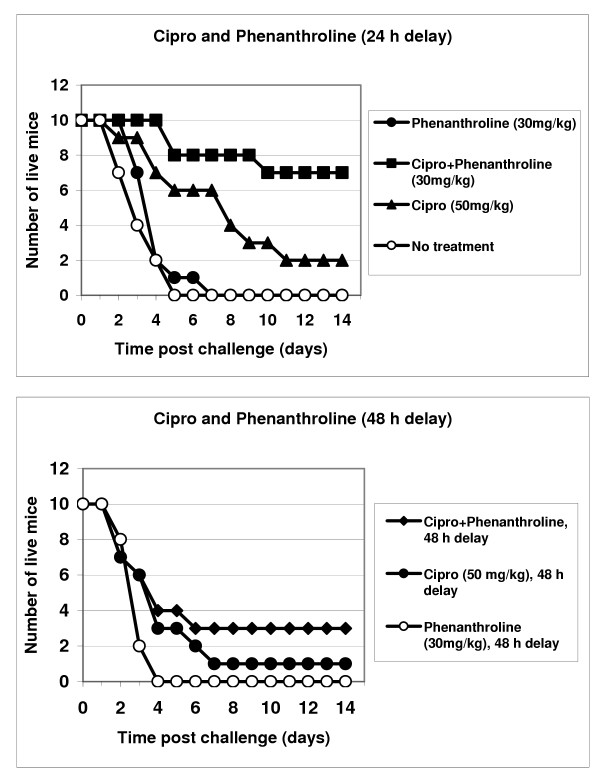
B. anthracis strain delta Ames (pXO1-, pXO2-) producing no lethal and edema toxins secrets a number of metalloprotease virulence factors upon cultivation under aerobic conditions, including those with hemorrhagic, caseinolytic and collagenolytic activities, belonging to M4 and M9 thermolysin and bacterial collagenase families, respectively. These factors are directly toxic to DBA/2 mice upon intratracheal administration at 0.5 mg/kg and higher doses. Chemical protease inhibitors (phosphoramidon and 1, 10-phenanthroline), as well as immune sera against M4 and M9 proteases of B. anthracis, were used to treat mice challenged with B. anthracis (Sterne) spores. These substances demonstrate a substantial protective efficacy in combination with ciprofloxacin therapy initiated as late as 48 h post spore challenge, compared to the antibiotic alone.
Secreted proteolytic enzymes are important pathogenic factors of B. anthrasis, which can be considered as effective therapeutic targets in the development of anthrax treatment and prophylactic approaches complementing anti-lethal toxin therapy.
吸入性炭疽的特征是致病因子炭疽芽孢杆菌在体内系统性传播。它会对宿主组织和器官造成严重损害,包括多处出血性病变。人们普遍认为,增殖细菌分泌的炭疽致死毒素是主要死因,然而,实验动物中毒的病理学与感染过程中发现的情况截然不同。为了弥合我们对炭疽分子病理学的理解与感染过程最突出临床特征之间的差距,我们对炭疽芽孢杆菌不同于致死毒素的潜在蛋白水解毒力因子进行了生物信息学和实验分析。
检测炭疽芽孢杆菌产生的分泌蛋白(致死毒素和水肿毒素除外)在小鼠体内的组织损伤活性和毒性。使用化学蛋白酶抑制剂和针对炭疽芽孢杆菌蛋白酶的兔免疫血清治疗受炭疽芽孢杆菌(Sterne)孢子攻击的小鼠。
不产生致死毒素和水肿毒素的炭疽芽孢杆菌菌株delta Ames(pXO1-,pXO2-)在有氧条件下培养时会分泌多种金属蛋白酶毒力因子,包括具有出血、酪蛋白溶解和胶原溶解活性 的因子,分别属于M4和M9嗜热菌蛋白酶家族及细菌胶原酶家族。这些因子经气管内以0.5mg/kg及更高剂量给药时,对DBA/2小鼠具有直接毒性。使用化学蛋白酶抑制剂(磷酰胺和1,10-菲咯啉)以及针对炭疽芽孢杆菌M4和M9蛋白酶的免疫血清治疗受炭疽芽孢杆菌(Sterne)孢子攻击的小鼠。与单独使用抗生素相比,这些物质与在孢子攻击后48小时才开始的环丙沙星治疗联合使用时,显示出显著的保护效果。
分泌的蛋白水解酶是炭疽芽孢杆菌的重要致病因素,在开发补充抗致死毒素治疗的炭疽治疗和预防方法时,可将其视为有效的治疗靶点。