Fagarasanu Monica, Fagarasanu Andrei, Tam Yuen Yi C, Aitchison John D, Rachubinski Richard A
Department of Cell Biology, University of Alberta, Edmonton, Alberta T6G 2H7, Canada.
J Cell Biol. 2005 Jun 6;169(5):765-75. doi: 10.1083/jcb.200503083. Epub 2005 May 31.
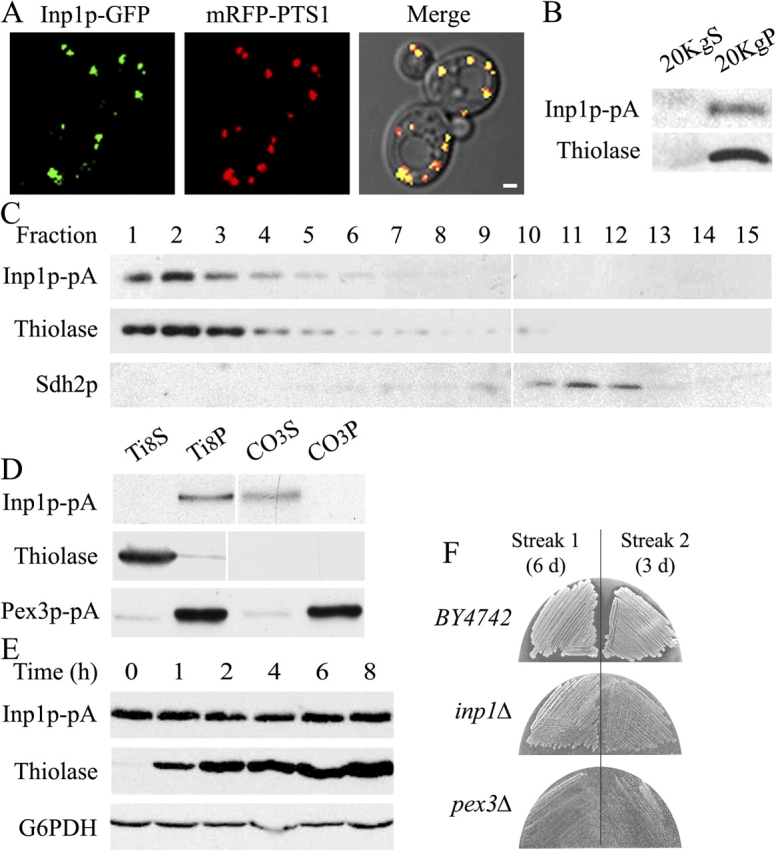
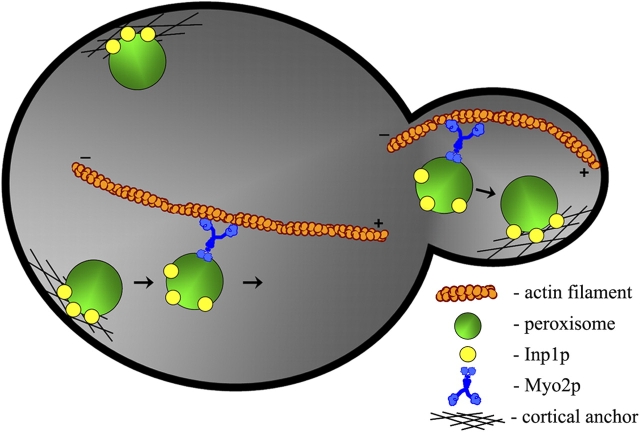
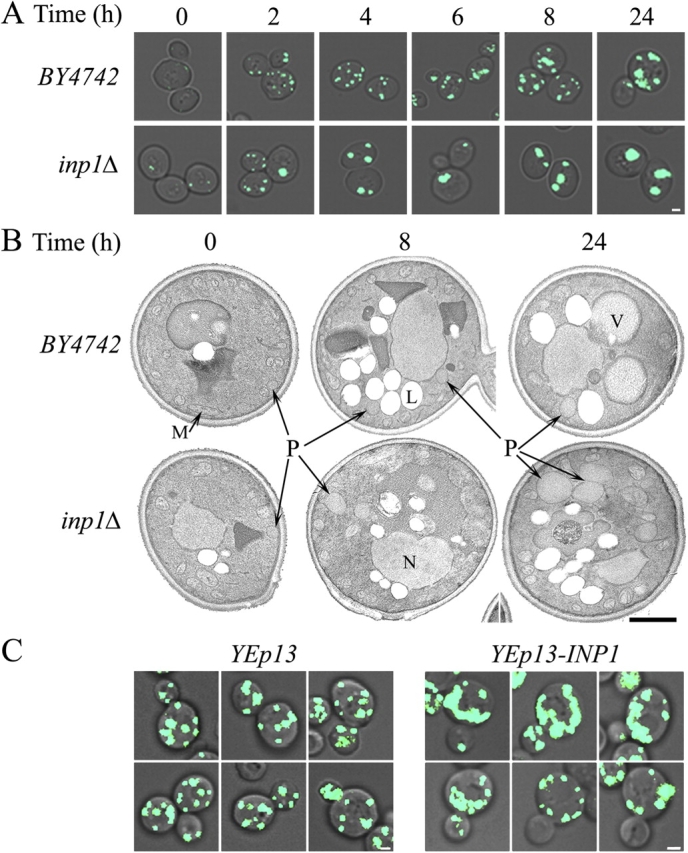
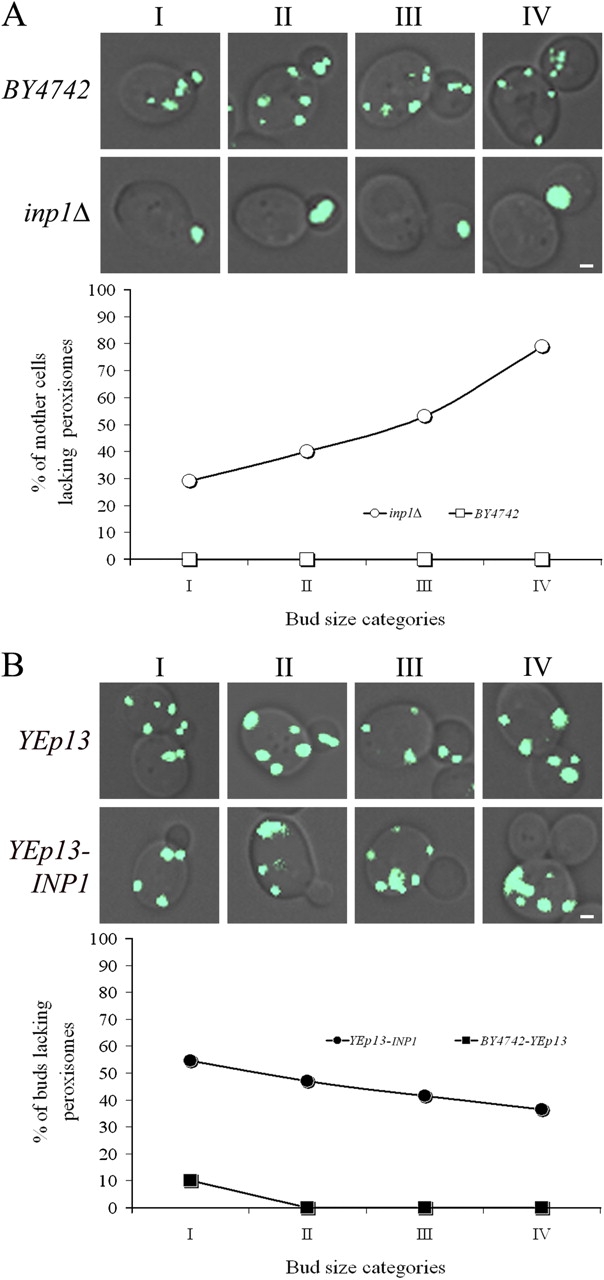
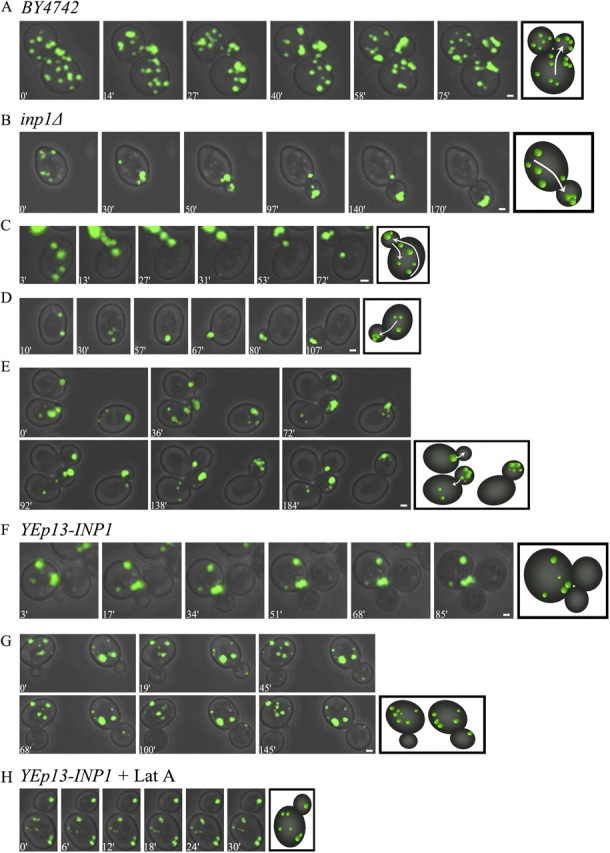
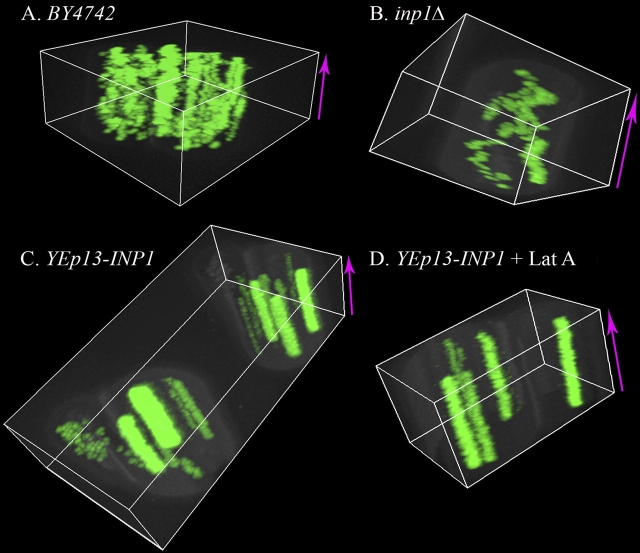
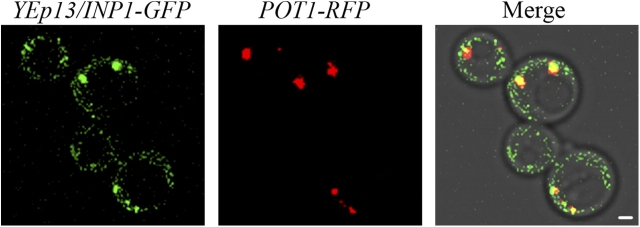
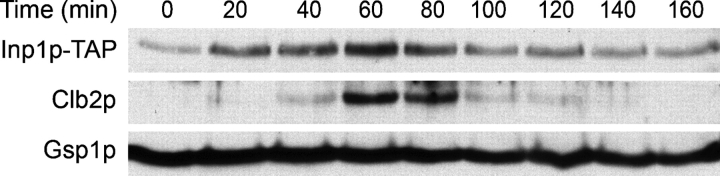
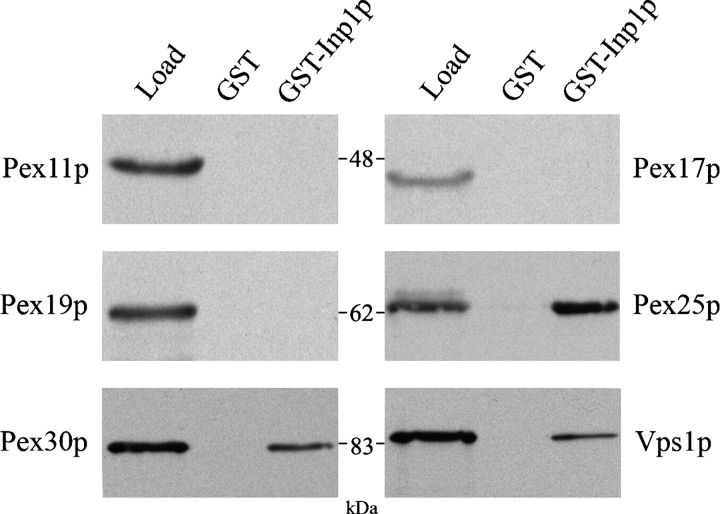
Cells have evolved molecular mechanisms for the efficient transmission of organelles during cell division. Little is known about how peroxisomes are inherited. Inp1p is a peripheral membrane protein of peroxisomes of Saccharomyces cerevisiae that affects both the morphology of peroxisomes and their partitioning during cell division. In vivo 4-dimensional video microscopy showed an inability of mother cells to retain a subset of peroxisomes in dividing cells lacking the INP1 gene, whereas cells overexpressing INP1 exhibited immobilized peroxisomes that failed to be partitioned to the bud. Overproduced Inp1p localized to both peroxisomes and the cell cortex, supporting an interaction of Inp1p with specific structures lining the cell periphery. The levels of Inp1p vary with the cell cycle. Inp1p binds Pex25p, Pex30p, and Vps1p, which have been implicated in controlling peroxisome division. Our findings are consistent with Inp1p acting as a factor that retains peroxisomes in cells and controls peroxisome division. Inp1p is the first peroxisomal protein directly implicated in peroxisome inheritance.
细胞已经进化出分子机制,以便在细胞分裂期间有效地传递细胞器。关于过氧化物酶体如何遗传,人们了解甚少。Inp1p是酿酒酵母过氧化物酶体的一种外周膜蛋白,它既影响过氧化物酶体的形态,也影响其在细胞分裂期间的分配。体内四维视频显微镜显示,在缺乏INP1基因的分裂细胞中,母细胞无法保留一部分过氧化物酶体,而过度表达INP1的细胞则表现出过氧化物酶体固定不动,无法分配到芽中。过量产生的Inp1p定位于过氧化物酶体和细胞皮层,这支持了Inp1p与细胞周边特定结构的相互作用。Inp1p的水平随细胞周期而变化。Inp1p与Pex25p、Pex30p和Vps1p结合,这些蛋白与控制过氧化物酶体分裂有关。我们的发现与Inp1p作为一种在细胞中保留过氧化物酶体并控制过氧化物酶体分裂的因子的作用一致。Inp1p是第一个直接参与过氧化物酶体遗传的过氧化物酶体蛋白。