Váchová Libuse, Palková Zdena
Institute of Microbiology, Academy of Sciences of the Czech Republic, 142 20 Prague-4, Czech Republic.
J Cell Biol. 2005 Jun 6;169(5):711-7. doi: 10.1083/jcb.200410064.
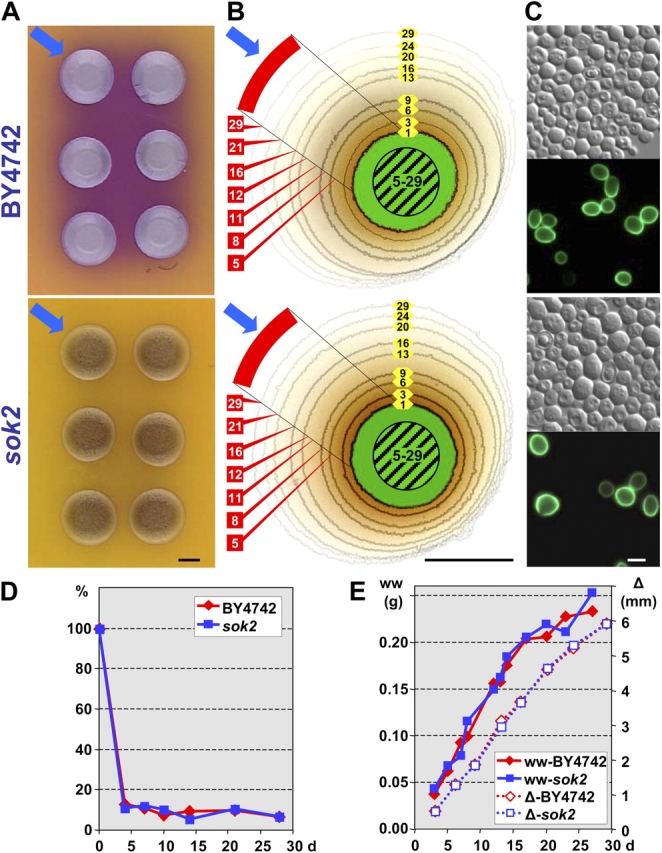
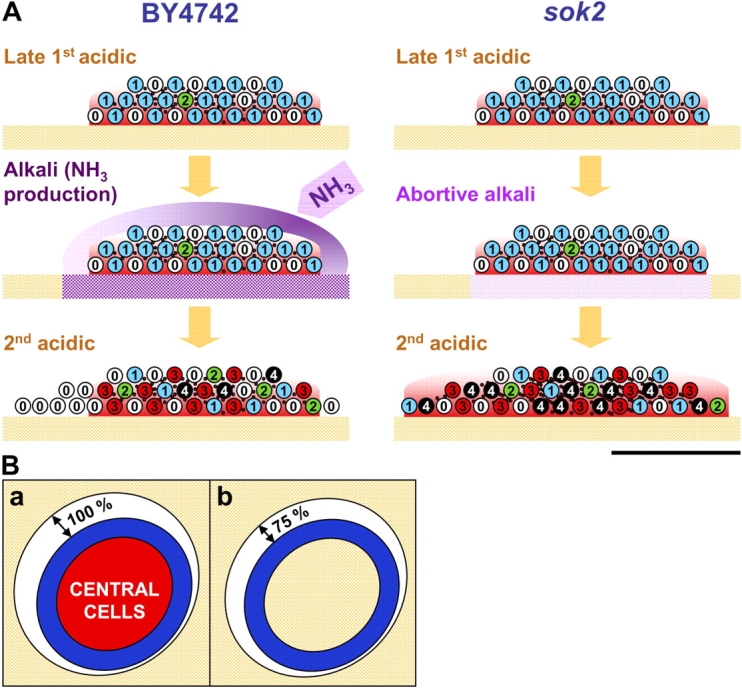
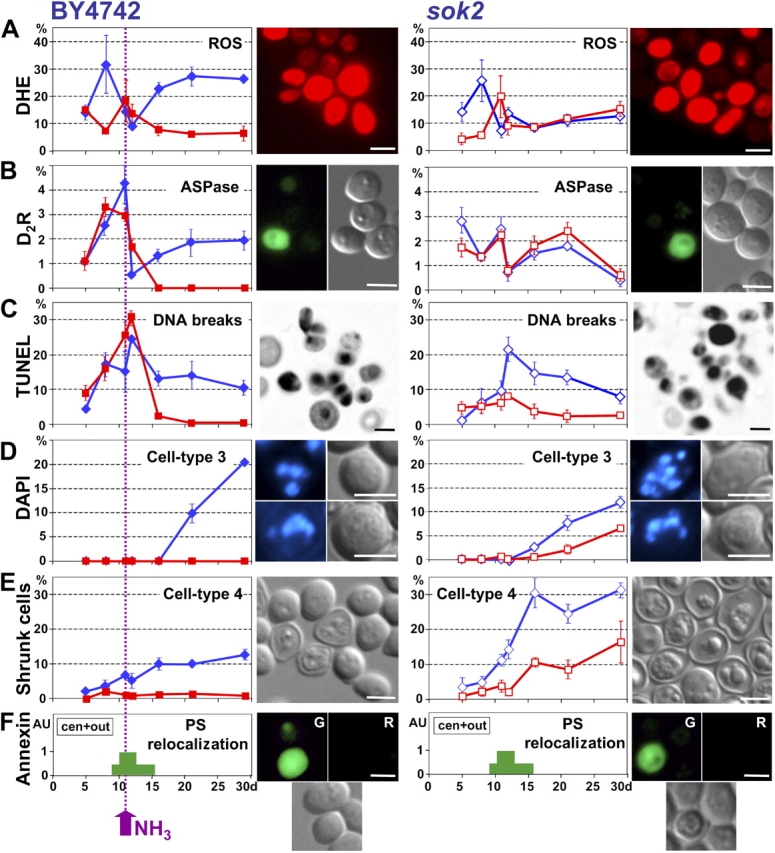
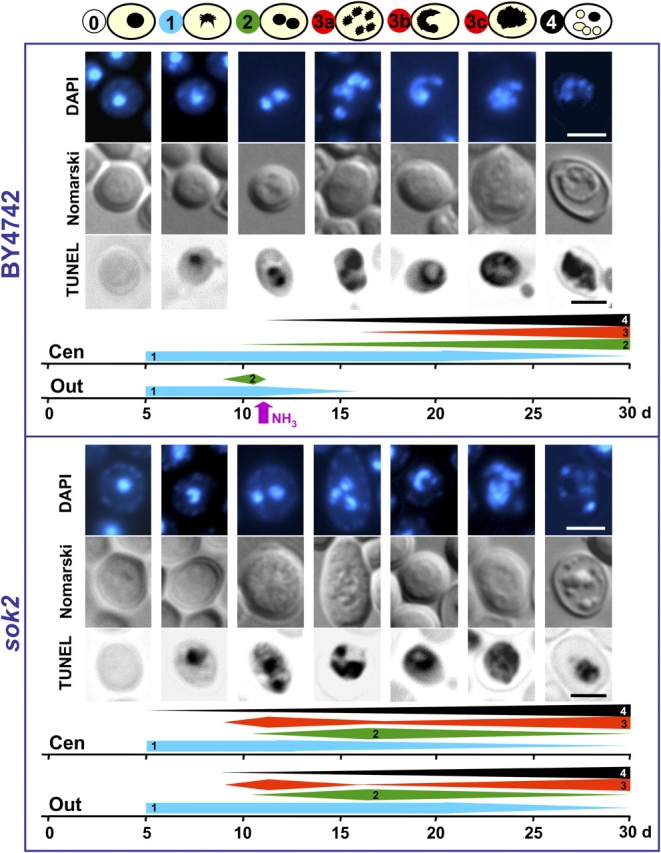
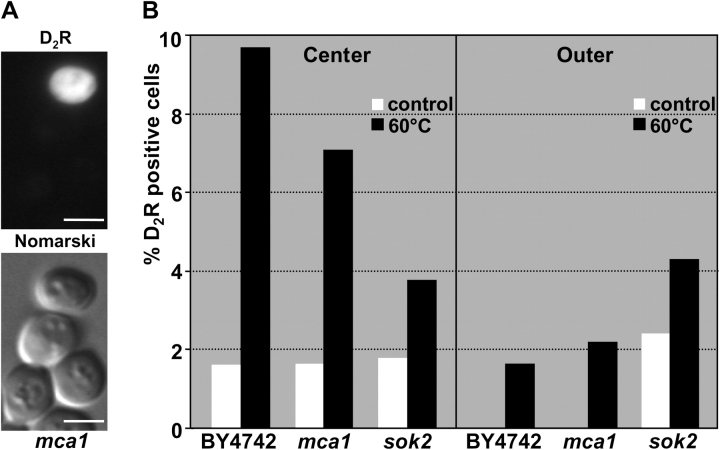
The existence of programmed cell death (PCD) in yeast and its significance to simple unicellular organisms is still questioned. However, such doubts usually do not reflect the fact that microorganisms in nature exist predominantly within structured, multicellular communities capable of differentiation, in which a profit of individual cells is subordinated to a profit of populations. In this study, we show that some PCD features naturally appear during the development of multicellular Saccharomyces cerevisiae colonies. An ammonia signal emitted by aging colonies triggers metabolic changes that localize yeast death only in the colony center. The remaining population can exploit the released nutrients and survives. In colonies defective in Sok2p transcription factor that are unable to produce ammonia, death is spread throughout the whole population, thus decreasing the lifetime of the colony. The absence of Mca1p metacaspase or Aif1p orthologue of mammalian apoptosis-inducing factor does not prevent regulated death in yeast colonies.
酵母中程序性细胞死亡(PCD)的存在及其对简单单细胞生物的意义仍受到质疑。然而,此类质疑通常并未反映出这样一个事实,即自然界中的微生物主要存在于能够分化的结构化多细胞群落中,其中单个细胞的利益从属于种群的利益。在本研究中,我们表明,一些PCD特征在多细胞酿酒酵母菌落的发育过程中自然出现。老化菌落发出的氨信号触发代谢变化,使酵母死亡仅局限于菌落中心。其余的群体可以利用释放的营养物质并存活下来。在缺乏Sok2p转录因子且无法产生氨的菌落中,死亡会蔓延至整个群体,从而缩短菌落的寿命。缺乏Mca1p类半胱天冬酶或哺乳动物凋亡诱导因子的Aif1p直系同源物并不妨碍酵母菌落中的程序性死亡。