Amit-Vazina M, Shishodia S, Harris D, Van Q, Wang M, Weber D, Alexanian R, Talpaz M, Aggarwal B B, Estrov Z
Department of Bioimmunotherapy, The University of Texas M.D. Anderson Cancer Center, Houston, TX 77030, USA.
Br J Cancer. 2005 Jul 11;93(1):70-80. doi: 10.1038/sj.bjc.6602637.
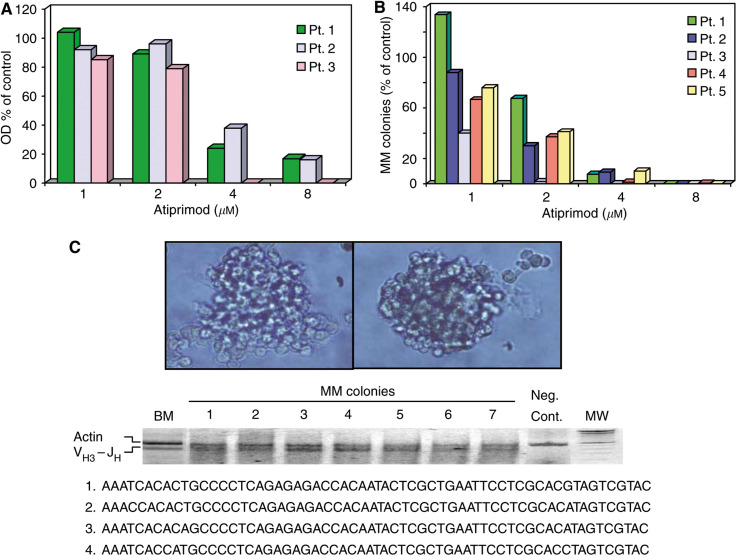
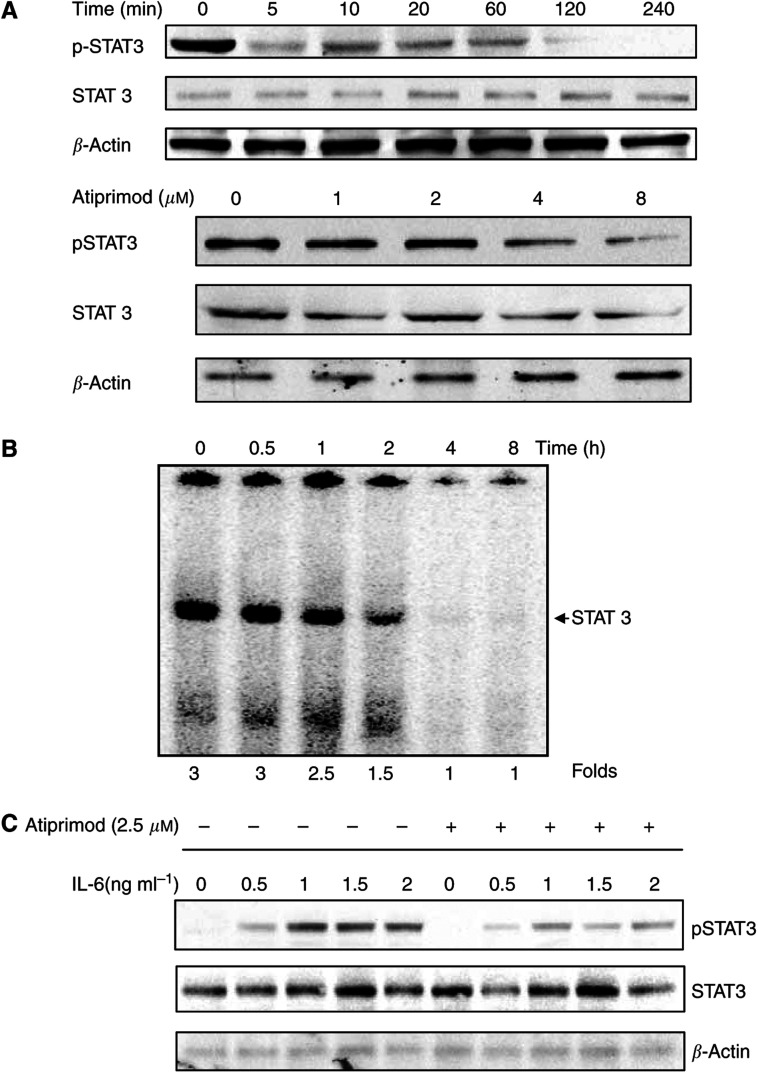
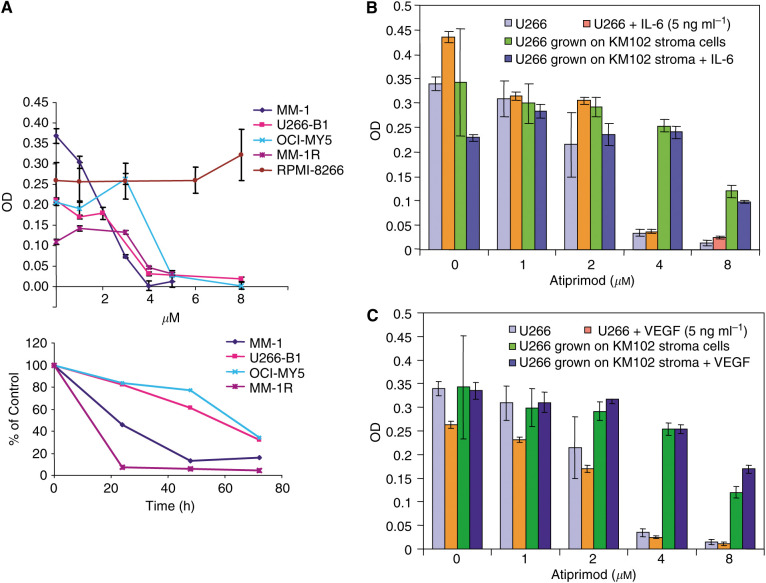
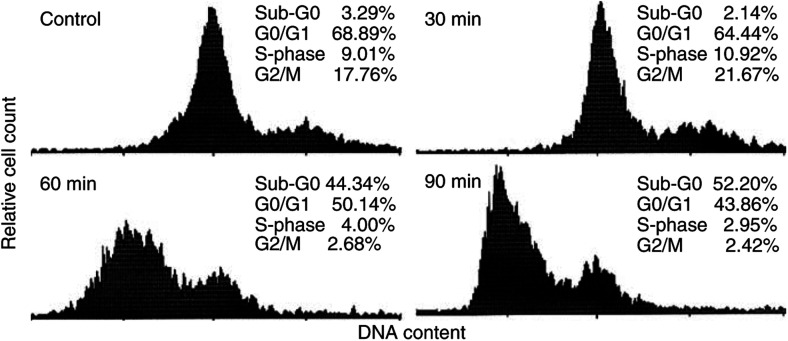
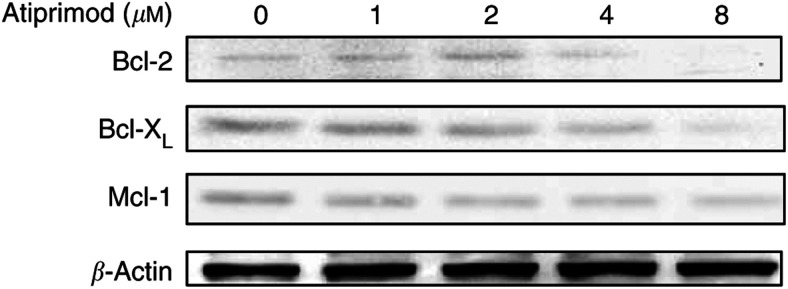
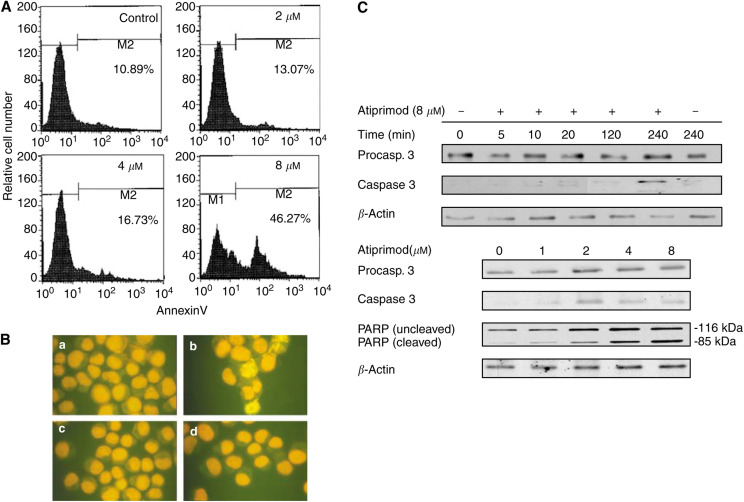
Multiple myeloma (MM) accounts for 1 % of all cancer deaths. Although treated aggressively, almost all myelomas eventually recur and become resistant to treatment. Atiprimod (2-(3-Diethylaminopropyl)-8,8-dipropyl-2-azaspiro[4,5] decane dimaleate) has exerted anti-inflammatory activities and inhibited oeteoclast-induced bone resorption in animal models and been well tolerated in patients with rheumatoid arthritis in phase I clinical trials. Therefore, we investigated its activity in MM cells and its mechanism of action. We found that Atiprimod inhibited proliferation of the myeloma cell lines U266-B1, OCI-MY5, MM-1, and MM-1R in a time- and dose-dependent manner. Atiprimod blocked U266-B1 myeloma cells in the G(0)/G(1) phase, preventing cell cycle progression. Furthermore, Atiprimod inhibited signal transducer and activator of transcription (STAT) 3 activation, blocking the signalling pathway of interleukin-6, which contributes to myeloma cell proliferation and survival, and downregulated the antiapoptotic proteins Bcl-2, Bcl-X(L), and Mcl-1. Incubation of U266-B1 myeloma cells with Atiprimod induced apoptosis through the activation of caspase 3 and subsequent cleavage of the DNA repair enzyme poly(adenosine diphosphate-ribose) polymerase. Finally, Atiprimod suppressed myeloma colony-forming cell proliferation in fresh marrow cells from five patients with newly diagnosed MM in a dose-dependent fashion. These data suggest that Atiprimod has a role in future therapies for MM.
多发性骨髓瘤(MM)占所有癌症死亡人数的1%。尽管进行了积极治疗,但几乎所有骨髓瘤最终都会复发并产生耐药性。阿替莫德(2-(3-二乙氨基丙基)-8,8-二丙基-2-氮杂螺[4,5]癸烷二马来酸盐)在动物模型中具有抗炎活性并抑制破骨细胞诱导的骨吸收,且在I期临床试验中类风湿关节炎患者中耐受性良好。因此,我们研究了其在骨髓瘤细胞中的活性及其作用机制。我们发现阿替莫德以时间和剂量依赖性方式抑制骨髓瘤细胞系U266-B1、OCI-MY5、MM-1和MM-1R的增殖。阿替莫德将U266-B1骨髓瘤细胞阻滞在G(0)/G(1)期,阻止细胞周期进展。此外,阿替莫德抑制信号转导和转录激活因子(STAT)3的激活,阻断白细胞介素-6的信号通路,白细胞介素-6有助于骨髓瘤细胞的增殖和存活,并下调抗凋亡蛋白Bcl-2、Bcl-X(L)和Mcl-1。用阿替莫德孵育U266-B1骨髓瘤细胞通过激活半胱天冬酶3并随后切割DNA修复酶聚(二磷酸腺苷-核糖)聚合酶诱导细胞凋亡。最后,阿替莫德以剂量依赖性方式抑制了5例新诊断MM患者新鲜骨髓细胞中骨髓瘤集落形成细胞的增殖。这些数据表明阿替莫德在MM未来治疗中具有作用。