Odoi Agricola, Wray Ron, Emo Marion, Birch Stephen, Hutchison Brian, Eyles John, Abernathy Tom
Department of Clinical Epidemiology and Biostatistics, McMaster University, Hamilton, Ontario, Canada.
Int J Health Geogr. 2005 Aug 10;4:20. doi: 10.1186/1476-072X-4-20.
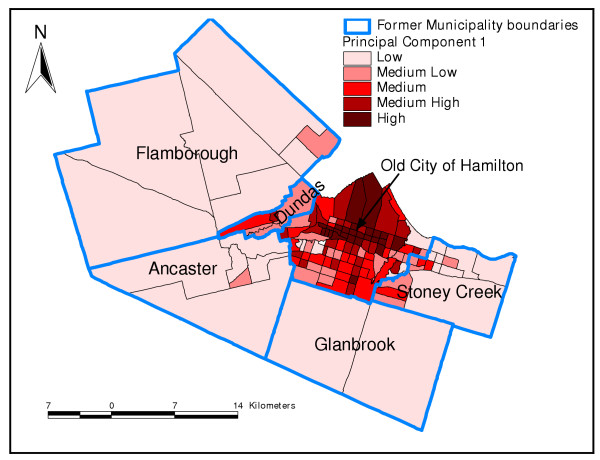
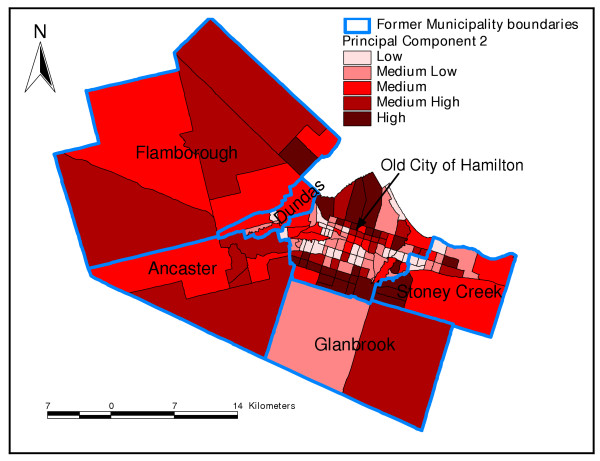
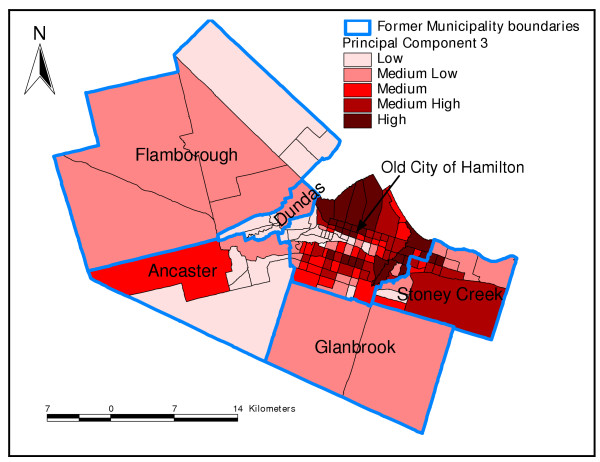
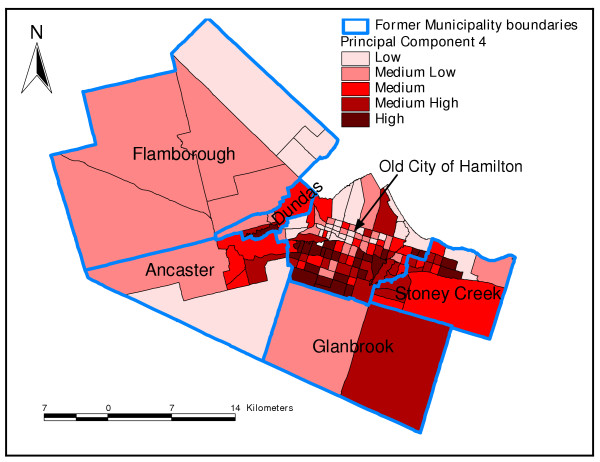
Population health planning aims to improve the health of the entire population and to reduce health inequities among population groups. Socioeconomic factors are increasingly being recognized as major determinants of many aspects of health and causes of health inequities. Knowledge of socioeconomic characteristics of neighbourhoods is necessary to identify their unique health needs and enhance identification of socioeconomically disadvantaged populations. Careful integration of this knowledge into health planning activities is necessary to ensure that health planning and service provision are tailored to unique neighbourhood population health needs. In this study, we identify unique neighbourhood socioeconomic characteristics and classify the neighbourhoods based on these characteristics. Principal components analysis (PCA) of 18 socioeconomic variables was used to identify the principal components explaining most of the variation in socioeconomic characteristics across the neighbourhoods. Cluster analysis was used to classify neighbourhoods based on their socioeconomic characteristics.
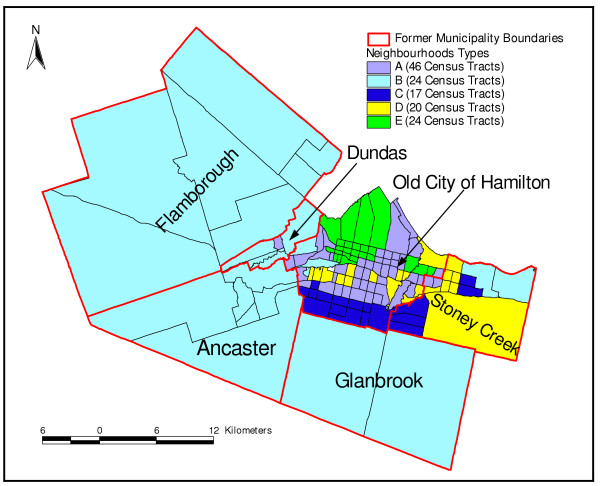
Results of the PCA and cluster analysis were similar but the latter were more objective and easier to interpret. Five neighbourhood types with distinguishing socioeconomic and demographic characteristics were identified. The methodology provides a more complete picture of the neighbourhood socioeconomic characteristics than when a single variable (e.g. income) is used to classify neighbourhoods.
Cluster analysis is useful for generating neighbourhood population socioeconomic and demographic characteristics that can be useful in guiding neighbourhood health planning and service provision. This study is the first of a series of studies designed to investigate health inequalities at the neighbourhood level with a view to providing evidence-base for health planners, service providers and policy makers to help address health inequity issues at the neighbourhood level. Subsequent studies will investigate inequalities in health outcomes both within and across the neighbourhood types identified in the current study.
人群健康规划旨在改善全体人群的健康状况,并减少不同人群之间的健康不平等。社会经济因素日益被视为健康诸多方面的主要决定因素以及健康不平等的成因。了解社区的社会经济特征对于确定其独特的健康需求以及加强对社会经济弱势群体的识别至关重要。将这些知识谨慎地融入健康规划活动中,对于确保健康规划和服务提供能够针对社区独特的人群健康需求进行量身定制是必要的。在本研究中,我们确定了社区独特的社会经济特征,并基于这些特征对社区进行分类。使用18个社会经济变量的主成分分析(PCA)来确定解释社区间社会经济特征大部分变异的主成分。聚类分析用于根据社区的社会经济特征对其进行分类。
主成分分析和聚类分析的结果相似,但聚类分析结果更客观且更易于解释。确定了五种具有不同社会经济和人口特征的社区类型。与使用单一变量(如收入)对社区进行分类相比,该方法能更全面地呈现社区的社会经济特征。
聚类分析有助于生成可用于指导社区健康规划和服务提供的社区人群社会经济及人口特征。本研究是旨在调查社区层面健康不平等现象的一系列研究中的第一项,目的是为健康规划者、服务提供者和政策制定者提供证据基础,以帮助解决社区层面的健康不平等问题。后续研究将调查当前研究中确定的社区类型内部和之间的健康结果不平等情况。