Hermanowski-Vosatka Anne, Balkovec James M, Cheng Kang, Chen Howard Y, Hernandez Melba, Koo Gloria C, Le Grand Cheryl B, Li Zhihua, Metzger Joseph M, Mundt Steven S, Noonan Heather, Nunes Christian N, Olson Steven H, Pikounis Bill, Ren Ning, Robertson Nancy, Schaeffer James M, Shah Kashmira, Springer Martin S, Strack Alison M, Strowski Matthias, Wu Kenneth, Wu Tsueiju, Xiao Jianying, Zhang Bei B, Wright Samuel D, Thieringer Rolf
Merck Research Laboratories, Merck and Company, Rahway, NJ 07065, USA.
J Exp Med. 2005 Aug 15;202(4):517-27. doi: 10.1084/jem.20050119.
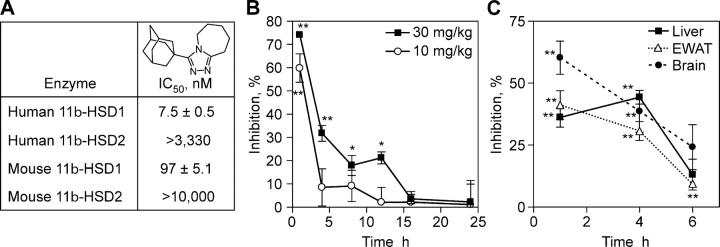
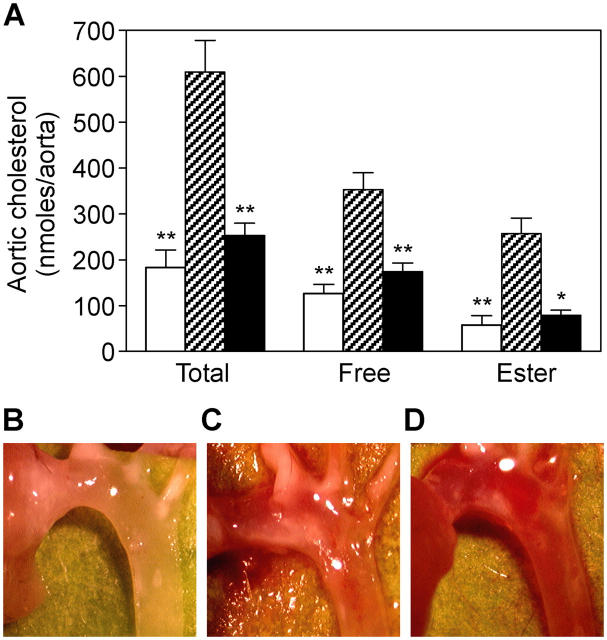
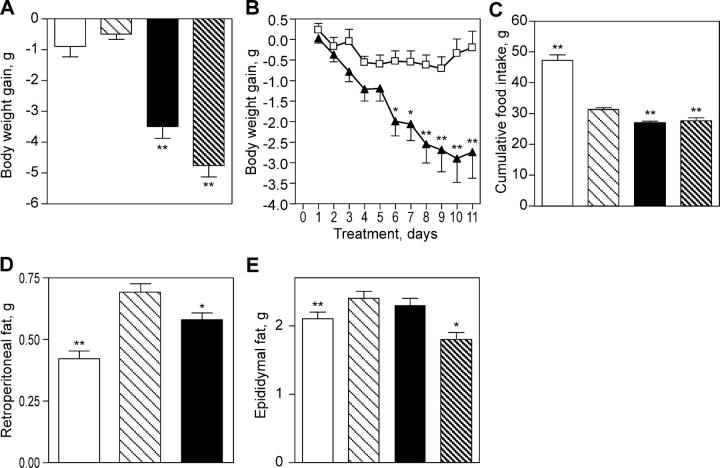
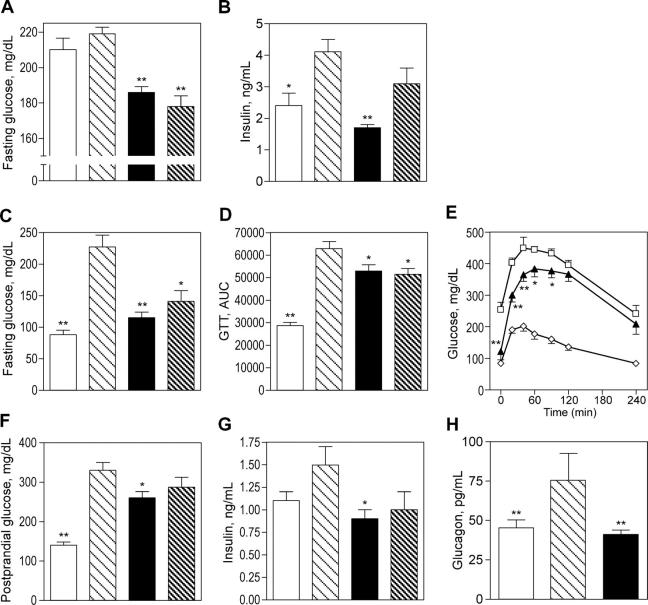
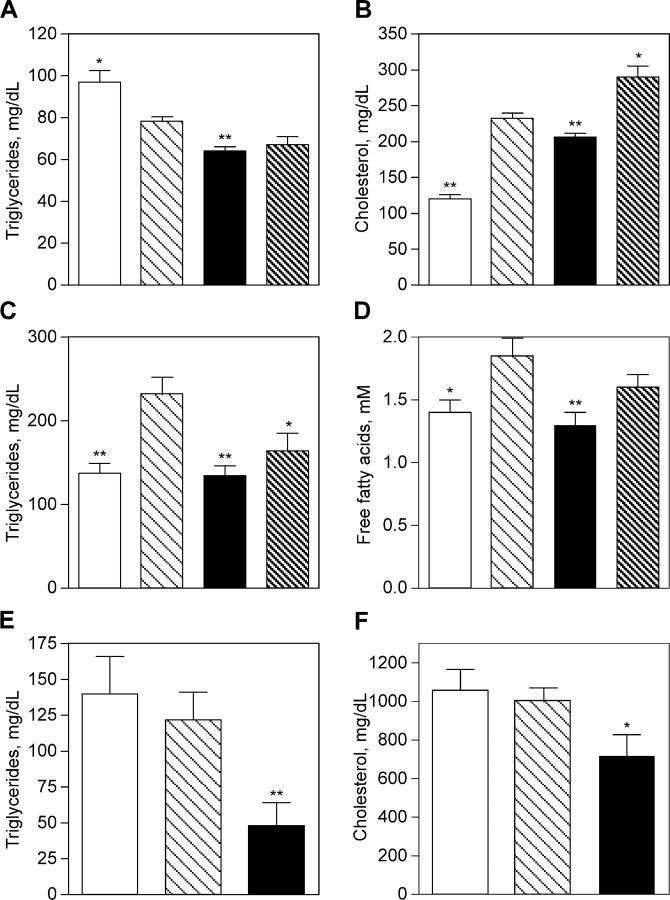
The enzyme 11beta-hydroxysteroid dehydrogenase (HSD) type 1 converts inactive cortisone into active cortisol in cells, thereby raising the effective glucocorticoid (GC) tone above serum levels. We report that pharmacologic inhibition of 11beta-HSD1 has a therapeutic effect in mouse models of metabolic syndrome. Administration of a selective, potent 11beta-HSD1 inhibitor lowered body weight, insulin, fasting glucose, triglycerides, and cholesterol in diet-induced obese mice and lowered fasting glucose, insulin, glucagon, triglycerides, and free fatty acids, as well as improved glucose tolerance, in a mouse model of type 2 diabetes. Most importantly, inhibition of 11beta-HSD1 slowed plaque progression in a murine model of atherosclerosis, the key clinical sequela of metabolic syndrome. Mice with a targeted deletion of apolipoprotein E exhibited 84% less accumulation of aortic total cholesterol, as well as lower serum cholesterol and triglycerides, when treated with an 11beta-HSD1 inhibitor. These data provide the first evidence that pharmacologic inhibition of intracellular GC activation can effectively treat atherosclerosis, the key clinical consequence of metabolic syndrome, in addition to its salutary effect on multiple aspects of the metabolic syndrome itself.
11β-羟基类固醇脱氢酶1型(HSD1)可将细胞内无活性的可的松转化为有活性的皮质醇,从而使有效的糖皮质激素(GC)水平高于血清水平。我们报告称,对11β-HSD1进行药物抑制在代谢综合征小鼠模型中具有治疗作用。给予选择性、强效的11β-HSD1抑制剂可降低饮食诱导的肥胖小鼠的体重、胰岛素、空腹血糖、甘油三酯和胆固醇,并降低2型糖尿病小鼠模型的空腹血糖、胰岛素、胰高血糖素、甘油三酯和游离脂肪酸,同时改善糖耐量。最重要的是,在动脉粥样硬化小鼠模型(代谢综合征的关键临床后遗症)中,抑制11β-HSD1可减缓斑块进展。当用11β-HSD1抑制剂治疗时,载脂蛋白E靶向缺失的小鼠主动脉总胆固醇积累减少84%,血清胆固醇和甘油三酯也降低。这些数据首次证明,对细胞内GC激活进行药物抑制除了对代谢综合征本身的多个方面有有益作用外,还可有效治疗动脉粥样硬化(代谢综合征的关键临床后果)。