
非诺贝特干预与糖尿病事件降低(FIELD)研究:非诺贝特的基线特征和短期效应[国际标准随机对照试验编号64783481]
Fenofibrate Intervention and Event Lowering in Diabetes (FIELD) study: baseline characteristics and short-term effects of fenofibrate [ISRCTN64783481].
作者信息
Scott R, Best J, Forder P, Taskinen M-R, Simes J, Barter P, Keech A
出版信息
Cardiovasc Diabetol. 2005 Aug 22;4:13. doi: 10.1186/1475-2840-4-13.
OBJECTIVE
The Fenofibrate Intervention and Event Lowering in Diabetes (FIELD) Study is examining the effects of long-term fibrate therapy on coronary heart disease (CHD) event rates in patients with diabetes mellitus. This article describes the trial's run-in phase and patients' baseline characteristics.
RESEARCH DESIGN AND METHODS
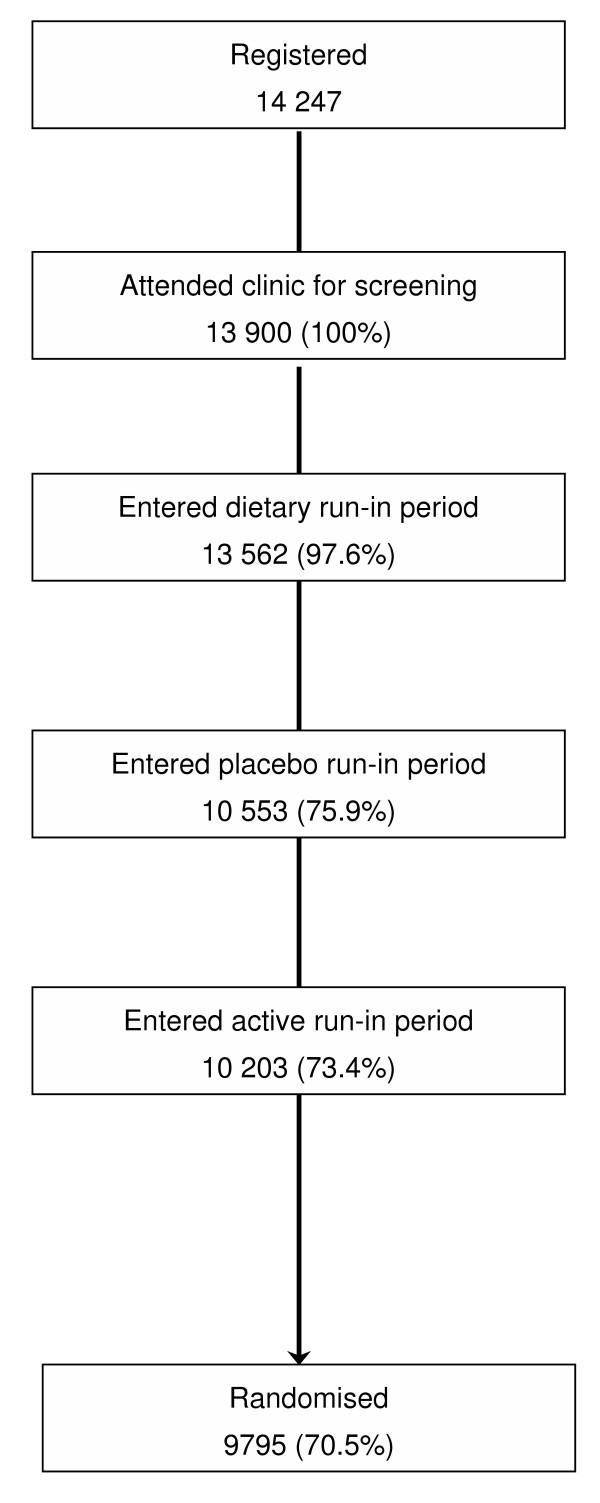
FIELD is a double-blind, placebo-controlled trial in 63 centres in 3 countries evaluating the effects of fenofibrate versus placebo on CHD morbidity and mortality in 9795 patients with type 2 diabetes mellitus. Patients were to have no indication for lipid-lowering therapy on randomization, but could start these or other drugs at any time after randomization. Follow-up in the study was to be for a median duration of not less than 5 years and until 500 major coronary events (fatal coronary heart disease plus nonfatal myocardial infarction) had occurred.
RESULTS
About 2100 patients (22%) had some manifestation of cardiovascular disease (CVD) at baseline and thus high risk status. Less than 25% of patients without CVD had a (UKPDS determined) calculated 5-year CHD risk of <5%, but nearly all had a 5-year stroke risk of <10%. Despite this, half of the cohort were obese (BMI > 30), most were men, two-thirds were aged over 60 years, and substantial proportions had NCEP ATP III features of the metabolic syndrome independent of their diabetes, including low HDL (60%), high blood pressure measurement (41%), high waist measurement (65%), and raised triglycerides (52%). After a 6-week run-in period before randomisation with all participants receiving 200 mg comicronized fenofibrate, there were declines in total and LDL cholesterol (10%) and triglycerides (26%) and an increase in HDL cholesterol (6.5%).
CONCLUSION
The study will show the effect of PPAR-alpha agonist action on CHD and other vascular outcomes in patients with type 2 diabetes including substantial numbers with low to moderate CVD risk but with the various components of the metabolic syndrome. The main results of the study will be reported in late 2005.
目的
非诺贝特干预与糖尿病事件降低(FIELD)研究正在考察长期贝特类药物治疗对糖尿病患者冠心病(CHD)事件发生率的影响。本文描述了该试验的导入期及患者的基线特征。
研究设计与方法
FIELD是一项在3个国家63个中心开展的双盲、安慰剂对照试验,评估非诺贝特与安慰剂对9795例2型糖尿病患者CHD发病率和死亡率的影响。随机分组时患者无降脂治疗指征,但随机分组后可随时开始使用这些或其他药物。该研究的随访中位持续时间不少于5年,直至发生500例主要冠脉事件(致命性冠心病加非致命性心肌梗死)。
结果
约2100例患者(22%)在基线时存在某种心血管疾病(CVD)表现,因此处于高危状态。无CVD的患者中,不到25%经计算(根据英国前瞻性糖尿病研究[UKPDS]确定)5年CHD风险<5%,但几乎所有患者5年卒中风险<10%。尽管如此,该队列中有一半为肥胖患者(体重指数[BMI]>30),大多数为男性,三分之二年龄超过60岁,且很大一部分患者具有美国国家胆固醇教育计划成人治疗组第三次报告(NCEP ATP III)定义的代谢综合征特征,与他们的糖尿病无关,包括低高密度脂蛋白(HDL)(60%)、高血压(41%)、高腰围(65%)和甘油三酯升高(52%)。在随机分组前为期6周的导入期内,所有参与者均接受200mg微粒化非诺贝特,总胆固醇和低密度脂蛋白胆固醇(LDL-C)下降了10%,甘油三酯下降了26%,HDL-C升高了6.5%。
结论
该研究将显示过氧化物酶体增殖物激活受体α(PPAR-α)激动剂作用对2型糖尿病患者CHD及其他血管转归的影响,这些患者包括大量具有低至中度CVD风险但伴有代谢综合征各组分的患者。该研究的主要结果将于2005年末报告。
 Zotero 插件