Skerker Jeffrey M, Prasol Melanie S, Perchuk Barrett S, Biondi Emanuele G, Laub Michael T
Bauer Center for Genomics Research, Harvard University, Cambridge, Massachusetts, USA.
PLoS Biol. 2005 Oct;3(10):e334. doi: 10.1371/journal.pbio.0030334. Epub 2005 Sep 27.
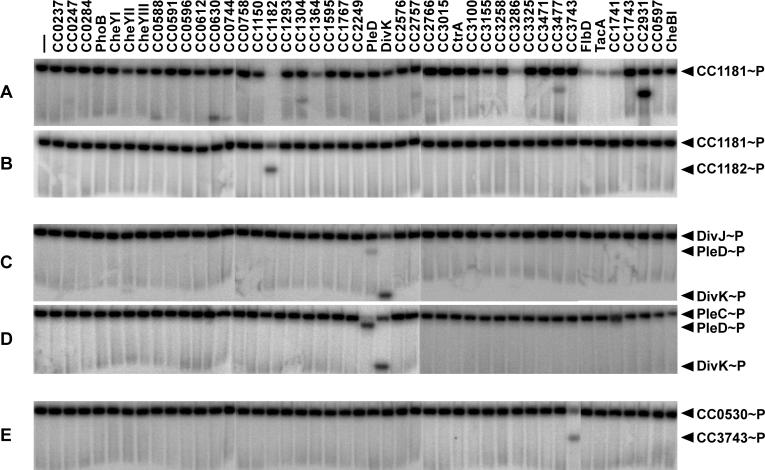
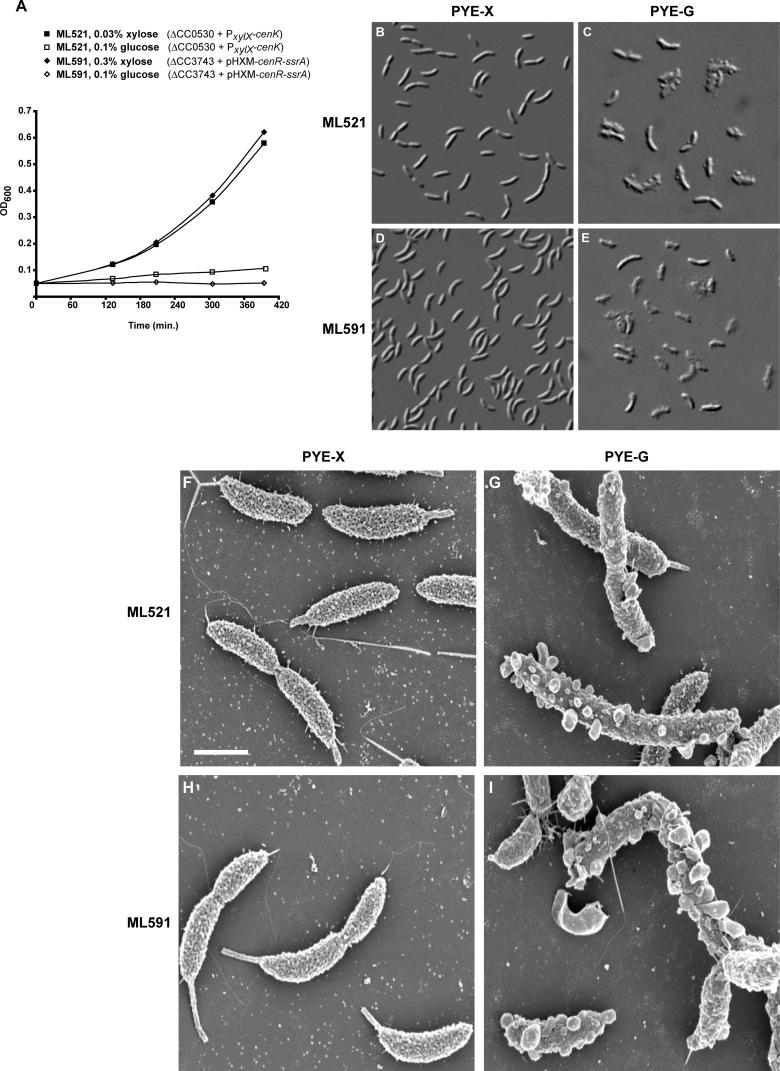
Two-component signal transduction systems, comprised of histidine kinases and their response regulator substrates, are the predominant means by which bacteria sense and respond to extracellular signals. These systems allow cells to adapt to prevailing conditions by modifying cellular physiology, including initiating programs of gene expression, catalyzing reactions, or modifying protein-protein interactions. These signaling pathways have also been demonstrated to play a role in coordinating bacterial cell cycle progression and development. Here we report a system-level investigation of two-component pathways in the model organism Caulobacter crescentus. First, by a comprehensive deletion analysis we show that at least 39 of the 106 two-component genes are required for cell cycle progression, growth, or morphogenesis. These include nine genes essential for growth or viability of the organism. We then use a systematic biochemical approach, called phosphotransfer profiling, to map the connectivity of histidine kinases and response regulators. Combining these genetic and biochemical approaches, we identify a new, highly conserved essential signaling pathway from the histidine kinase CenK to the response regulator CenR, which plays a critical role in controlling cell envelope biogenesis and structure. Depletion of either cenK or cenR leads to an unusual, severe blebbing of cell envelope material, whereas constitutive activation of the pathway compromises cell envelope integrity, resulting in cell lysis and death. We propose that the CenK-CenR pathway may be a suitable target for new antibiotic development, given previous successes in targeting the bacterial cell wall. Finally, the ability of our in vitro phosphotransfer profiling method to identify signaling pathways that operate in vivo takes advantage of an observation that histidine kinases are endowed with a global kinetic preference for their cognate response regulators. We propose that this system-wide selectivity insulates two-component pathways from one another, preventing unwanted cross-talk.
由组氨酸激酶及其应答调节子底物组成的双组分信号转导系统,是细菌感知和响应细胞外信号的主要方式。这些系统使细胞能够通过改变细胞生理过程来适应当前环境,包括启动基因表达程序、催化反应或改变蛋白质 - 蛋白质相互作用。这些信号通路也已被证明在协调细菌细胞周期进程和发育中发挥作用。在此,我们报告了对模式生物新月柄杆菌中双组分信号通路的系统水平研究。首先,通过全面的缺失分析,我们表明106个双组分基因中至少有39个是细胞周期进程、生长或形态发生所必需的。其中包括9个对该生物体生长或存活至关重要的基因。然后,我们使用一种称为磷酸转移谱分析的系统生化方法,来绘制组氨酸激酶和应答调节子的连接图谱。结合这些遗传和生化方法,我们鉴定出一条从组氨酸激酶CenK到应答调节子CenR的新的、高度保守的必需信号通路,该通路在控制细胞膜生物合成和结构中起关键作用。缺失cenK或cenR会导致细胞膜物质出现异常严重的起泡现象,而该通路的组成型激活会损害细胞膜完整性,导致细胞裂解和死亡。鉴于之前在靶向细菌细胞壁方面取得的成功,我们提出CenK - CenR通路可能是新型抗生素开发的合适靶点。最后,我们的体外磷酸转移谱分析方法能够识别在体内起作用的信号通路,这利用了一个观察结果,即组氨酸激酶对其同源应答调节子具有全局动力学偏好。我们提出这种全系统的选择性使双组分信号通路相互隔离,防止不必要的串扰。