Bhattacharya Bhaskar, Cai Jingli, Luo Youngquan, Miura Takumi, Mejido Josef, Brimble Sandii N, Zeng Xianmin, Schulz Thomas C, Rao Mahendra S, Puri Raj K
Division of Cellular and Gene Therapies, Center for Biologics Evaluation and Research, Food and Drug Administration, Bethesda, MD 20892, USA.
BMC Dev Biol. 2005 Oct 5;5:22. doi: 10.1186/1471-213X-5-22.
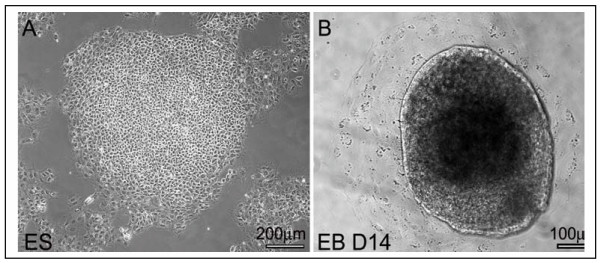
The identification of molecular pathways of differentiation of embryonic stem cells (hESC) is critical for the development of stem cell based medical therapies. In order to identify biomarkers and potential regulators of the process of differentiation, a high quality microarray containing 16,659 seventy base pair oligonucleotides was used to compare gene expression profiles of undifferentiated hESC lines and differentiating embryoid bodies.
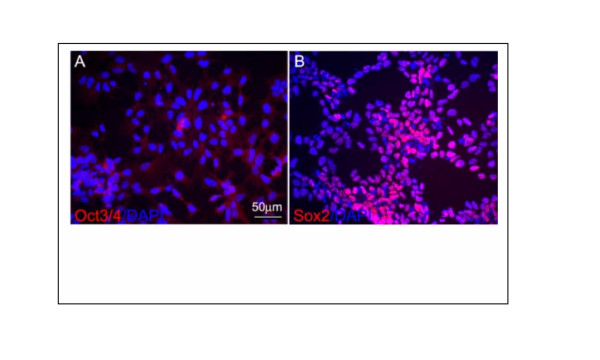
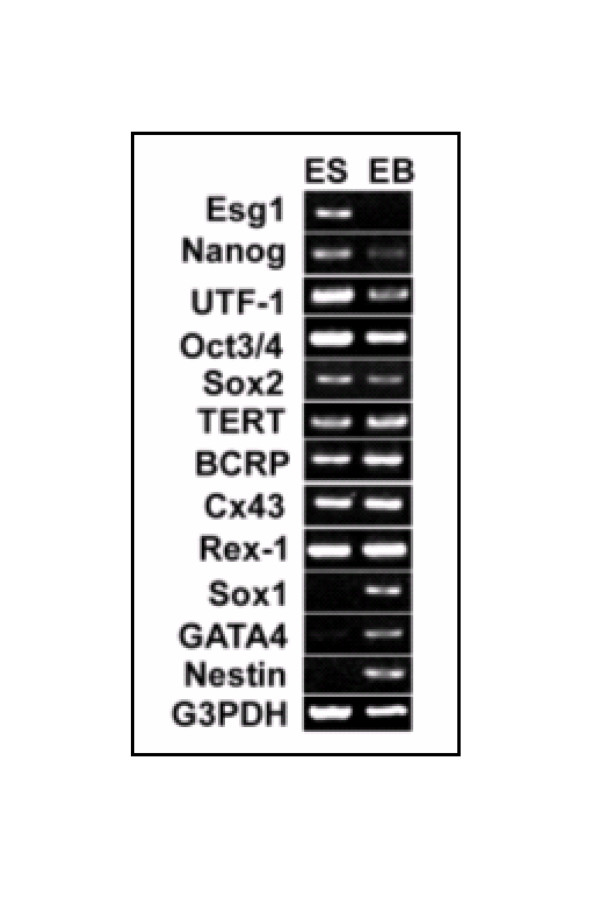
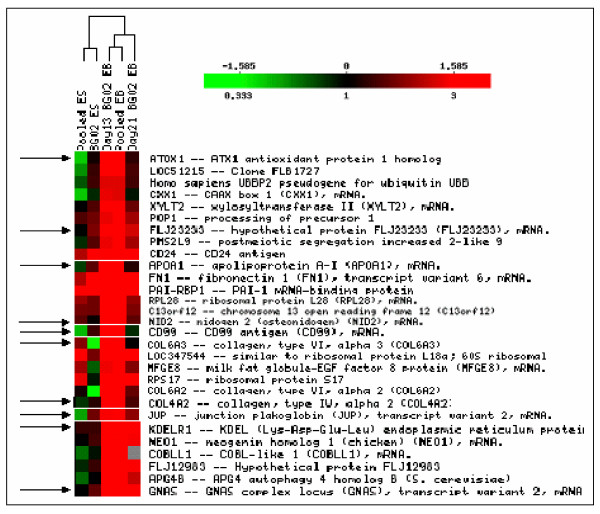
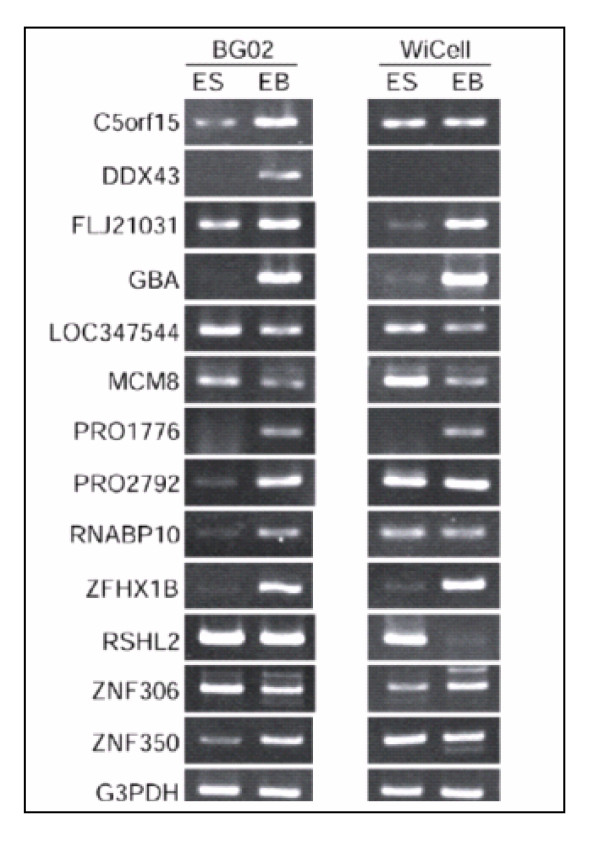
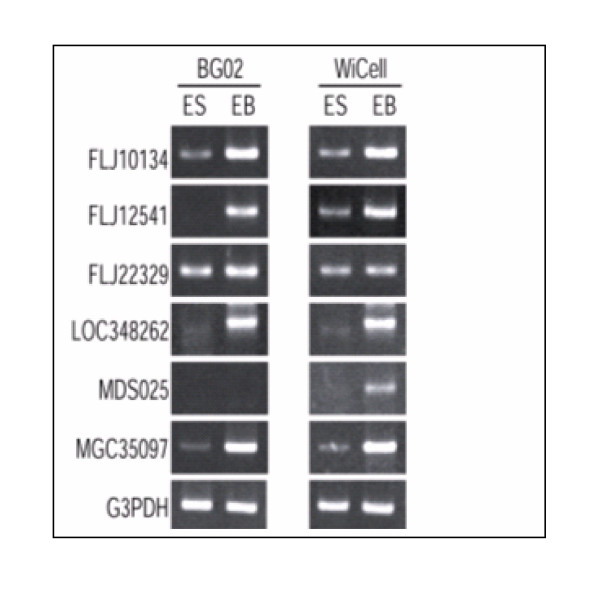
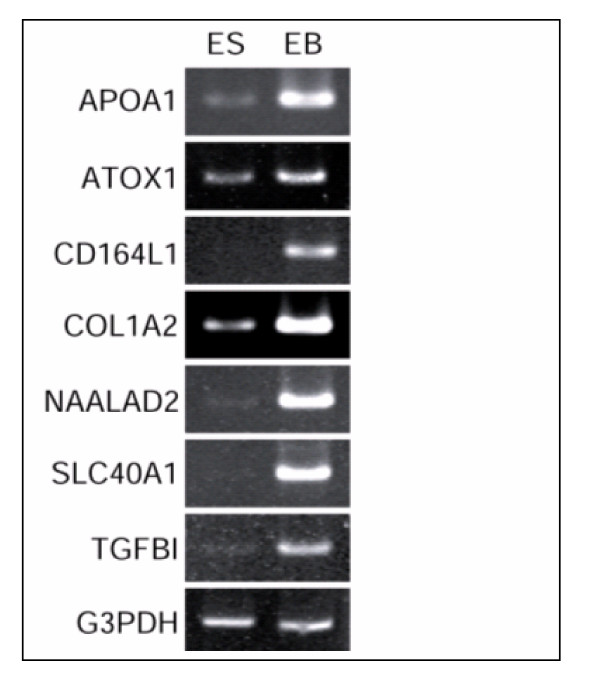
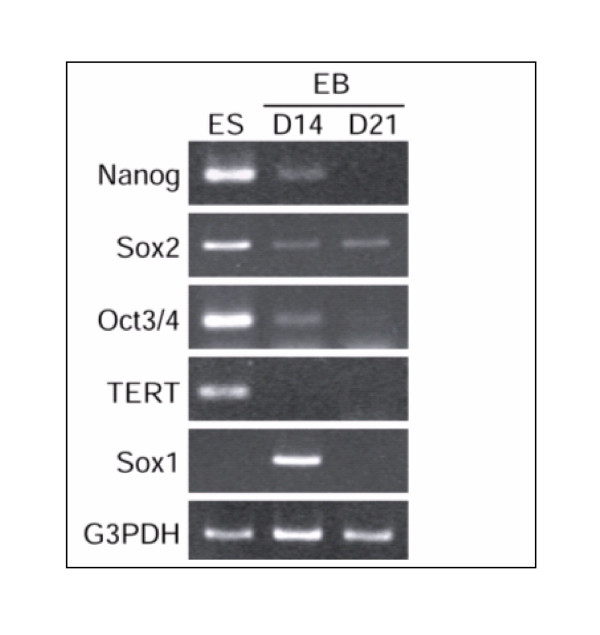
Previously identified "stemness" genes in undifferentiated hESC lines showed down modulation in differentiated cells while expression of several genes was induced as cells differentiated. In addition, a subset of 194 genes showed overexpression of greater than > or = 3 folds in human embryoid bodies (hEB). These included 37 novel and 157 known genes. Gene expression was validated by a variety of techniques including another large scale array, reverse transcription polymerase chain reaction, focused cDNA microarrays, massively parallel signature sequencing (MPSS) analysis and immunocytochemisty. Several novel hEB specific expressed sequence tags (ESTs) were mapped to the human genome database and their expression profile characterized. A hierarchical clustering analysis clearly depicted a distinct difference in gene expression profile among undifferentiated and differentiated hESC and confirmed that microarray analysis could readily distinguish them.
These results present a detailed characterization of a unique set of genes, which can be used to assess the hESC differentiation.
胚胎干细胞(hESC)分化分子途径的鉴定对于基于干细胞的医学治疗的发展至关重要。为了鉴定分化过程的生物标志物和潜在调节因子,使用了包含16,659个70碱基对寡核苷酸的高质量微阵列来比较未分化hESC系和分化的胚状体的基因表达谱。
在未分化的hESC系中先前鉴定出的“干性”基因在分化细胞中显示下调,而随着细胞分化,几个基因的表达被诱导。此外,194个基因的一个子集在人类胚状体(hEB)中显示出大于或等于3倍的过表达。这些包括37个新基因和157个已知基因。通过多种技术验证了基因表达,包括另一种大规模阵列、逆转录聚合酶链反应、聚焦cDNA微阵列、大规模平行签名测序(MPSS)分析和免疫细胞化学。几个新的hEB特异性表达序列标签(EST)被定位到人类基因组数据库并对其表达谱进行了表征。层次聚类分析清楚地描绘了未分化和分化的hESC之间基因表达谱的明显差异,并证实微阵列分析可以很容易地区分它们。
这些结果详细描述了一组独特的基因,可用于评估hESC的分化。