Karim Mohammad A, Wang Xiaoqin, Hale Terri C, Elbein Steven C
Endocrinology Section, Medical Service, Central Arkansas Veterans Healthcare System, College of Medicine, University of Arkansas for Medical Sciences, Little Rock, Arkansas 72205, USA.
BMC Med Genet. 2005 Oct 17;6:37. doi: 10.1186/1471-2350-6-37.
Defective insulin secretion is a key defect in the pathogenesis of type 2 diabetes (T2DM). The beta-cell specific transcription factor, insulin promoter factor 1 gene (IPF1), is essential to pancreatic development and the maintenance of beta-cell mass. We hypothesized that regulatory or coding variants in IPF1 contribute to defective insulin secretion and thus T2DM.
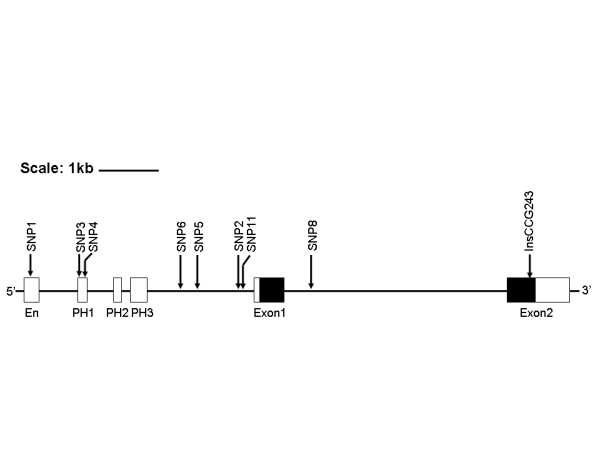
We screened 71 Caucasian and 69 African American individuals for genetic variants in the promoter region, three highly conserved upstream regulatory sequences (PH1, PH2 and PH3), the human beta-cell specific enhancer, and the two exons with adjacent introns. We tested for an association of each variant with T2DM Caucasians (192 cases and 192 controls) and African Americans (341 cases and 186 controls).
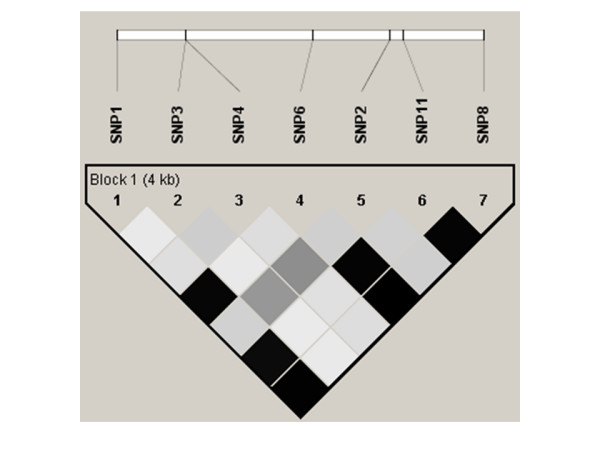
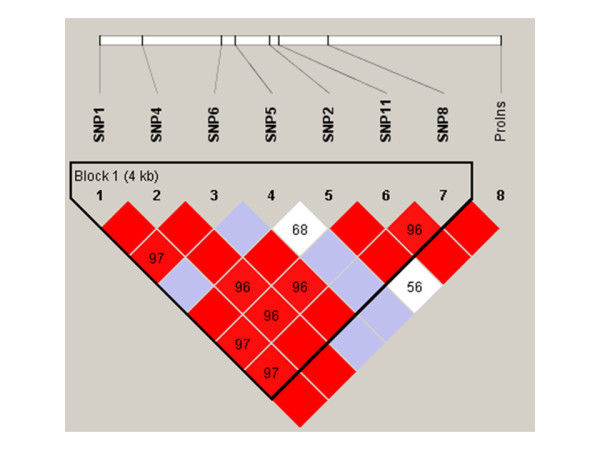
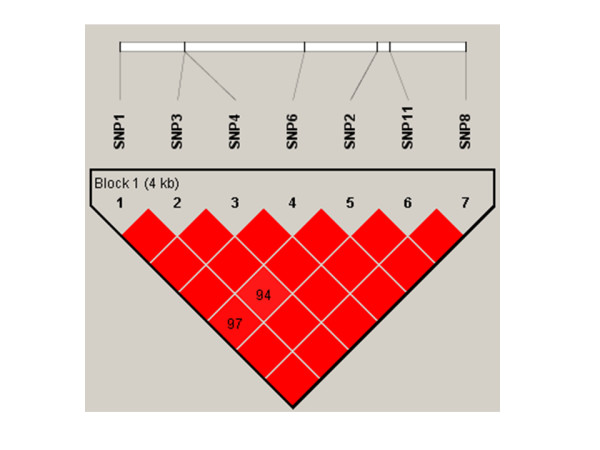
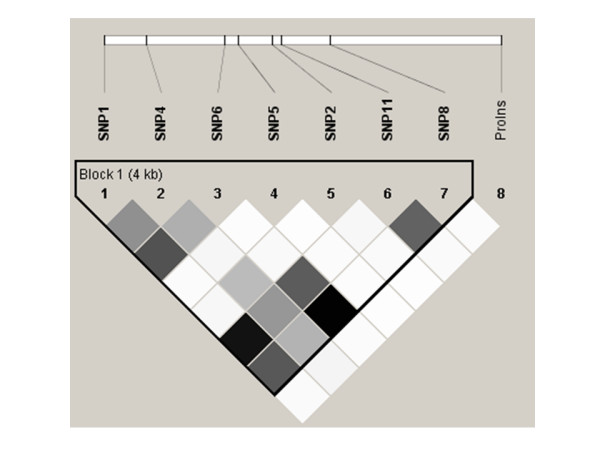
We identified 8 variants in the two populations, including a 3 bp insertion in exon 2 (InsCCG243) in African Americans that resulted in an in-frame proline insertion in the transactivation domain. No variant was associated with T2DM in Caucasians, but polymorphisms at -3766 in the human beta-cell enhancer, at -2877 bp in the PH1 domain, and at -108 bp in the promoter region were associated with T2DM in African American subjects (p < 0.01), both individually and as haplotypes (p = 0.01 correcting by permutation test). No SNP altered a binding site for the expected beta-cell transcription factors. The rare alleles of InsCCG243 in exon 2 showed a trend to over-representation among African American diabetic subjects (p < 0.1), but this trend was not significant on permutation test.
The common alleles of regulatory variants in the 5' enhancer and promoter regions of the IPF1 gene increase susceptibility to type 2 diabetes among African American individuals, likely as a result of gene-gene or gene-environment interactions. In contrast, IPF1 is not a cause of type 2 diabetes in Caucasians. A previously described InsCCG243 variant may contribute to diabetes susceptibility in African American individuals, but is of low penetrance.
胰岛素分泌缺陷是2型糖尿病(T2DM)发病机制中的关键缺陷。β细胞特异性转录因子胰岛素启动子因子1基因(IPF1)对于胰腺发育和β细胞数量的维持至关重要。我们推测IPF1中的调控或编码变异导致胰岛素分泌缺陷,进而引发T2DM。
我们对71名白种人和69名非裔美国人进行了筛查,检测其启动子区域、三个高度保守的上游调控序列(PH1、PH2和PH3)、人β细胞特异性增强子以及两个包含相邻内含子的外显子中的基因变异。我们测试了每个变异与T2DM白种人(192例病例和192例对照)和非裔美国人(341例病例和186例对照)之间的关联。
我们在这两个人群中鉴定出8个变异,包括非裔美国人外显子2中的一个3 bp插入(InsCCG243),该插入导致反式激活结构域中框内脯氨酸插入。在白种人中没有变异与T2DM相关,但人β细胞增强子中-3766处、PH1结构域中-2877 bp处以及启动子区域中-108 bp处的多态性与非裔美国受试者的T2DM相关(p < 0.01),无论是单个还是作为单倍型(通过置换检验校正后p = 0.01)。没有单核苷酸多态性改变预期的β细胞转录因子的结合位点。外显子2中InsCCG243的罕见等位基因在非裔美国糖尿病受试者中显示出过度表达的趋势(p < 0.1),但在置换检验中这种趋势并不显著。
IPF1基因5'增强子和启动子区域调控变异的常见等位基因增加了非裔美国人患2型糖尿病的易感性,这可能是基因-基因或基因-环境相互作用的结果。相比之下,IPF1不是白种人2型糖尿病的病因。先前描述的InsCCG243变异可能导致非裔美国人的糖尿病易感性,但外显率较低。