Mariathasan Sanjeev, Weiss David S, Dixit Vishva M, Monack Denise M
Molecular Oncology Department, Genentech Inc., South San Francisco, CA 94080, USA.
J Exp Med. 2005 Oct 17;202(8):1043-9. doi: 10.1084/jem.20050977.
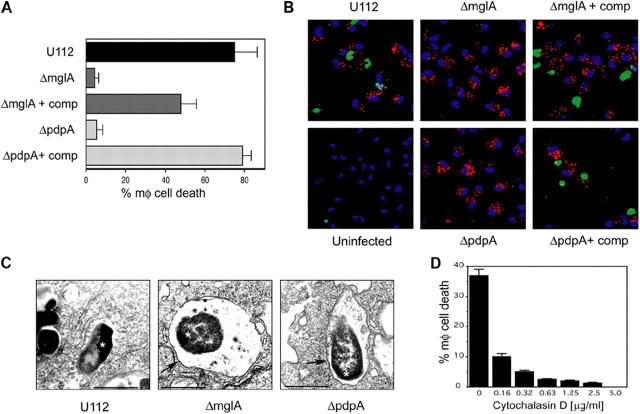
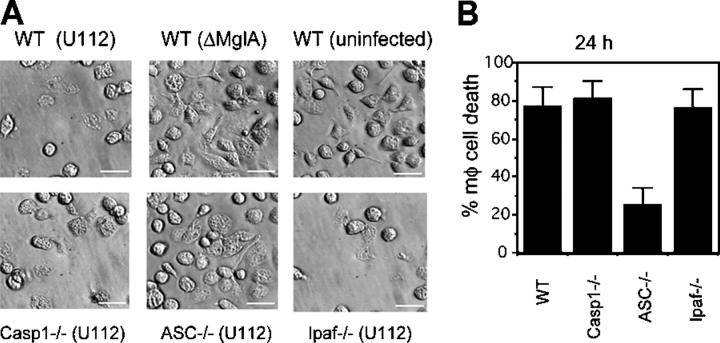
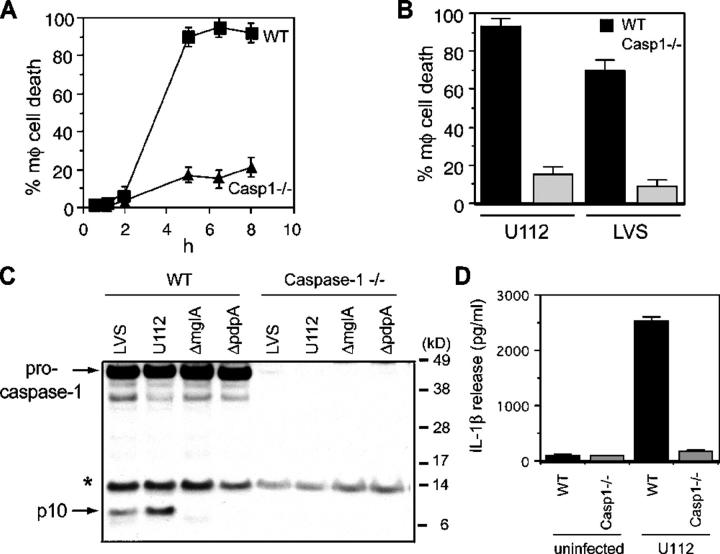
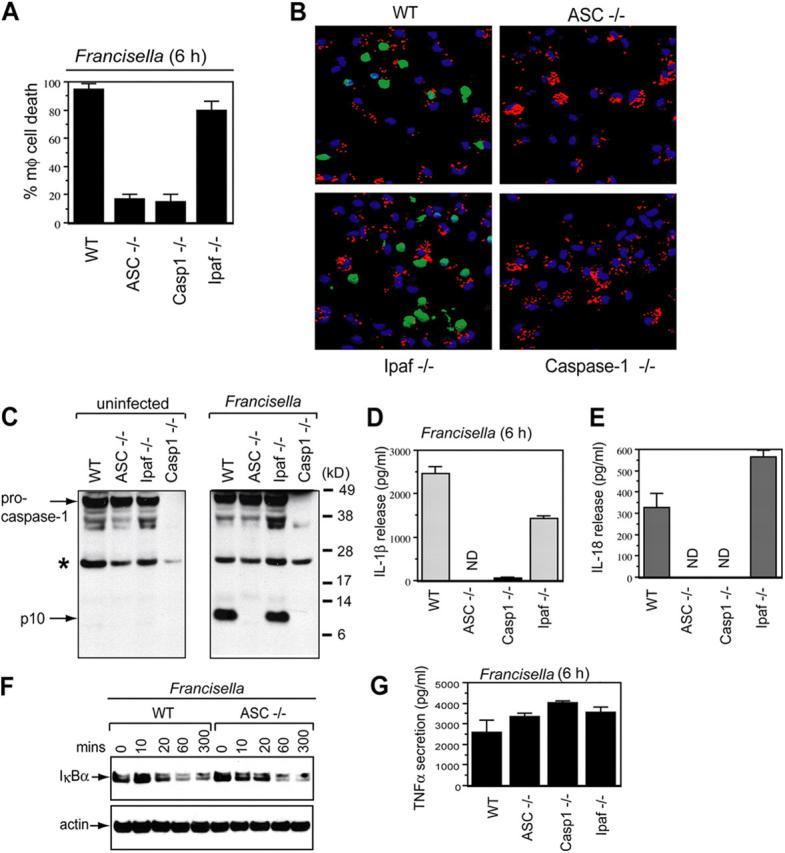
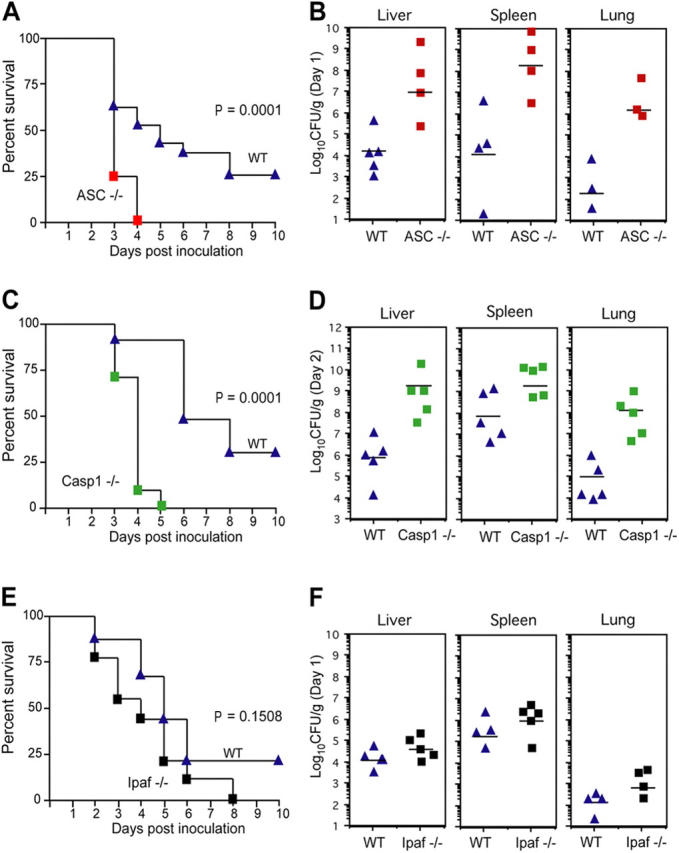
Francisella tularensis is a highly infectious gram-negative coccobacillus that causes the zoonosis tularemia. This bacterial pathogen causes a plague-like disease in humans after exposure to as few as 10 cells. Many of the mechanisms by which the innate immune system fights Francisella are unknown. Here we show that wild-type Francisella, which reach the cytosol, but not Francisella mutants that remain localized to the vacuole, induced a host defense response in macrophages, which is dependent on caspase-1 and the death-fold containing adaptor protein ASC. Caspase-1 and ASC signaling resulted in host cell death and the release of the proinflammatory cytokines interleukin (IL)-1beta and IL-18. F. tularensis-infected caspase-1- and ASC-deficient mice showed markedly increased bacterial burdens and mortality as compared with wild-type mice, demonstrating a key role for caspase-1 and ASC in innate defense against infection by this pathogen.
土拉弗朗西斯菌是一种极具传染性的革兰氏阴性球杆菌,可引发人畜共患病土拉菌病。这种细菌病原体在人类接触少至10个细胞后就能引发类似鼠疫的疾病。先天免疫系统对抗土拉弗朗西斯菌的许多机制尚不清楚。在此我们表明,能够到达胞质溶胶的野生型土拉弗朗西斯菌,而非仍局限于液泡中的土拉弗朗西斯菌突变体,可在巨噬细胞中诱导宿主防御反应,该反应依赖于半胱天冬酶-1和含死亡结构域的接头蛋白ASC。半胱天冬酶-1和ASC信号传导导致宿主细胞死亡,并释放促炎细胞因子白细胞介素(IL)-1β和IL-18。与野生型小鼠相比,感染土拉弗朗西斯菌的半胱天冬酶-1和ASC缺陷小鼠表现出细菌载量和死亡率显著增加,这表明半胱天冬酶-1和ASC在针对该病原体感染的先天防御中起关键作用。