Lau Christina M, Broughton Courtney, Tabor Abigail S, Akira Shizuo, Flavell Richard A, Mamula Mark J, Christensen Sean R, Shlomchik Mark J, Viglianti Gregory A, Rifkin Ian R, Marshak-Rothstein Ann
Department of Microbiology, Boston University School of Medicine, MA 02118, USA.
J Exp Med. 2005 Nov 7;202(9):1171-7. doi: 10.1084/jem.20050630. Epub 2005 Oct 31.
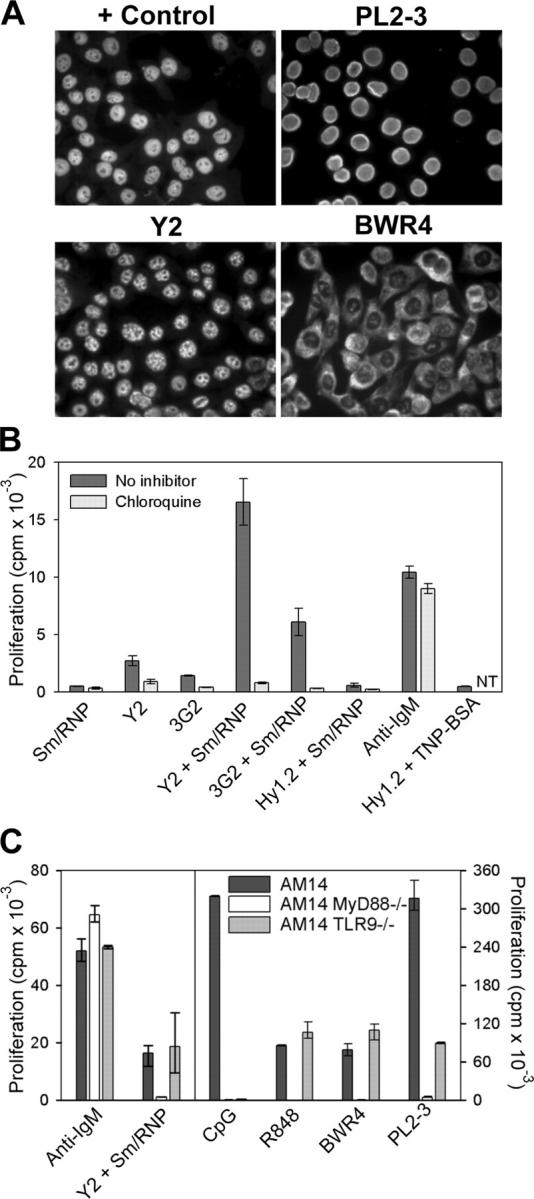
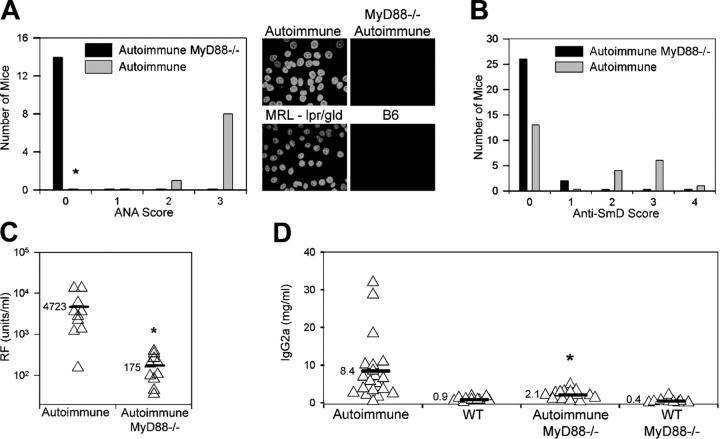
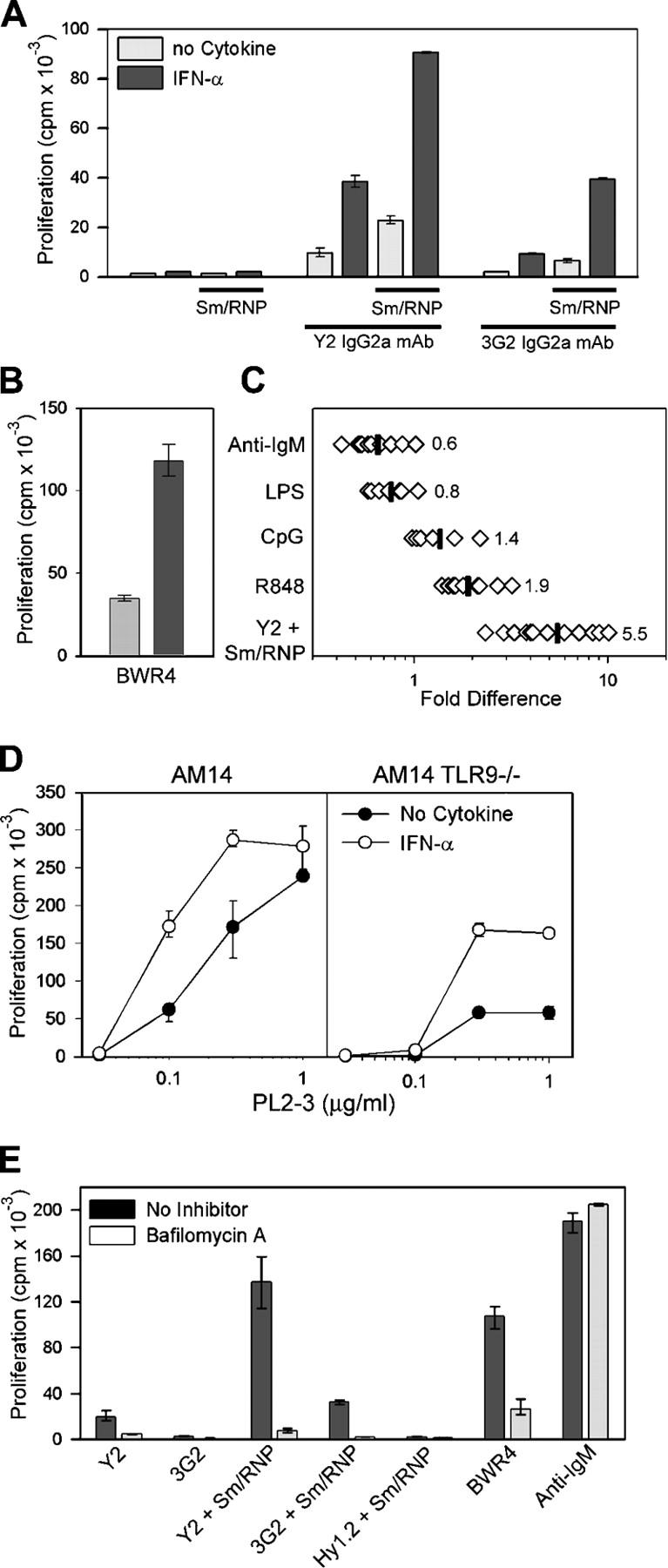
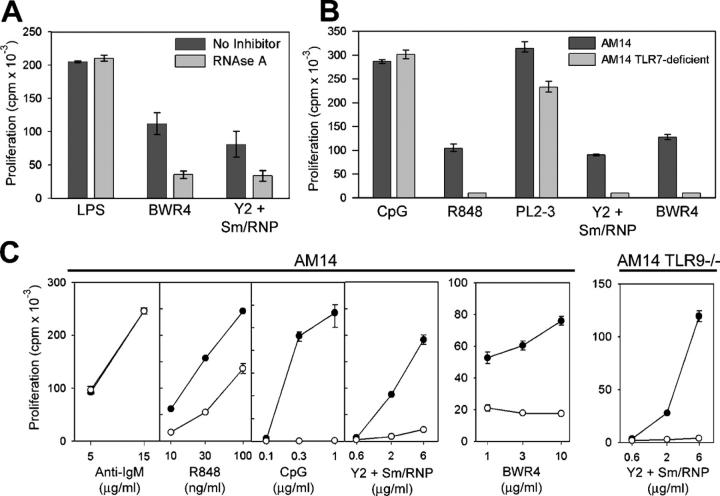
Previous studies (Leadbetter, E.A., I.R. Rifkin, A.H. Hohlbaum, B. Beaudette, M.J. Shlomchik, and A. Marshak-Rothstein. 2002. Nature. 416:603-607; Viglianti, G.A., C.M. Lau, T.M. Hanley, B.A. Miko, M.J. Shlomchik, and A. Marshak-Rothstein. 2003. Immunity. 19:837-847) established the unique capacity of DNA and DNA-associated autoantigens to activate autoreactive B cells via sequential engagement of the B cell antigen receptor (BCR) and Toll-like receptor (TLR) 9. We demonstrate that this two-receptor paradigm can be extended to the BCR/TLR7 activation of autoreactive B cells by RNA and RNA-associated autoantigens. These data implicate TLR recognition of endogenous ligands in the response to both DNA- and RNA-associated autoantigens. Importantly, the response to RNA-associated autoantigens was markedly enhanced by IFN-alpha, a cytokine strongly linked to disease progression in patients with systemic lupus erythematosus (SLE). As further evidence that TLRs play a key role in autoantibody responses in SLE, we found that autoimmune-prone mice, lacking the TLR adaptor protein MyD88, had markedly reduced chromatin, Sm, and rheumatoid factor autoantibody titers.
先前的研究(Leadbetter, E.A., I.R. Rifkin, A.H. Hohlbaum, B. Beaudette, M.J. Shlomchik, and A. Marshak-Rothstein. 2002. 《自然》. 416:603 - 607;Viglianti, G.A., C.M. Lau, T.M. Hanley, B.A. Miko, M.J. Shlomchik, and A. Marshak-Rothstein. 2003. 《免疫》. 19:837 - 847)证实,DNA及与DNA相关的自身抗原具有独特能力,可通过B细胞抗原受体(BCR)和Toll样受体(TLR)9的顺序结合来激活自身反应性B细胞。我们证明,这种双受体模式可扩展至RNA及与RNA相关的自身抗原对自身反应性B细胞的BCR/TLR7激活。这些数据表明,在对与DNA和RNA相关的自身抗原的反应中,内源性配体可被TLR识别。重要的是,α干扰素可显著增强对与RNA相关的自身抗原的反应,α干扰素是一种与系统性红斑狼疮(SLE)患者疾病进展密切相关的细胞因子。作为TLR在SLE自身抗体反应中起关键作用的进一步证据,我们发现缺乏TLR衔接蛋白MyD88的自身免疫易感小鼠,其染色质、Sm和类风湿因子自身抗体滴度显著降低。