De Klerck Bert, Geboes Lies, Hatse Sigrid, Kelchtermans Hilde, Meyvis Yves, Vermeire Kurt, Bridger Gary, Billiau Alfons, Schols Dominique, Matthys Patrick
Laboratory of Immunobiology, Rega Institute, Katholieke Universiteit Leuven, Leuven, Belgium.
Arthritis Res Ther. 2005;7(6):R1208-20. doi: 10.1186/ar1806. Epub 2005 Aug 25.
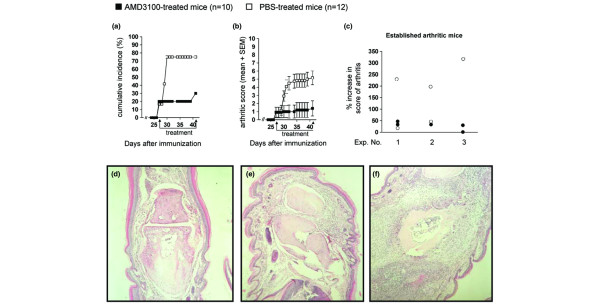
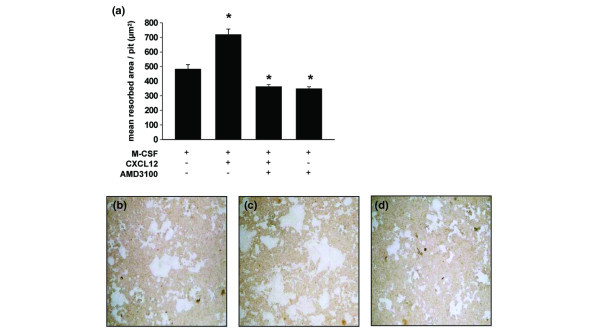
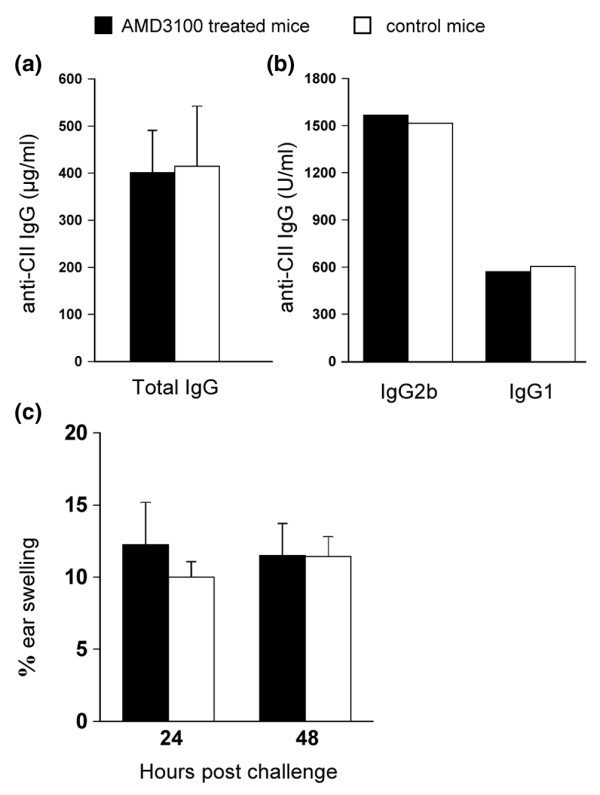
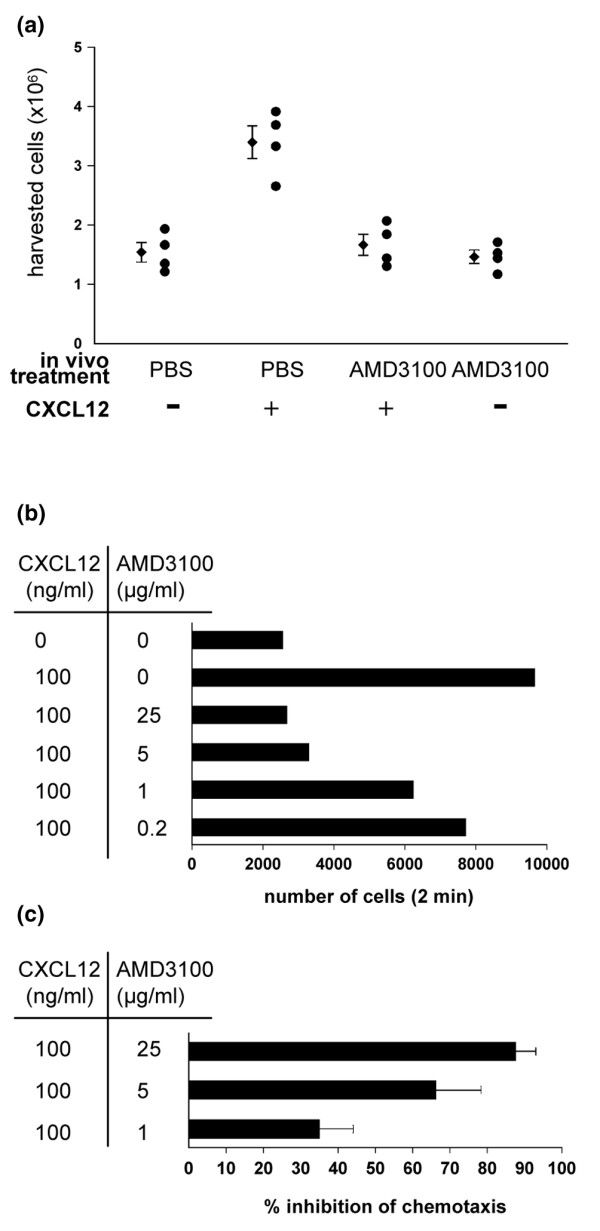
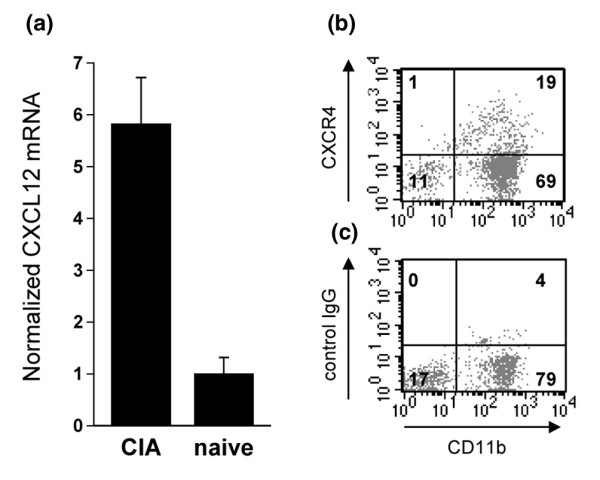
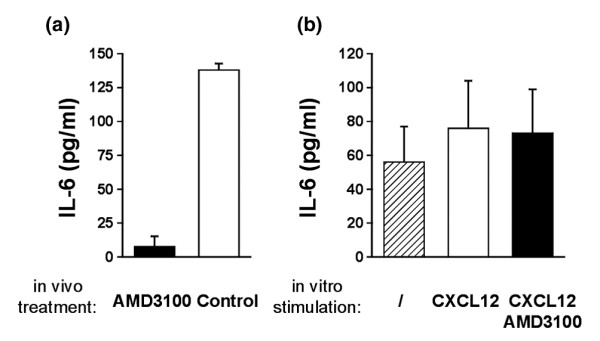
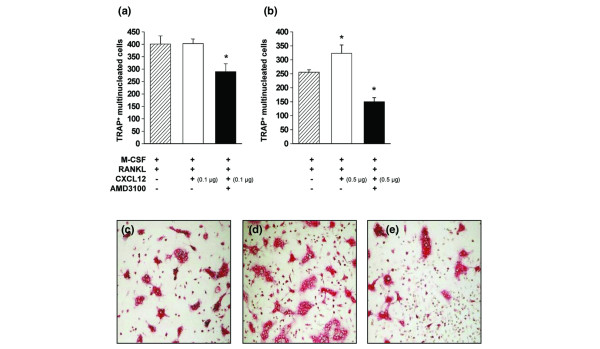
CXCL12 (stromal cell-derived factor 1) is a unique biological ligand for the chemokine receptor CXCR4. We previously reported that treatment with a specific CXCR4 antagonist, AMD3100, exerts a beneficial effect on the development of collagen-induced arthritis (CIA) in the highly susceptible IFN-gamma receptor-deficient (IFN-gammaR KO) mouse. We concluded that CXCL12 plays a central role in the pathogenesis of CIA in IFN-gammaR KO mice by promoting delayed type hypersensitivity against the auto-antigen and by interfering with chemotaxis of CXCR4+ cells to the inflamed joints. Here, we investigated whether AMD3100 can likewise inhibit CIA in wild-type mice and analysed the underlying mechanism. Parenteral treatment with the drug at the time of onset of arthritis reduced disease incidence and modestly inhibited severity in affected mice. This beneficial effect was associated with reduced serum concentrations of IL-6. AMD3100 did not affect anti-collagen type II antibodies and, in contrast with its action in IFN-gammaR KO mice, did not inhibit the delayed type hypersensitivity response against collagen type II, suggesting that the beneficial effect cannot be explained by inhibition of humoral or cellular autoimmune responses. AMD3100 inhibited the in vitro chemotactic effect of CXCL12 on splenocytes, as well as in vivo leukocyte infiltration in CXCL12-containing subcutaneous air pouches. We also demonstrate that, in addition to its effect on cell infiltration, CXCL12 potentiates receptor activator of NF-kappaB ligand-induced osteoclast differentiation from splenocytes and increases the calcium phosphate-resorbing capacity of these osteoclasts, both processes being potently counteracted by AMD3100. Our observations indicate that CXCL12 acts as a pro-inflammatory factor in the pathogenesis of autoimmune arthritis by attracting inflammatory cells to joints and by stimulating the differentiation and activation of osteoclasts.
CXCL12(基质细胞衍生因子1)是趋化因子受体CXCR4的一种独特生物配体。我们之前报道,用特异性CXCR4拮抗剂AMD3100进行治疗,对高度易感的γ干扰素受体缺陷(IFN-γR KO)小鼠的胶原诱导性关节炎(CIA)发展具有有益作用。我们得出结论,CXCL12通过促进针对自身抗原的迟发型超敏反应以及干扰CXCR4+细胞向炎症关节的趋化作用,在IFN-γR KO小鼠的CIA发病机制中起核心作用。在此,我们研究了AMD3100是否同样能抑制野生型小鼠的CIA,并分析了其潜在机制。在关节炎发病时经肠胃外给予该药物,可降低疾病发生率,并适度抑制患病小鼠的严重程度。这种有益作用与血清IL-6浓度降低有关。AMD3100不影响抗II型胶原抗体,并且与其在IFN-γR KO小鼠中的作用相反,不抑制针对II型胶原的迟发型超敏反应,这表明这种有益作用无法通过抑制体液或细胞自身免疫反应来解释。AMD3100抑制了CXCL12对脾细胞的体外趋化作用,以及含CXCL12的皮下气袋中的体内白细胞浸润。我们还证明,除了对细胞浸润的作用外,CXCL12增强了核因子κB受体激活剂配体诱导的脾细胞破骨细胞分化,并增加了这些破骨细胞的磷酸钙吸收能力,这两个过程均被AMD3100有效抵消。我们的观察结果表明,CXCL12在自身免疫性关节炎发病机制中作为一种促炎因子,通过将炎症细胞吸引至关节以及刺激破骨细胞的分化和激活发挥作用。