Department of Medical Science, Chungnam National University, Daejeon, Korea.
Laboratory of Endocrinology and Immune System, Chungnam National University School of Medicine, Daejeon, Korea.
J Cachexia Sarcopenia Muscle. 2022 Jun;13(3):1785-1799. doi: 10.1002/jcsm.12975. Epub 2022 Mar 20.
Mitochondrial oxidative phosphorylation (OxPhos) is a critical regulator of skeletal muscle mass and function. Although muscle atrophy due to mitochondrial dysfunction is closely associated with bone loss, the biological characteristics of the relationship between muscle and bone remain obscure. We showed that muscle atrophy caused by skeletal muscle-specific CR6-interacting factor 1 knockout (MKO) modulates the bone marrow (BM) inflammatory response, leading to low bone mass.
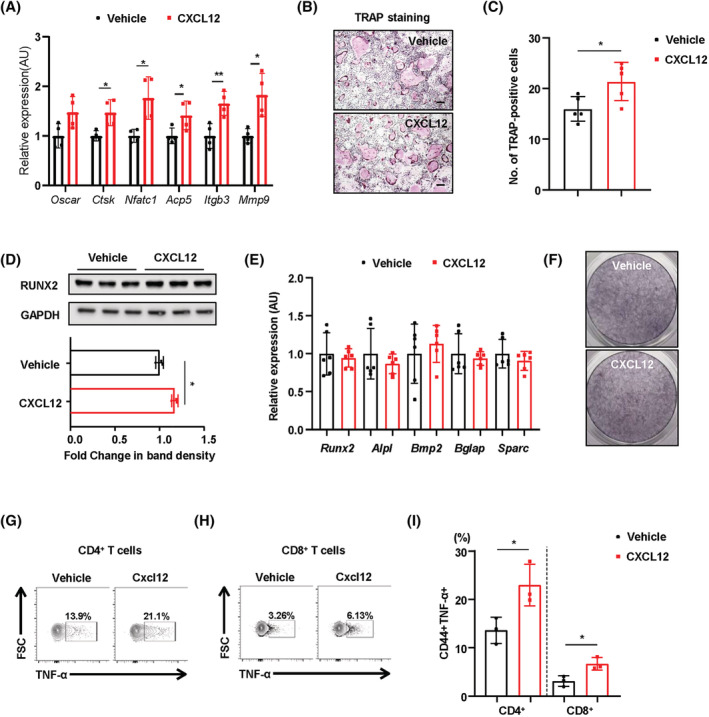
MKO mice with lower muscle OxPhos were fed a normal chow or high-fat diet and then evaluated for muscle mass and function, and bone mineral density. Immunophenotyping of BM immune cells was also performed. BM transcriptomic analysis was used to identify key factors regulating bone mass in MKO mice. To determine the effects of BM-derived CXCL12 (C-X-C motif chemokine ligand 12) on regulation of bone homeostasis, a variety of BM niche-resident cells were treated with recombinant CXCL12. Vastus lateralis muscle and BM immune cell samples from 14 patients with hip fracture were investigated to examine the association between muscle function and BM inflammation.
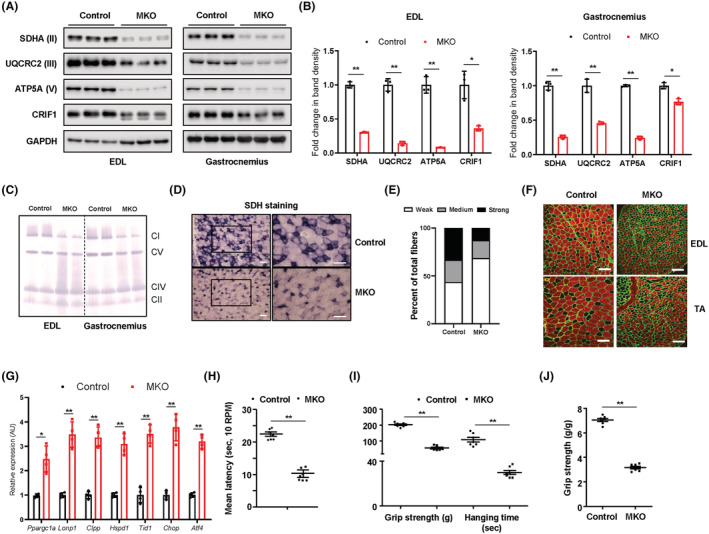
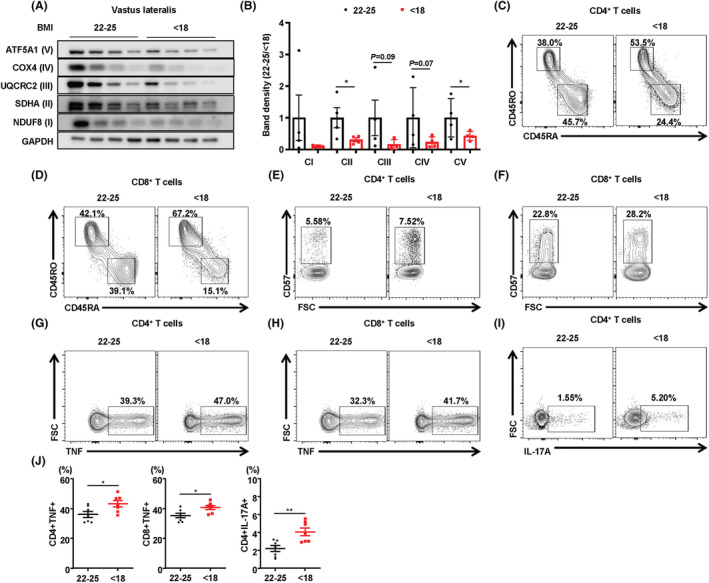
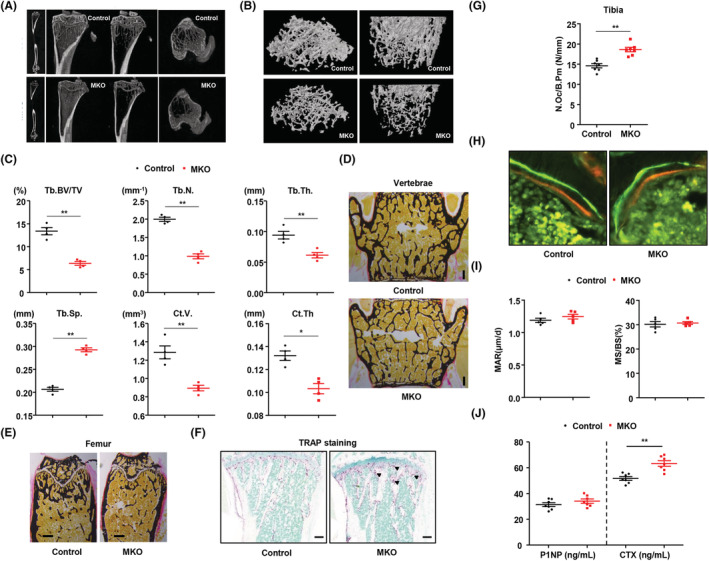
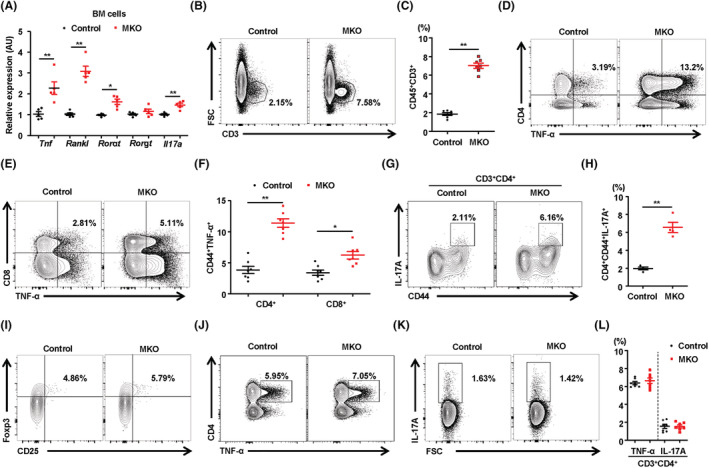
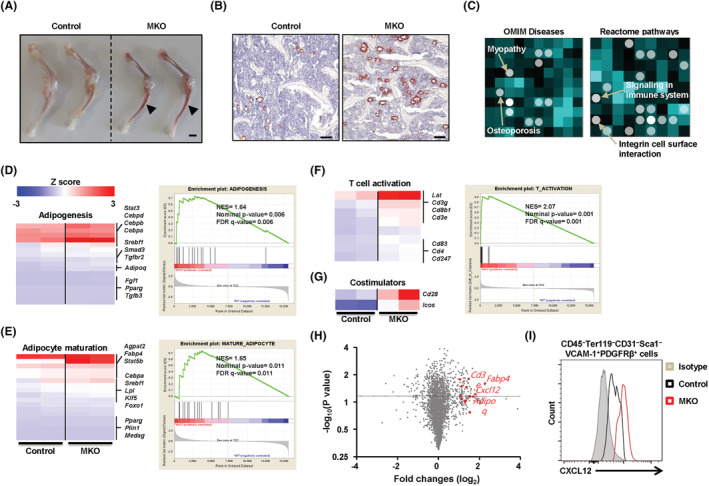
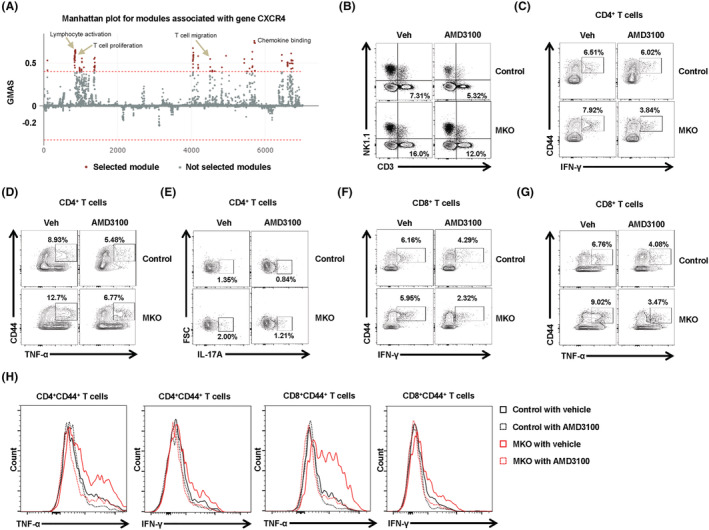
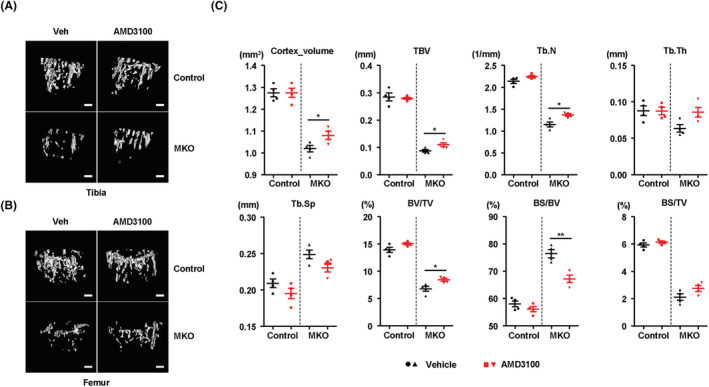
MKO mice exhibited significant reductions in both muscle mass and expression of OxPhos subunits but increased transcription of mitochondrial stress response-related genes in the extensor digitorum longus (P < 0.01). MKO mice showed a decline in grip strength and a higher drop rate in the wire hanging test (P < 0.01). Micro-computed tomography and von Kossa staining revealed that MKO mice developed a low mass phenotype in cortical and trabecular bone (P < 0.01). Transcriptomic analysis of the BM revealed that mitochondrial stress responses in skeletal muscles induce an inflammatory response and adipogenesis in the BM and that the CXCL12-CXCR4 (C-X-C chemokine receptor 4) axis is important for T-cell homing to the BM. Antagonism of CXCR4 attenuated BM inflammation and increased bone mass in MKO mice. In humans, patients with low body mass index (BMI = 17.2 ± 0.42 kg/m ) harboured a larger population of proinflammatory and cytotoxic senescent T-cells in the BMI (P < 0.05) and showed reduced expression of OxPhos subunits in the vastus lateralis, compared with controls with a normal BMI (23.7 ± 0.88 kg/m ) (P < 0.01).
Defects in muscle mitochondrial OxPhos promote BM inflammation in mice, leading to decreased bone mass. Muscle mitochondrial dysfunction is linked to BM inflammatory cytokine secretion via the CXCL12-CXCR4 signalling axis, which is critical for inducing low bone mass.
线粒体氧化磷酸化(OxPhos)是骨骼肌质量和功能的关键调节因子。尽管由于线粒体功能障碍导致的肌肉萎缩与骨丢失密切相关,但肌肉和骨骼之间关系的生物学特征仍不清楚。我们发现,由骨骼肌特异性 CR6 相互作用因子 1 敲除(MKO)引起的肌肉萎缩会调节骨髓(BM)炎症反应,导致低骨量。
喂食正常饮食或高脂肪饮食的 MKO 小鼠表现出较低的肌肉 OxPhos,然后评估其肌肉质量和功能以及骨矿物质密度。还进行了 BM 免疫细胞的免疫表型分析。BM 转录组分析用于鉴定调节 MKO 小鼠骨量的关键因素。为了确定 BM 来源的 CXCL12(C-X-C 基序趋化因子配体 12)对调节骨稳态的影响,用重组 CXCL12 处理各种 BM 龛位驻留细胞。研究了 14 名髋部骨折患者的比目鱼肌和 BM 免疫细胞样本,以检查肌肉功能与 BM 炎症之间的关联。
MKO 小鼠的肌肉质量和 OxPhos 亚基表达均显著降低,但伸趾长肌中线粒体应激反应相关基因的转录增加(P<0.01)。MKO 小鼠的握力下降,悬线测试的下降率更高(P<0.01)。微计算机断层扫描和 von Kossa 染色显示,MKO 小鼠的皮质骨和小梁骨均表现出低质量表型(P<0.01)。BM 的转录组分析表明,骨骼肌中的线粒体应激反应会在 BM 中引起炎症反应和脂肪生成,而 CXCL12-CXCR4(C-X-C 趋化因子受体 4)轴对于 T 细胞归巢到 BM 很重要。CXCR4 拮抗剂减弱了 MKO 小鼠的 BM 炎症并增加了骨量。在人类中,身体质量指数(BMI=17.2±0.42kg/m )较低的患者在 BMI 中存在更大比例的促炎和细胞毒性衰老 T 细胞(P<0.05),并且与 BMI 正常(23.7±0.88kg/m )的对照组相比,比目鱼肌中 OxPhos 亚基的表达减少(P<0.01)。
肌肉线粒体 OxPhos 的缺陷会促进小鼠的 BM 炎症,导致骨量减少。肌肉线粒体功能障碍通过 CXCL12-CXCR4 信号通路与 BM 炎症细胞因子的分泌有关,这对于诱导低骨量至关重要。