Stroh Emilie, Oudin Anna, Gustafsson Susanna, Pilesjö Petter, Harrie Lars, Strömberg Ulf, Jakobsson Kristina
GIS Centre & The Department of Physical Geography and Ecosystem Analysis, Lund University, Sölvegatan 12, SE-223 62 Lund, Sweden.
Int J Health Geogr. 2005 Nov 16;4:30. doi: 10.1186/1476-072X-4-30.
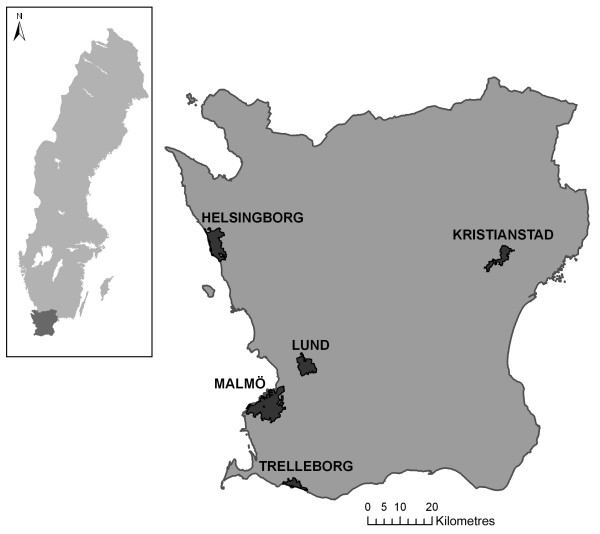
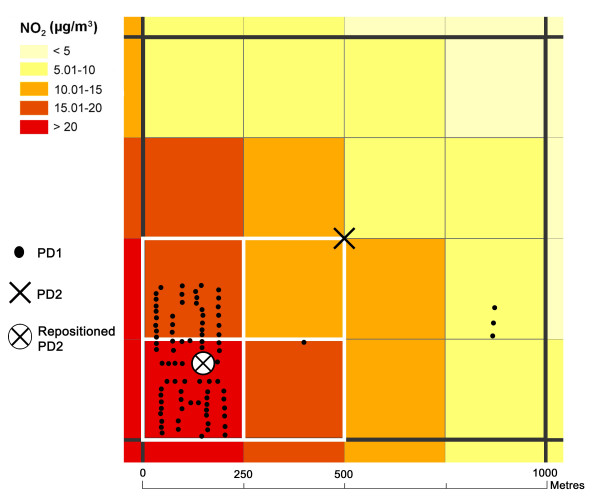
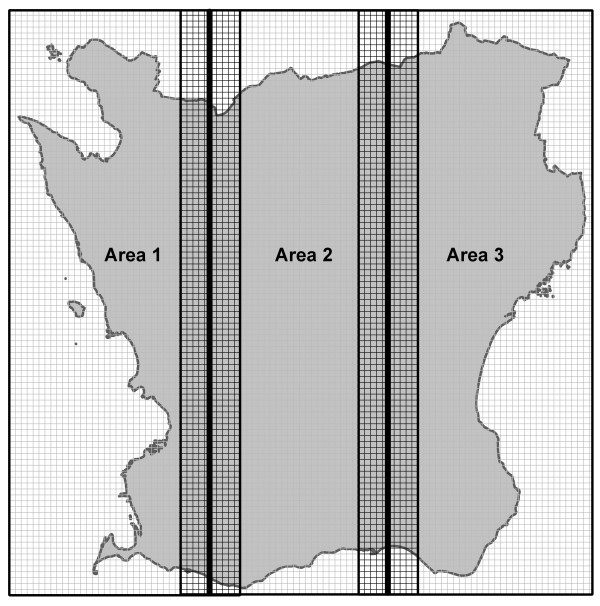
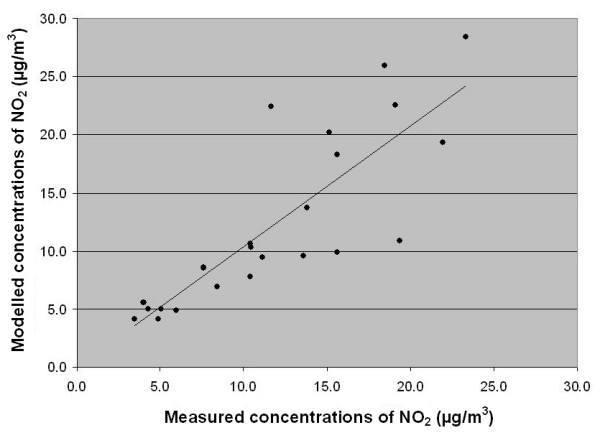
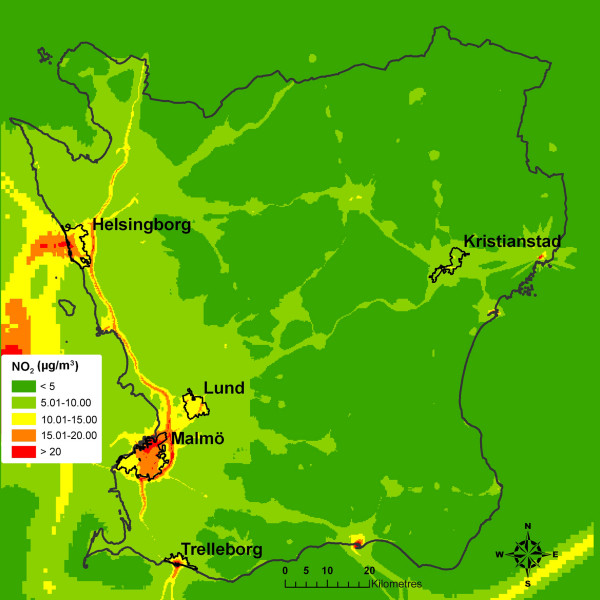
Numerous studies have shown that exposure to air pollutants in the area of residence and the socio-economic status of an individual may be related. Therefore, when conducting an epidemiological study on the health effect of air pollution, socio-economy may act as a confounding factor. In this paper we examine to what extent socio-economic status and concentrations of NO2 in the county/region of Scania, southern Sweden, are associated and if such associations between these factors differ when studying them at county or city level. To perform this study we used high-resolution census data and modelled the annual exposure to NO2 using an emission database, a dispersion modelling program and a geographical information system (GIS).
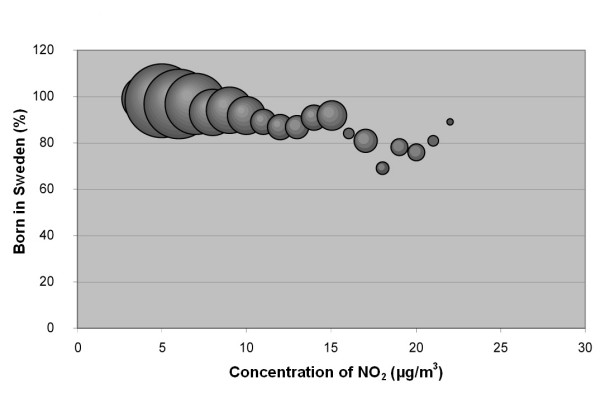
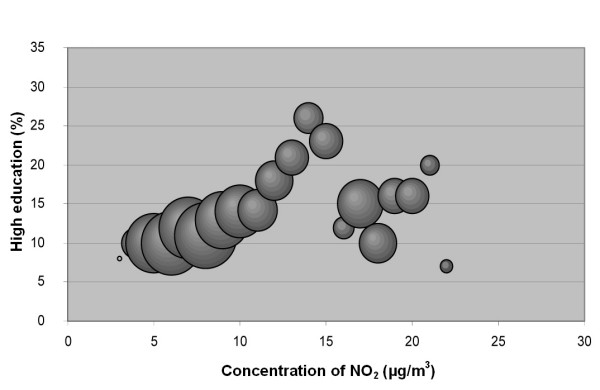
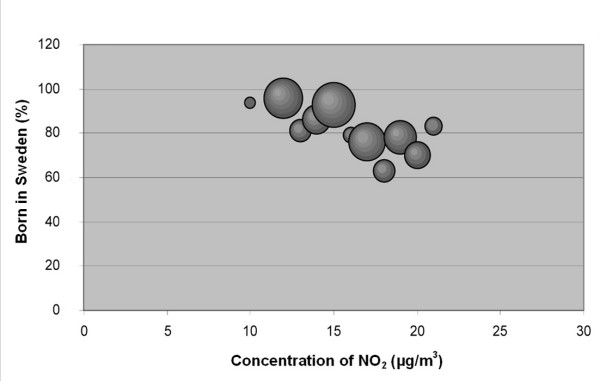
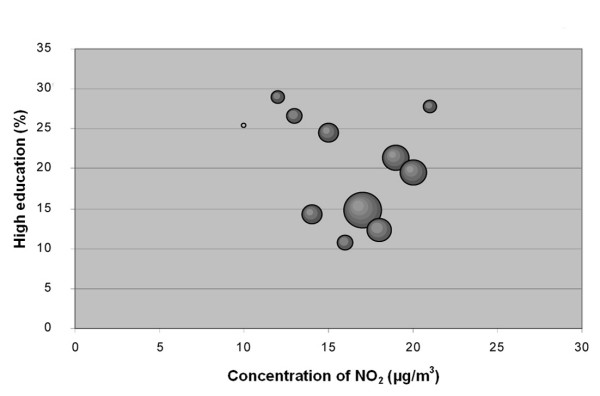
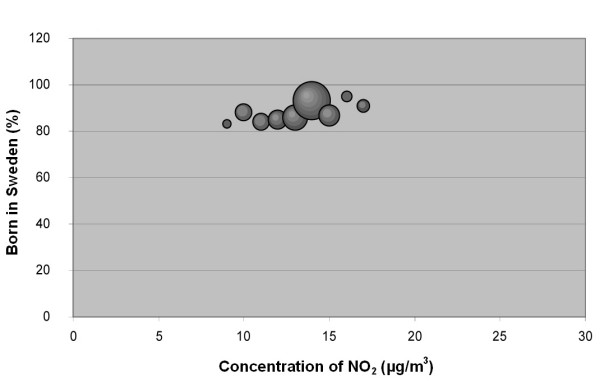
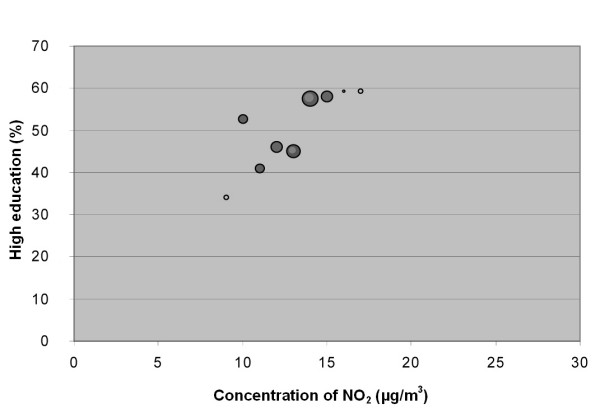
The results from this study confirm that socio-economic status and the levels of NO2 in the area of residence are associated in some cities. The associations vary considerably between cities within the same county (Scania). Even for cities of similar sizes and population bases the associations observed are different. Studying the cities together or separately yields contradictory results, especially when education is used as a socio-economic indicator.
Four conclusions have been drawn from the results of this study. 1) Adjusting for socio-economy is important when investigating the health effects of air pollution. 2) The county of Scania seems to be heterogeneous regarding the association between air pollution and socio-economy. 3) The relationship between air pollution and socio-economy differs in the five cities included in our study, depending on whether they are analysed separately or together. It is therefore inadvisable to determine and analyse associations between socio-economy and exposure to air pollutants on county level. This study indicates that the size and choice of study area is of great importance. 4) The selection of socio-economic indices (in this study: country of birth and education level) is important.
大量研究表明,居住地的空气污染物暴露与个人的社会经济地位可能有关。因此,在进行空气污染对健康影响的流行病学研究时,社会经济状况可能是一个混杂因素。在本文中,我们研究了瑞典南部斯科讷省/地区的社会经济地位与二氧化氮浓度之间的关联程度,以及在县或城市层面研究这些因素时,它们之间的关联是否存在差异。为开展这项研究,我们使用了高分辨率人口普查数据,并利用排放数据库、扩散模型程序和地理信息系统(GIS)对二氧化氮的年度暴露情况进行建模。
本研究结果证实,在一些城市中,社会经济地位与居住地区的二氧化氮水平存在关联。在同一县(斯科讷)内的不同城市之间,这种关联差异很大。即使对于规模和人口基数相似的城市,观察到的关联也有所不同。将这些城市一起研究或分别研究得出的结果相互矛盾,尤其是当把教育程度用作社会经济指标时。
从本研究结果得出了四点结论。1)在调查空气污染对健康的影响时,对社会经济因素进行调整很重要。2)斯科讷县在空气污染与社会经济之间的关联方面似乎具有异质性。3)在我们研究的五个城市中,空气污染与社会经济之间的关系因单独分析还是一起分析而有所不同。因此,在县一级确定和分析社会经济与空气污染物暴露之间的关联是不可取的。本研究表明,研究区域的规模和选择非常重要。4)社会经济指标的选择(本研究中:出生地和教育水平)很重要。