Department of Biological Sciences, University of Calgary, Calgary, Alberta, Canada T2N 1N4.
Appl Environ Microbiol. 1988 Jun;54(6):1373-82. doi: 10.1128/aem.54.6.1373-1382.1988.
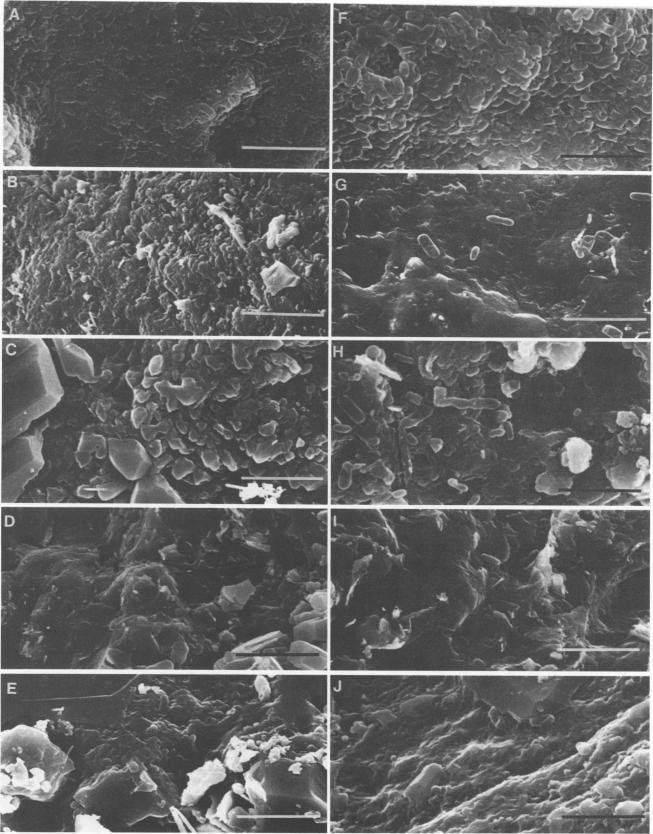
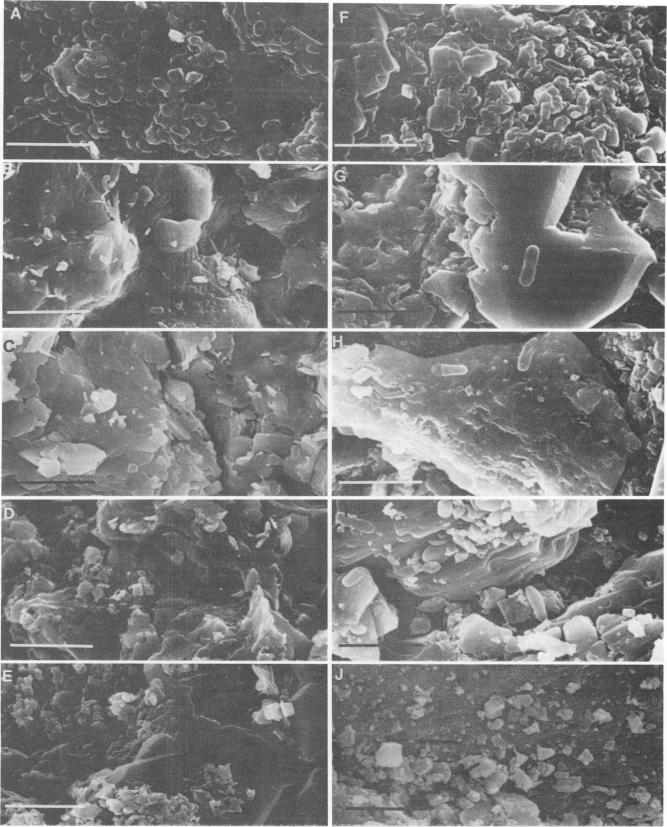
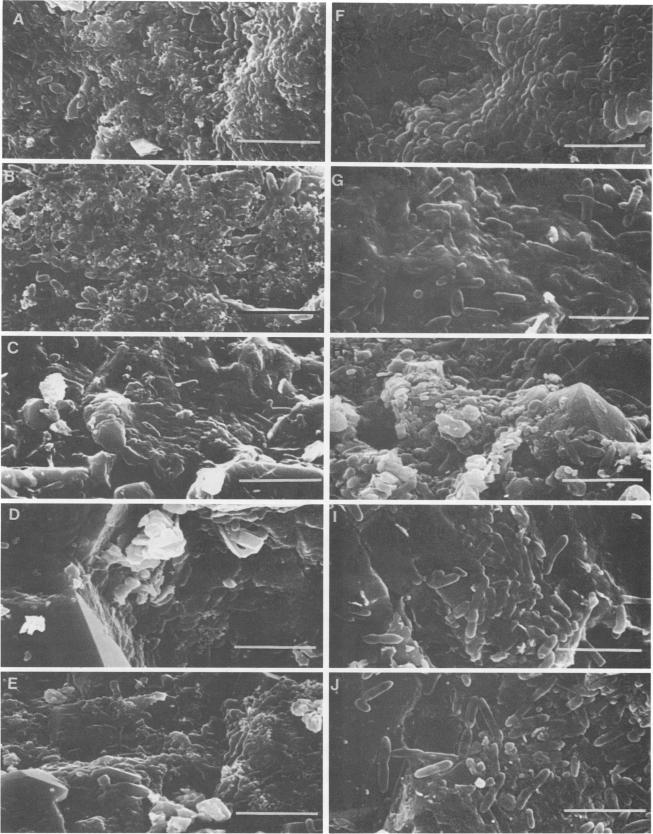
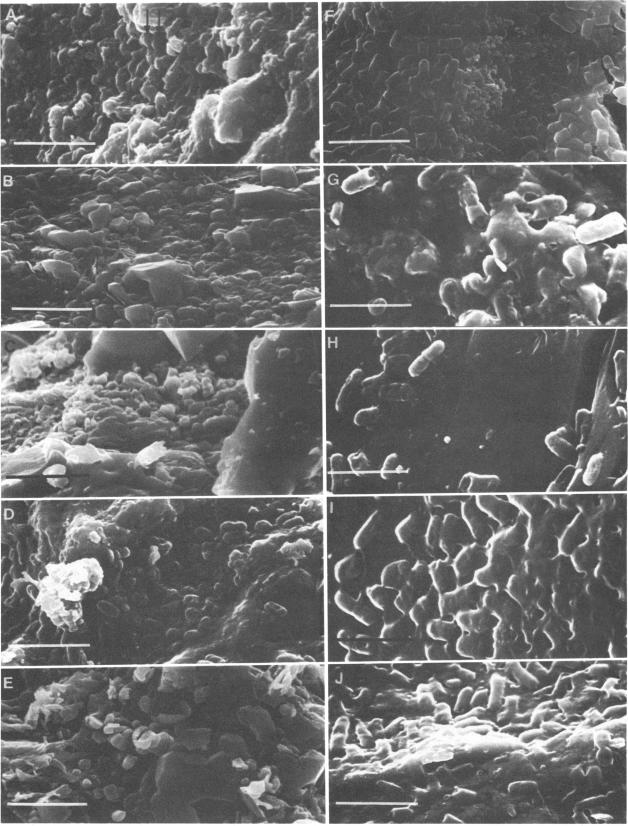
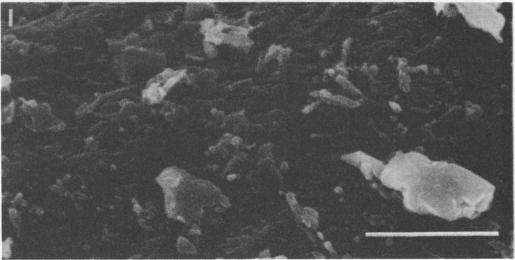
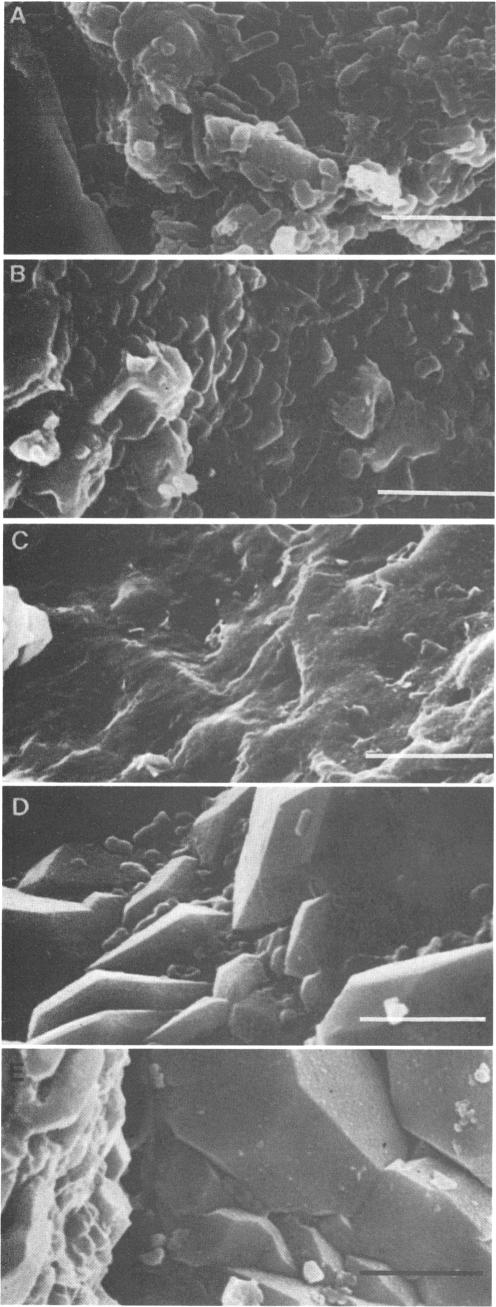
Klebsiella pneumoniae, which was reduced in size (0.25 by 0.5 mum) by carbon deprivation, was injected into a series of sandstone cores and subjected to separate treatments. Scanning electron microscopy of 400-mD cores showed these small starved cells in nearly every core section. The cells were a mixture of small rods and cocci with little or no biofilm production. Continuous or dose stimulation with sodium citrate allowed the cells to grow throughout the sandstone and completely plug the length of the core. The resuscitated cells were larger than the starved cells (up to 1.7 mum) and were encased in glycocalyx. Scanning electron microscopic results of resuscitation in situ with half-strength brain heart infusion broth showed that a shallow "skin" plug of cells formed at the core inlet and that fewer cells were located in the lower sections. Starved cells also penetrated 200-mD cores and were successfully resuscitated in situ with sodium citrate, so that the entire core was plugged. Nutrient resuscitation of injected starved cells to produce full-size cells which grow and block the rock pores may be successfully applied to selective plugging and may effectively increase oil recovery.
被剥夺碳源而体积缩小(0.25 微米×0.5 微米)的肺炎克雷伯氏菌被注入一系列砂岩岩心,并进行了单独处理。400 毫达西岩心的扫描电子显微镜观察显示,几乎每个岩心切片中都有这些饥饿的小细胞。这些细胞是小杆状菌和球菌的混合物,几乎没有或没有生物膜生成。用柠檬酸钠连续或剂量刺激可使细胞在整个砂岩中生长,并完全堵塞岩心的长度。复苏的细胞比饥饿的细胞(最大 1.7 微米)大,并被荚膜包裹。用半强度脑心浸液进行原位复苏的扫描电子显微镜结果表明,在岩心入口处形成了一个浅层“表皮”细胞塞,并且位于下部的细胞较少。饥饿细胞也穿透了 200 毫达西岩心,并成功地用柠檬酸钠原位复苏,从而使整个岩心被堵塞。向注入的饥饿细胞中添加营养物质以产生生长并堵塞岩石孔隙的全尺寸细胞的复苏,可能会成功地应用于选择性堵塞,并可有效地提高采油率。