Department of Chemical Ecology and Ecotoxicology, Lund University, Helgonavägen 5, S-223 62 Lund, Sweden.
Appl Environ Microbiol. 1991 Oct;57(10):2868-72. doi: 10.1128/aem.57.10.2868-2872.1991.
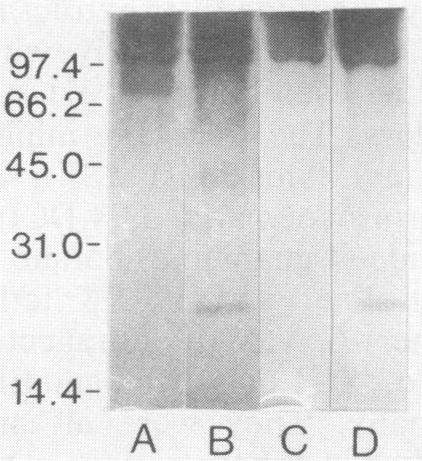
The nematophagous fungus Arthrobotrys oligospora produced extracellular proteases when grown in a liquid culture, as revealed by measuring the hydrolysis of the chromogenic substrate Azocoll. The extracellular protease activity was inhibited by phenylmethylsulfonyl fluoride (PMSF) and other serine protease inhibitors and partly inhibited by the aspartate protease inhibitor pepstatin and by a cysteine protease inhibitor [l-trans-epoxysuccinyl-leucylamide-(4-guanidino)-butane, or E-64]. Substrate gel electrophoresis showed that the fungus produced several different proteases, including multiple serine proteases. The function of proteases in the infection of nematodes was examined by treating the fungus with various protease inhibitors. None of the inhibitors tested affected the adhesion of nematodes to the traps, but incubating trap-bearing mycelium with a serine protease inhibitor, PMSF, antipain, or chymostatin, or the metalloprotease inhibitor phenanthroline significantly decreased the immobilization of nematodes captured by the fungus. Inhibitors of cysteine or aspartic proteases did not affect the immobilization of captured nematodes. The effects of PMSF on the immobilization of nematodes were probably due to serine proteases produced by the fungus, since the effects were observed when unbound inhibitor was washed away from the fungus before the nematodes were added to the system. No effects were observed when the nematodes only were pretreated with PMSF.
寡孢丝虫真菌(Arthrobotrys oligospora)在液体培养中产生细胞外蛋白酶,这一点可以通过测量显色底物 Azocoll 的水解情况来揭示。细胞外蛋白酶活性被苯甲基磺酰氟(PMSF)和其他丝氨酸蛋白酶抑制剂抑制,部分被天冬氨酸蛋白酶抑制剂胃蛋白酶抑制剂和半胱氨酸蛋白酶抑制剂[l-trans-epoxysuccinyl-leucylamide-(4-guanidino)-butane,或 E-64]抑制。底物凝胶电泳显示,该真菌产生了几种不同的蛋白酶,包括多种丝氨酸蛋白酶。通过用各种蛋白酶抑制剂处理真菌,研究了蛋白酶在侵染线虫中的作用。测试的抑制剂均未影响线虫对陷阱的黏附,但孵育带有陷阱的菌丝体与丝氨酸蛋白酶抑制剂 PMSF、抑蛋白酶肽或色蛋白酶抑制剂,或金属蛋白酶抑制剂菲咯啉,可显著降低真菌捕获的线虫的固定化。半胱氨酸或天冬氨酸蛋白酶抑制剂对线虫固定化没有影响。PMSF 对线虫固定化的影响可能是由于真菌产生的丝氨酸蛋白酶所致,因为在将线虫添加到系统之前,从真菌上洗掉未结合的抑制剂后,就观察到了这种影响。当仅对线虫进行 PMSF 预处理时,未观察到任何影响。