Vernon Suzanne D, Whistler Toni, Cameron Barbara, Hickie Ian B, Reeves William C, Lloyd Andrew
Centers for Disease Control and Prevention, Atlanta, Georgia 30333, USA.
BMC Infect Dis. 2006 Jan 31;6:15. doi: 10.1186/1471-2334-6-15.
Acute infectious diseases are typically accompanied by non-specific symptoms including fever, malaise, irritability and somnolence that usually resolve on recovery. However, in some individuals these symptoms persist in what is commonly termed post-infective fatigue. The objective of this pilot study was to determine the gene expression correlates of post-infective fatigue following acute Epstein Barr virus (EBV) infection.
We followed 5 people with acute mononucleosis who developed post-infective fatigue of more than 6 months duration and 5 HLA-matched control subjects who recovered within 3 months. Subjects had peripheral blood mononuclear cell (PBMC) samples collected at varying time points including at diagnosis, then every 2 weeks for 3 months, then every 3 months for a year. Total RNA was extracted from the PBMC samples and hybridized to microarrays spotted with 3,800 oligonucleotides.
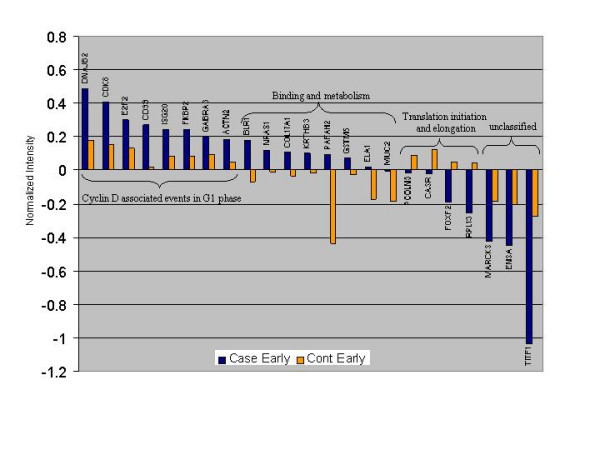
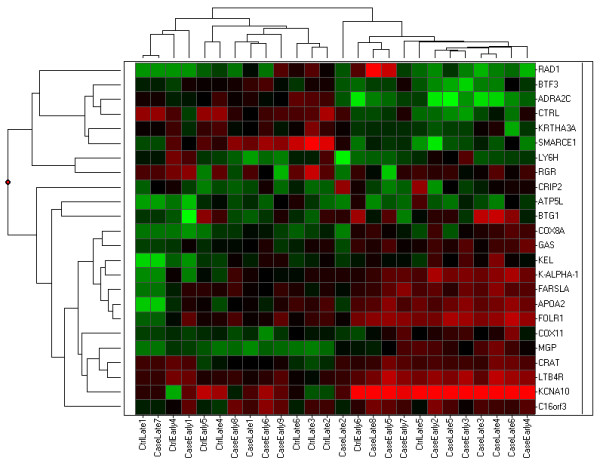
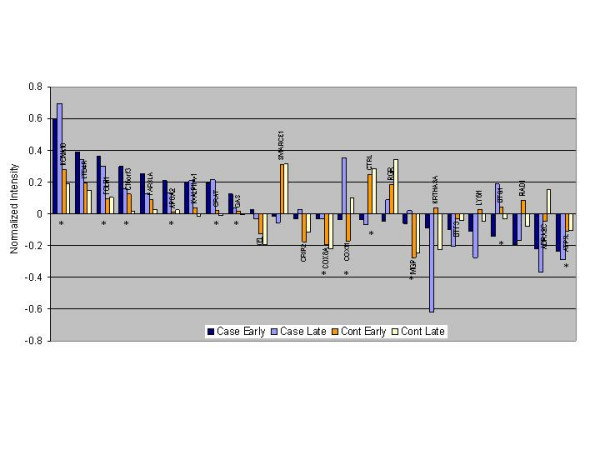
Those who developed post-infective fatigue had gene expression profiles indicative of an altered host response during acute mononucleosis compared to those who recovered uneventfully. Several genes including ISG20 (interferon stimulated gene), DNAJB2 (DnaJ [Hsp40] homolog and CD99), CDK8 (cyclin-dependent kinase 8), E2F2 (E2F transcription factor 2), CDK8 (cyclin-dependent kinase 8), and ACTN2 (actinin, alpha 2), known to be regulated during EBV infection, were differentially expressed in post-infective fatigue cases. Several of the differentially expressed genes affect mitochondrial functions including fatty acid metabolism and the cell cycle.
These preliminary data provide insights into alterations in gene transcripts associated with the varied clinical outcomes from acute infectious mononucleosis.
急性传染病通常伴有非特异性症状,包括发热、不适、易怒和嗜睡,这些症状通常在康复后会消失。然而,在一些个体中,这些症状会持续存在,这就是通常所说的感染后疲劳。这项初步研究的目的是确定急性爱泼斯坦-巴尔病毒(EBV)感染后感染后疲劳的基因表达相关性。
我们跟踪了5名患有急性单核细胞增多症且感染后疲劳持续超过6个月的患者,以及5名在3个月内康复的HLA匹配对照受试者。受试者在不同时间点采集外周血单个核细胞(PBMC)样本,包括诊断时,然后每2周采集一次,共3个月,之后每3个月采集一次,持续一年。从PBMC样本中提取总RNA,并与点有3800个寡核苷酸的微阵列杂交。
与顺利康复的患者相比,出现感染后疲劳的患者在急性单核细胞增多症期间的基因表达谱表明宿主反应发生了改变。包括ISG20(干扰素刺激基因)、DNAJB2(DnaJ [Hsp40] 同源物和CD99)、CDK8(细胞周期蛋白依赖性激酶8)、E2F2(E2F转录因子2)、CDK8(细胞周期蛋白依赖性激酶8)和ACTN2(辅肌动蛋白,α2)在内的几个基因,已知在EBV感染期间受到调控,在感染后疲劳病例中差异表达。一些差异表达的基因影响线粒体功能,包括脂肪酸代谢和细胞周期。
这些初步数据为与急性传染性单核细胞增多症不同临床结果相关的基因转录变化提供了见解。