Serafimidis Costas, Katsarolis Ioannis, Vernadakis Spyros, Rallis George, Giannopoulos George, Legakis Nikolaos, Peros George
4th Department of Surgery, ATTIKON University General Hospital, 12462 Haidari, Athens, Greece.
BMC Surg. 2006 Feb 13;6:3. doi: 10.1186/1471-2482-6-3.
Idiopathic sclerosing encapsulating peritonitis (or abdominal cocoon) is a rare cause of small bowel obstruction, especially in adult population. Diagnosis is usually incidental at laparotomy. We discuss one such rare case, outlining the fact that an intra-operative surprise diagnosis could have been facilitated by previous investigations.
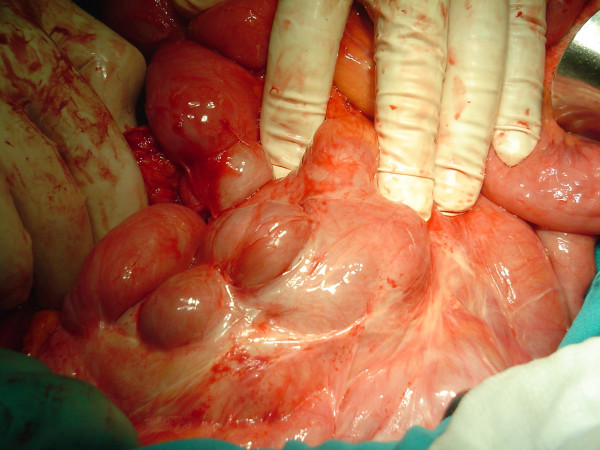
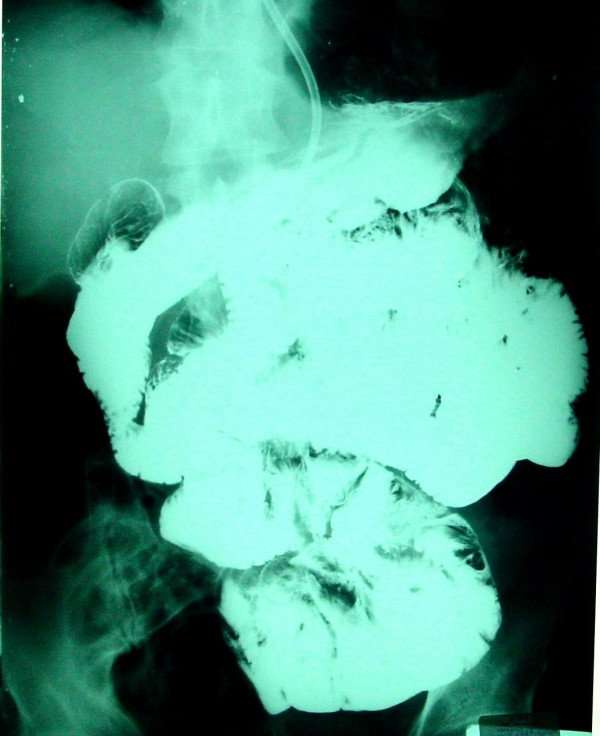
A 56 year-old man presented in A&E department with small bowel ileus. He had a history of 6 similar episodes of small bowel obstruction in the past 4 years, which resolved with conservative treatment. Pre-operative work-up did not reveal any specific etiology. At laparotomy, a fibrous capsule was revealed, in which small bowel loops were encased, with the presence of interloop adhesions. A diagnosis of abdominal cocoon was established and extensive adhesiolysis was performed. The patient had an uneventful recovery and follow-up.
Idiopathic sclerosing encapsulating peritonitis, although rare, may be the cause of a common surgical emergency such as small bowel ileus, especially in cases with attacks of non-strangulating obstruction in the same individual. A high index of clinical suspicion may be generated by the recurrent character of small bowel ileus combined with relevant imaging findings and lack of other plausible etiologies. Clinicians must rigorously pursue a preoperative diagnosis, as it may prevent a "surprise" upon laparotomy and result in proper management.
特发性硬化性包裹性腹膜炎(或腹腔茧症)是小肠梗阻的罕见病因,在成人中尤为少见。诊断通常在剖腹手术时偶然发现。我们讨论这样一例罕见病例,强调先前的检查可能有助于术中意外诊断。
一名56岁男性因小肠肠梗阻就诊于急诊科。他在过去4年中有6次类似的小肠梗阻发作史,经保守治疗后缓解。术前检查未发现任何特定病因。剖腹手术时,发现一个纤维性包膜,其中包裹着小肠肠袢,伴有肠袢间粘连。确诊为腹腔茧症,并进行了广泛的粘连松解术。患者恢复顺利,进行了随访。
特发性硬化性包裹性腹膜炎虽然罕见,但可能是小肠肠梗阻等常见外科急症的病因,尤其是在同一个体出现非绞窄性梗阻发作的情况下。小肠肠梗阻的复发性、相关影像学表现以及缺乏其他合理病因,可能会引起高度的临床怀疑。临床医生必须严格进行术前诊断,因为这可能避免剖腹手术时的“意外”情况,并实现恰当的治疗。