Lanai High School, Lanai City, HI.
J Athl Train. 1998 Apr;33(2):130-5.
To determine the rate and magnitude of temperature change in response to ultrasound in human patellar tendon for two treatment sizes.
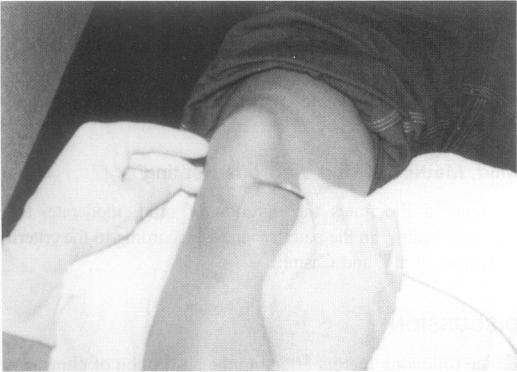
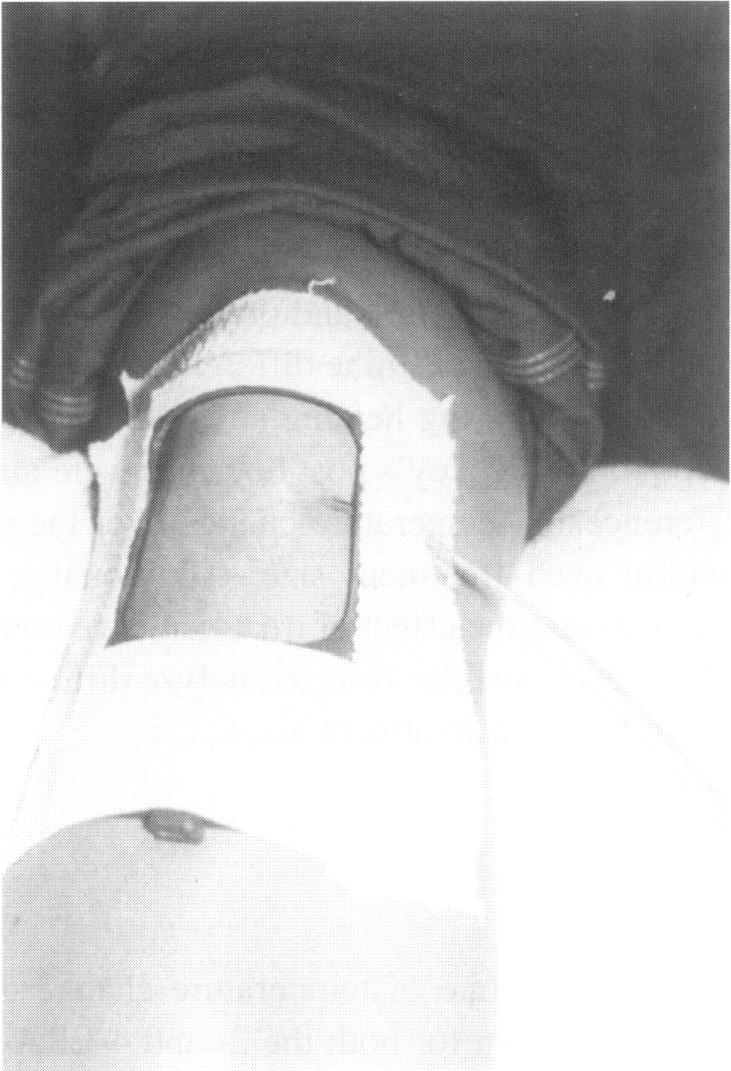
A thermistor was inserted into the medial aspect of each subject's right patellar tendon, and the baseline temperature was recorded. Using stratified random sampling and using a transducer head with an effective radiating area (ERA) of 4.5 cm(2), we had eight subjects each undergo either the 2-or 4-ERA ultrasound treatment first. Each subject received a 3-MHz continuous ultrasound treatment at 1 W/cm(2) for both the 2-and 4-ERA treatment sizes.
Sixteen subjects (8 males, 21.3 +/- 1.9 years, and 8 females, 21.0 +/- 2.8 years) participated.
We moved the sound head at a speed of 2 to 3 cm/sec while recording the tendon temperature every 30 seconds during, and for 20 minutes after, the 4-minute treatment. Twenty minutes after the treatment, we applied the second treatment to the other ERA treatment size.
At the end of the treatment, the mean temperature increase was significantly different (P = .006) between treatment sizes (8.3 degrees C +/- 1.7 degrees C (2 x ERA) and 5.0 degrees C +/- 1.0 degrees C (4 x ERA)). The rate of increase was also significantly different (P < .001). The heating rate per minute for the 2-ERA treatment was 2.1 degrees C +/- 0.4 degrees C and 1.3 degrees C +/- 0.3 degrees C for the 4-ERA treatment. There was a significant difference in the cooling between treatment sizes (P = .001). The rate of temperature decrease between treatment sizes was significantly different only during the first 5-minute interval post-treatment.
Three-megahertz ultrasound at an intensity of 1 W/cm(2) significantly increased patellar tendon temperature at both 2 and 4 x ERA, but our results confirm that the 2-ERA treatment size provided higher and longer heating than the 4-ERA treatment size.
确定两种治疗尺寸下,人髌腱对超声响应的温度变化率和幅度。
将热敏电阻插入每个研究对象右侧髌腱的内侧,记录基线温度。采用分层随机抽样,使用有效辐射面积(ERA)为 4.5cm2 的换能器头,我们让 8 名研究对象中的每个人首先分别接受 2 或 4-ERA 超声治疗。每位研究对象均接受 3MHz 连续超声治疗,强度为 1W/cm2,两种治疗尺寸均接受 4 分钟的治疗。
16 名研究对象(8 名男性,21.3±1.9 岁,8 名女性,21.0±2.8 岁)参与了研究。
在 4 分钟治疗过程中,我们以 2 至 3cm/sec 的速度移动声头,每 30 秒记录一次腱温,并在治疗后 20 分钟继续记录。治疗 20 分钟后,我们将第二个治疗应用于另一个 ERA 治疗尺寸。
在治疗结束时,治疗尺寸之间的平均温度升高差异显著(P=0.006)(2xERA 为 8.3°C±1.7°C,4xERA 为 5.0°C±1.0°C)。增加率也有显著差异(P<0.001)。2-ERA 治疗的每分钟加热率为 2.1°C±0.4°C,4-ERA 治疗的加热率为 1.3°C±0.3°C。治疗尺寸之间的冷却差异显著(P=0.001)。只有在治疗后前 5 分钟间隔内,治疗尺寸之间的温度下降率才存在显著差异。
强度为 1W/cm2 的 3MHz 超声在 2 和 4xERA 均显著增加髌腱温度,但我们的结果证实,2-ERA 治疗尺寸提供的加热效果更高且持续时间更长。