Liu H-K, Perrier S, Lipina C, Finlay D, McLauchlan H, Hastie C J, Hundal H S, Sutherland C
Division of Pathology and Neurosciences, Ninewells Medical School, University of Dundee, Dundee, DD1 9SY, UK.
BMC Mol Biol. 2006 Apr 6;7:14. doi: 10.1186/1471-2199-7-14.
Glycogen Synthase Kinase-3 (GSK3) activity is repressed following insulin treatment of cells. Pharmacological inhibition of GSK3 mimics the effect of insulin on Phosphoenolpyruvate Carboxykinase (PEPCK), Glucose-6 Phosphatase (G6Pase) and IGF binding protein-1 (IGFBP1) gene expression. CAAT/enhancer binding protein alpha (C/EBPalpha) regulates these gene promoters in liver and is phosphorylated on two residues (T222/T226) by GSK3, although the functional outcome of the phosphorylation has not been established. We aimed to establish whether CEBPalpha is a link between GSK3 and these gene promoters.
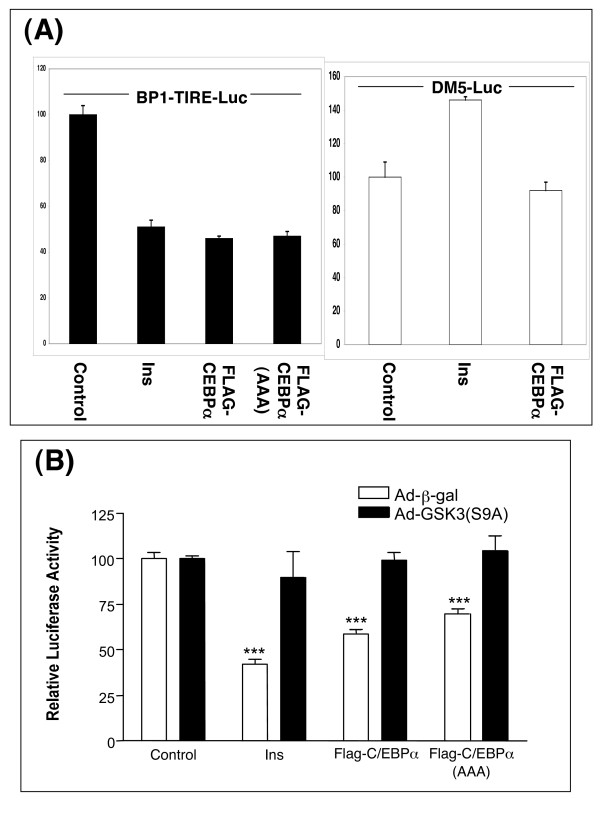
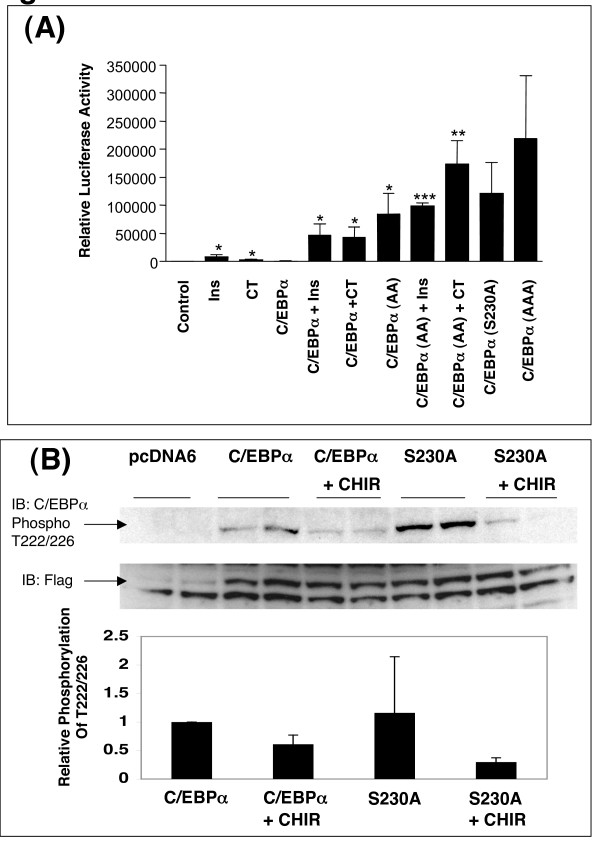
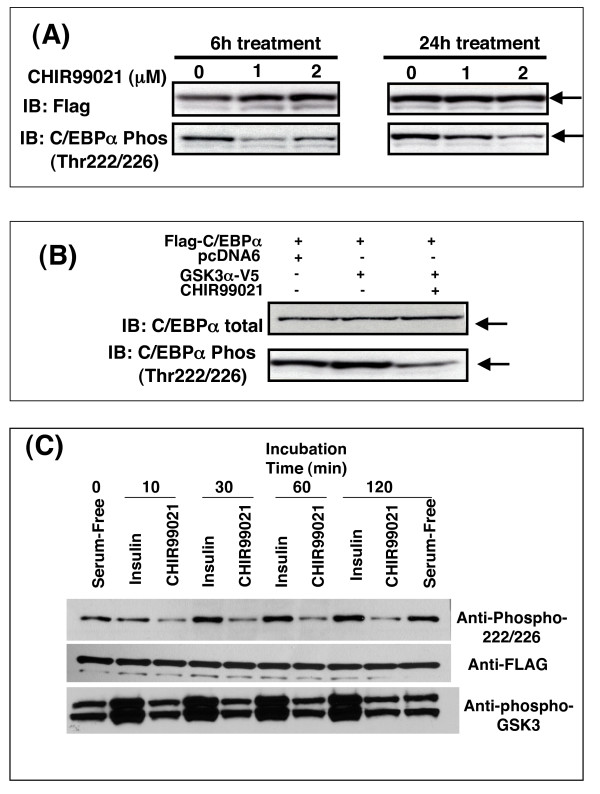
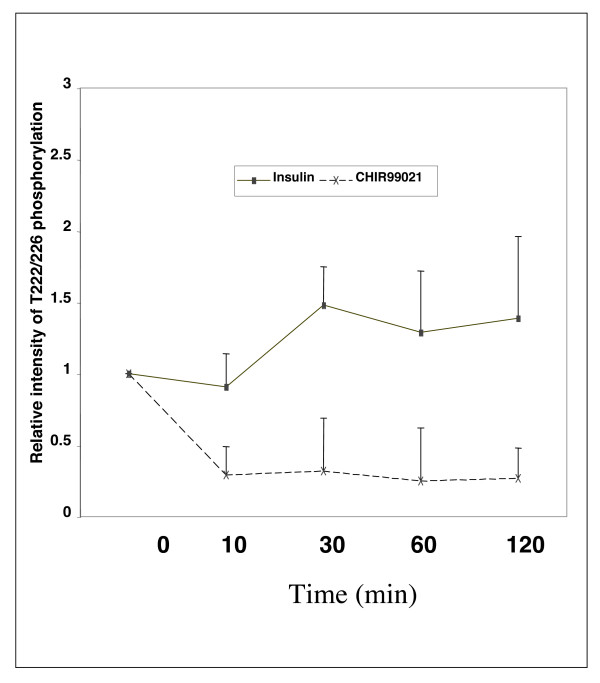
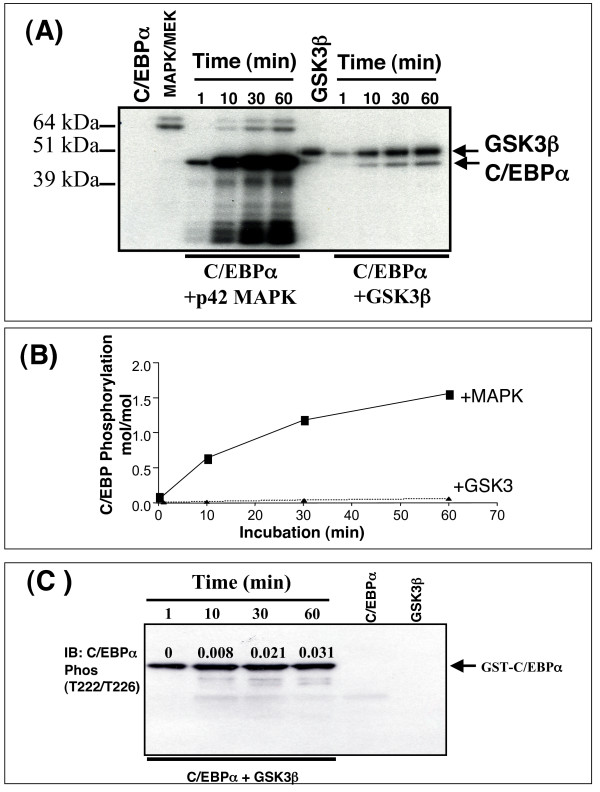
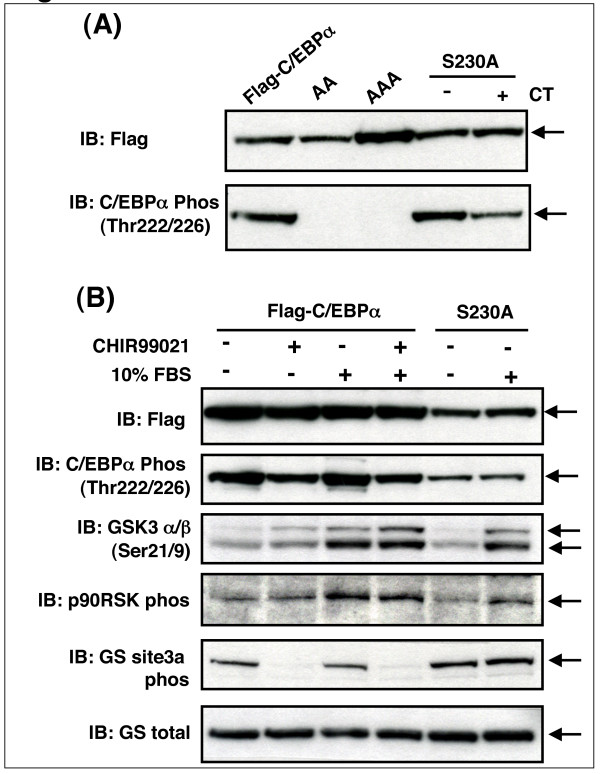
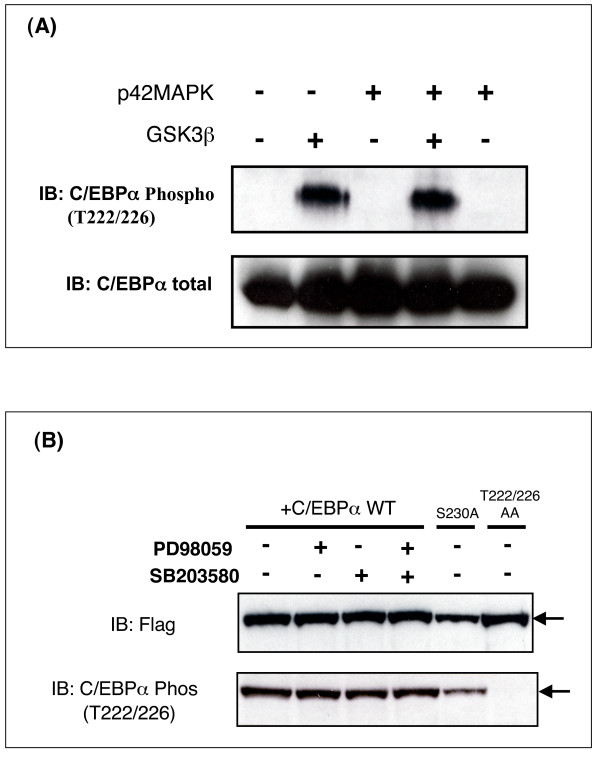
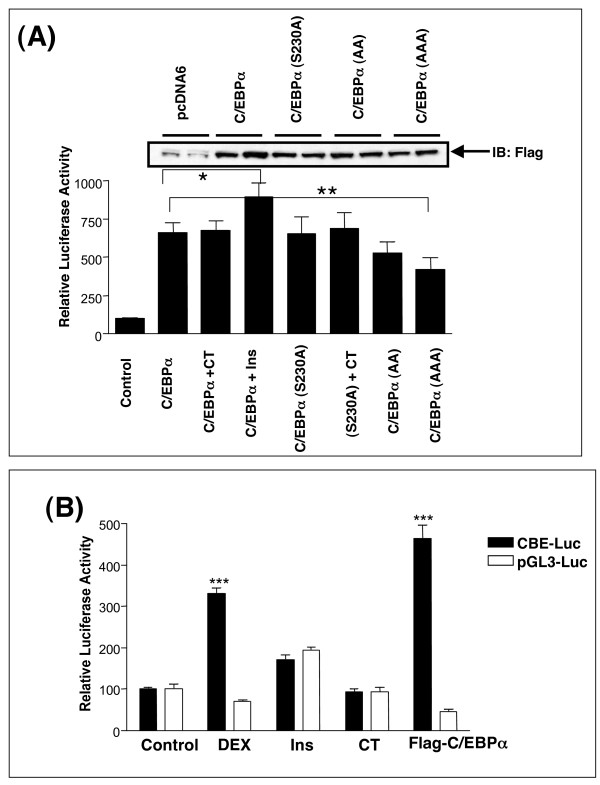
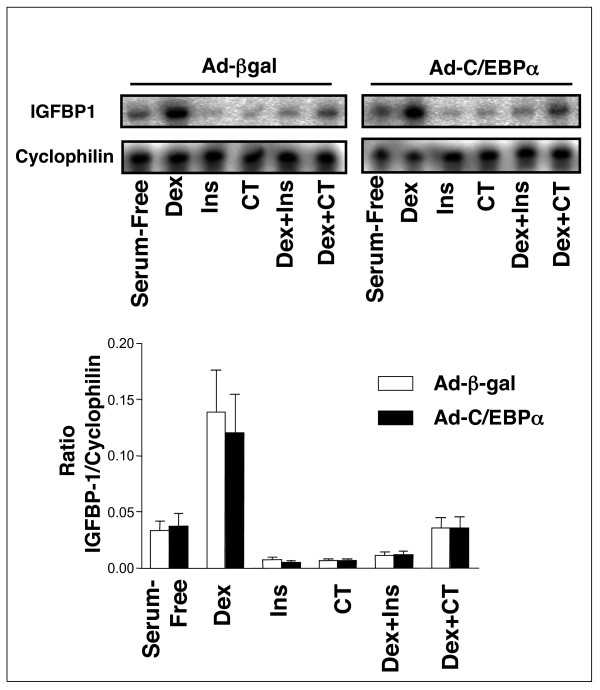
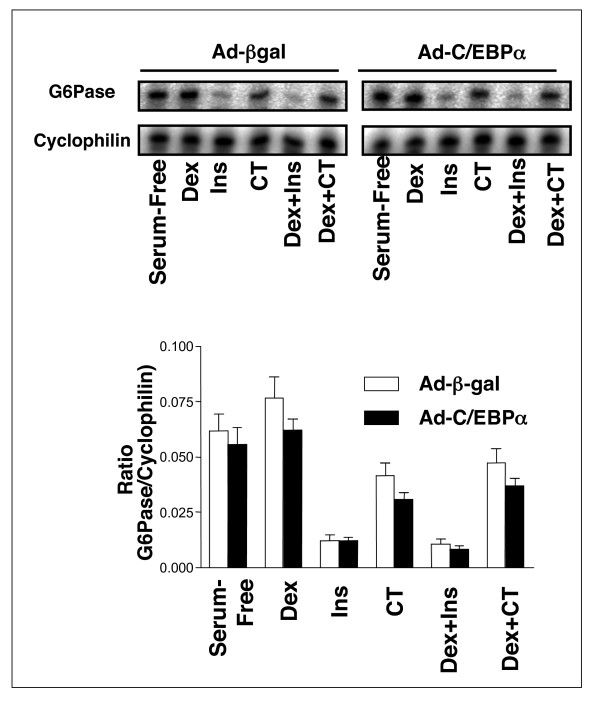
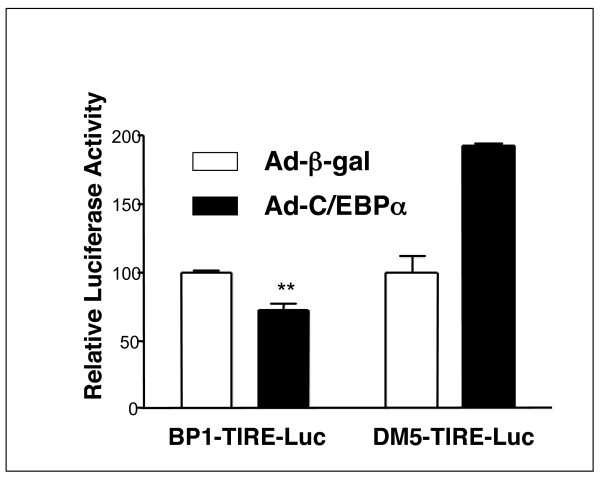
C/EBPalpha represses the IGFBP1 thymine-rich insulin response element (TIRE), but mutation of T222 or T226 of C/EBPalpha to non-phosphorylatable alanines has no effect on C/EBPalpha activity in liver cells (towards the TIRE or a consensus C/EBP binding sequence). Phosphorylation of T222/T226 is decreased by GSK3 inhibition, suggesting GSK3 does phosphorylate T222/226 in intact cells. However, phosphorylation was not altered by treatment of liver cells with insulin. Meanwhile C/EBPalpha activity in 3T3 L1 preadipocytes was enhanced by mutation of T222/T226 and/or S230 to alanine residues. Finally, we demonstrate that C/EBPalpha is a very poor substrate for GSK3 in vitro and in cells.
The work demonstrates an important role for this domain in the regulation of C/EBPalpha activity in adipocytes but not hepatocytes, however GSK3 phosphorylation of these residues does not mediate regulation of this C/EBP activity. In short, we find no evidence that C/EBPalpha activity is regulated by direct phosphorylation by GSK3.
用胰岛素处理细胞后,糖原合酶激酶-3(GSK3)的活性受到抑制。GSK3的药理学抑制模拟了胰岛素对磷酸烯醇式丙酮酸羧激酶(PEPCK)、葡萄糖-6磷酸酶(G6Pase)和胰岛素样生长因子结合蛋白-1(IGFBP1)基因表达的影响。CCAAT/增强子结合蛋白α(C/EBPα)在肝脏中调节这些基因启动子,并被GSK3在两个位点(T222/T226)磷酸化,尽管这种磷酸化的功能结果尚未确定。我们旨在确定C/EBPα是否是GSK3与这些基因启动子之间的联系。
C/EBPα抑制IGFBP1富含胸腺嘧啶的胰岛素反应元件(TIRE),但将C/EBPα的T222或T226突变为不可磷酸化的丙氨酸对肝细胞中C/EBPα的活性(针对TIRE或共有C/EBP结合序列)没有影响。GSK3抑制降低了T222/T226的磷酸化,表明GSK3在完整细胞中确实使T222/226磷酸化。然而,用胰岛素处理肝细胞并没有改变磷酸化。同时,将T222/T226和/或S230突变为丙氨酸残基可增强3T3 L1前脂肪细胞中C/EBPα的活性。最后,我们证明C/EBPα在体外和细胞中都是GSK3的极差底物。
这项工作证明了该结构域在调节脂肪细胞而非肝细胞中C/EBPα活性方面的重要作用,然而这些位点的GSK3磷酸化并不介导这种C/EBP活性的调节。简而言之,我们没有发现证据表明C/EBPα的活性受GSK3直接磷酸化的调节。