Subbaiah Papasani V, Horvath Peter, Achar Srinivasa B
Department of Medicine, University of Illinois, Chicago, Illinois 60612, USA.
Biochemistry. 2006 Apr 18;45(15):5029-38. doi: 10.1021/bi0600704.
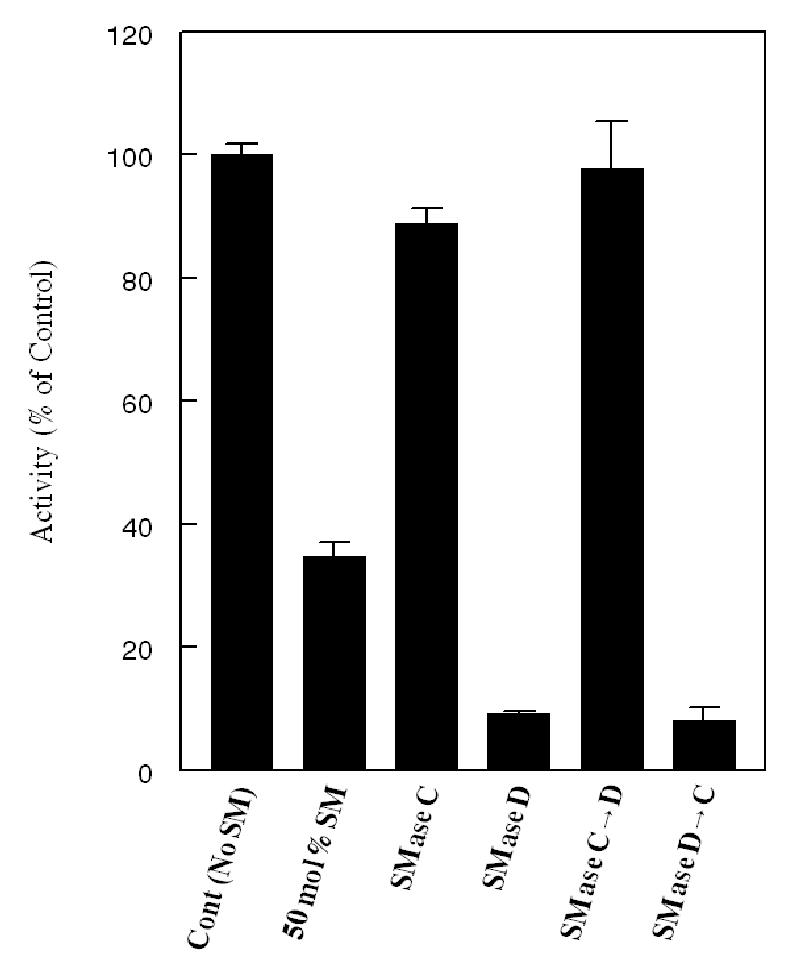
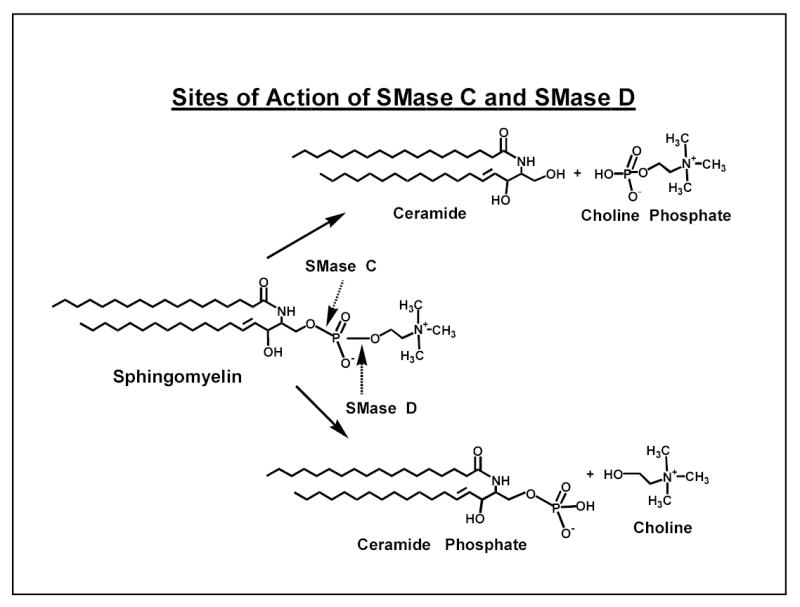
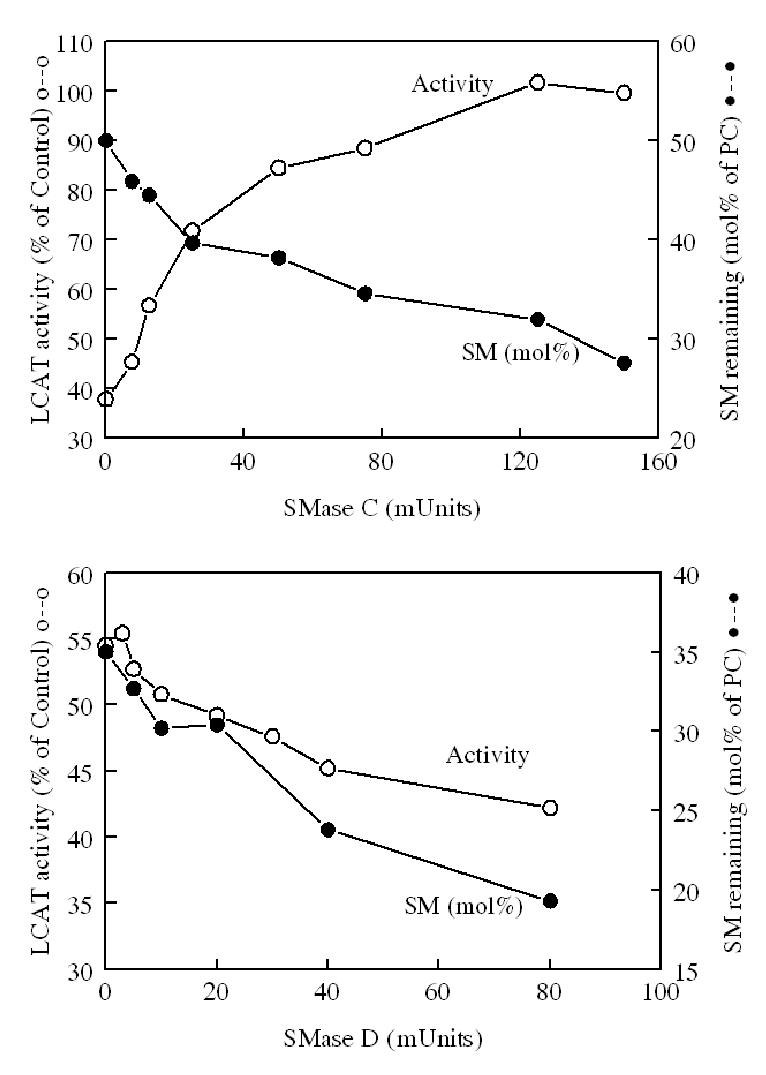
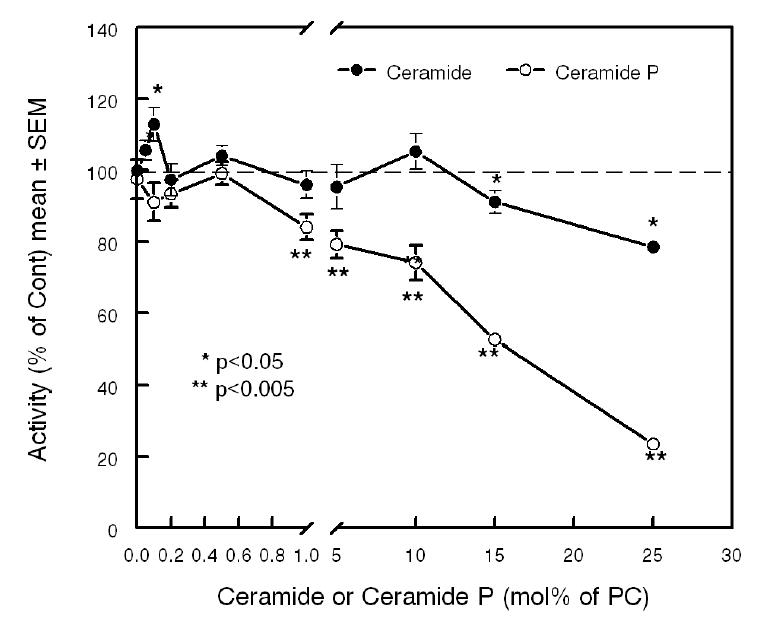
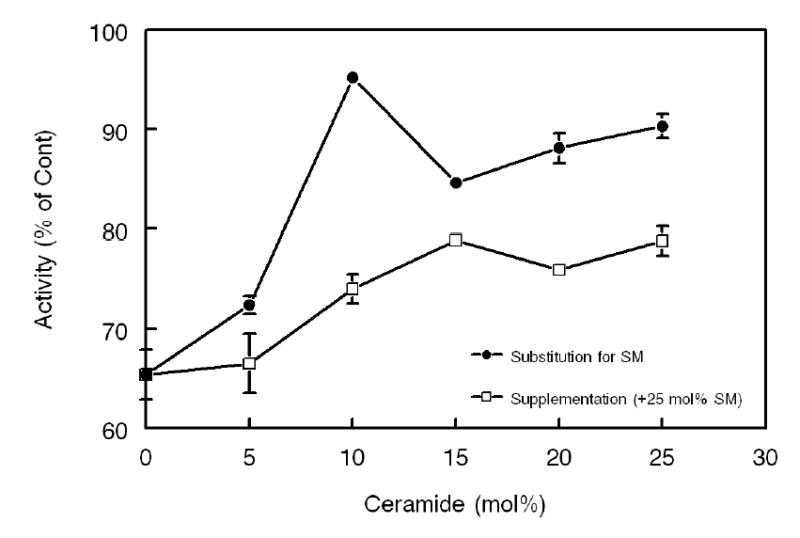
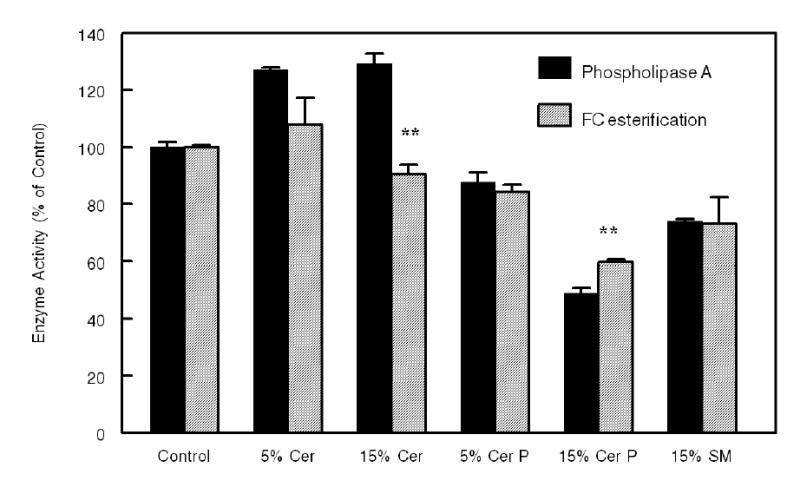
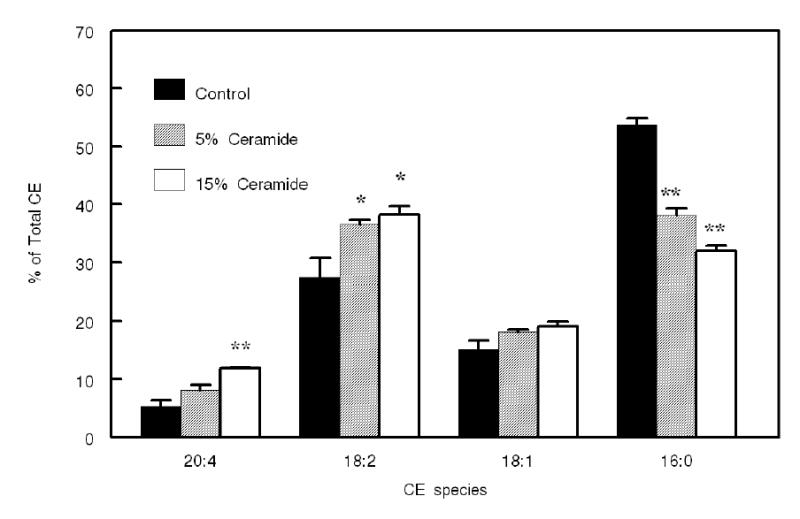
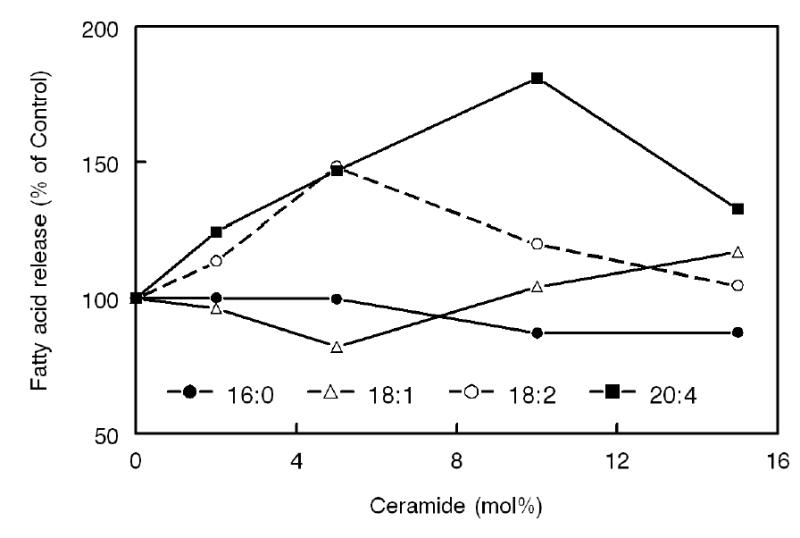
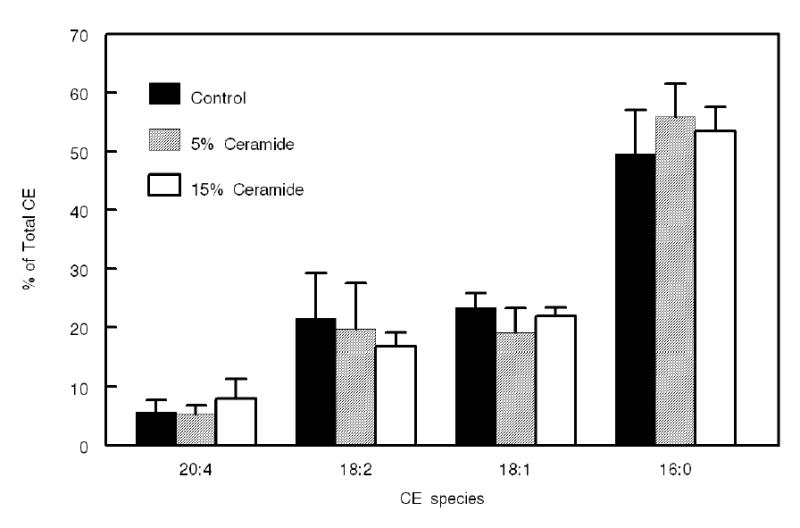
Sphingomyelin (SM), the second most abundant phospholipid in plasma lipoproteins, was previously shown to be a physiological inhibitor of the lecithin-cholesterol acyltransferase (LCAT) reaction. In this study, we investigated the effects of its metabolites, ceramide and ceramide phosphate, on the activity and fatty acid specificity of LCAT in vitro. Treatment of SM-containing substrate with SMase C, which hydrolyzes SM to ceramide, abolished the inhibitory effect of SM, whereas treatment with SMase D, which hydrolyzes it to ceramide phosphate, increased the level of inhibition. Although incorporation of ceramide into the substrate in the absence of SM activated the LCAT reaction only modestly, its co-incorporation with SM neutralized the inhibitory effect of SM. Ceramide phosphate, on the other hand, inhibited the LCAT reaction more strongly than SM. The effects of the sphingolipids on the phospholipase A and cholesterol esterification reactions of the enzyme were similar, indicating that they regulate the binding of phosphatidylcholine (PC) to the active site, rather than the esterification step. Incorporation of ceramide into the substrate stimulated the synthesis of unsaturated cholesteryl esters at the expense of saturated esters. However, these effects on fatty acid specificity disappeared when the PC substrates were incorporated into an inert diether PC matrix, suggesting that ceramide increases the availability of polyunsaturated PCs to the enzyme by altering the macromolecular structure of the substrate particle. Since the plasma ceramide levels are increased during inflammation, these results indicate that the activity and fatty acid specificity of LCAT may be altered during the inflammatory response.
鞘磷脂(SM)是血浆脂蛋白中含量第二丰富的磷脂,先前已被证明是卵磷脂胆固醇酰基转移酶(LCAT)反应的生理抑制剂。在本研究中,我们在体外研究了其代谢产物神经酰胺和神经酰胺磷酸对LCAT活性和脂肪酸特异性的影响。用将SM水解为神经酰胺的鞘磷脂酶C(SMase C)处理含SM的底物,消除了SM的抑制作用,而用将其水解为神经酰胺磷酸的鞘磷脂酶D(SMase D)处理则增加了抑制水平。尽管在没有SM的情况下将神经酰胺掺入底物仅适度激活了LCAT反应,但其与SM的共同掺入中和了SM的抑制作用。另一方面,神经酰胺磷酸比SM更强烈地抑制LCAT反应。鞘脂对该酶的磷脂酶A和胆固醇酯化反应的影响相似,表明它们调节磷脂酰胆碱(PC)与活性位点的结合,而不是酯化步骤。将神经酰胺掺入底物刺激了不饱和胆固醇酯的合成,而饱和酯则减少。然而,当PC底物掺入惰性二醚PC基质中时,这些对脂肪酸特异性的影响消失了,这表明神经酰胺通过改变底物颗粒的大分子结构增加了多不饱和PC对该酶的可用性。由于炎症期间血浆神经酰胺水平会升高,这些结果表明炎症反应期间LCAT的活性和脂肪酸特异性可能会发生改变。