Fridlyand Jane, Snijders Antoine M, Ylstra Bauke, Li Hua, Olshen Adam, Segraves Richard, Dairkee Shanaz, Tokuyasu Taku, Ljung Britt Marie, Jain Ajay N, McLennan Jane, Ziegler John, Chin Koei, Devries Sandy, Feiler Heidi, Gray Joe W, Waldman Frederic, Pinkel Daniel, Albertson Donna G
Department of Epidemiology and Biostatistics, University of California San Francisco, CA 94143, USA.
BMC Cancer. 2006 Apr 18;6:96. doi: 10.1186/1471-2407-6-96.
Genomic DNA copy number aberrations are frequent in solid tumors, although the underlying causes of chromosomal instability in tumors remain obscure. Genes likely to have genomic instability phenotypes when mutated (e.g. those involved in mitosis, replication, repair, and telomeres) are rarely mutated in chromosomally unstable sporadic tumors, even though such mutations are associated with some heritable cancer prone syndromes.
We applied array comparative genomic hybridization (CGH) to the analysis of breast tumors. The variation in the levels of genomic instability amongst tumors prompted us to investigate whether alterations in processes/genes involved in maintenance and/or manipulation of the genome were associated with particular types of genomic instability.
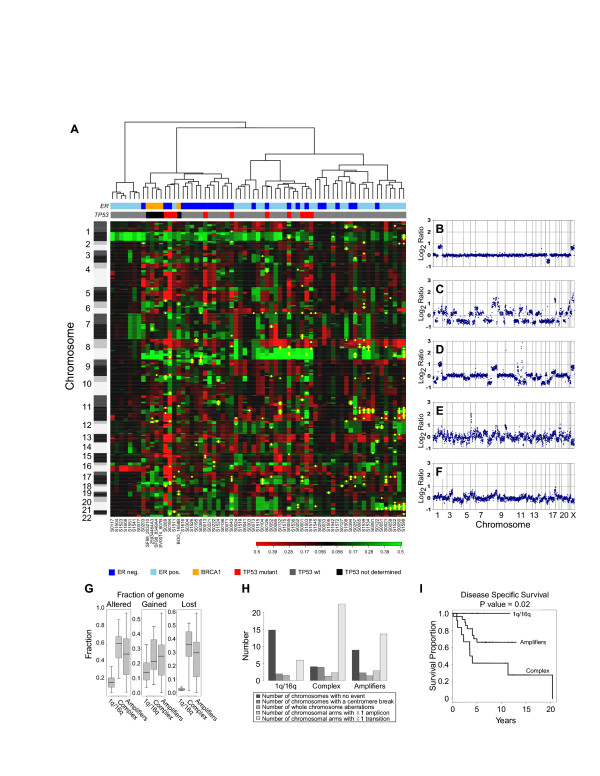
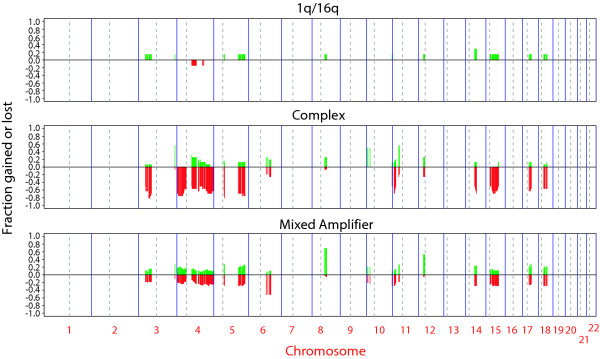
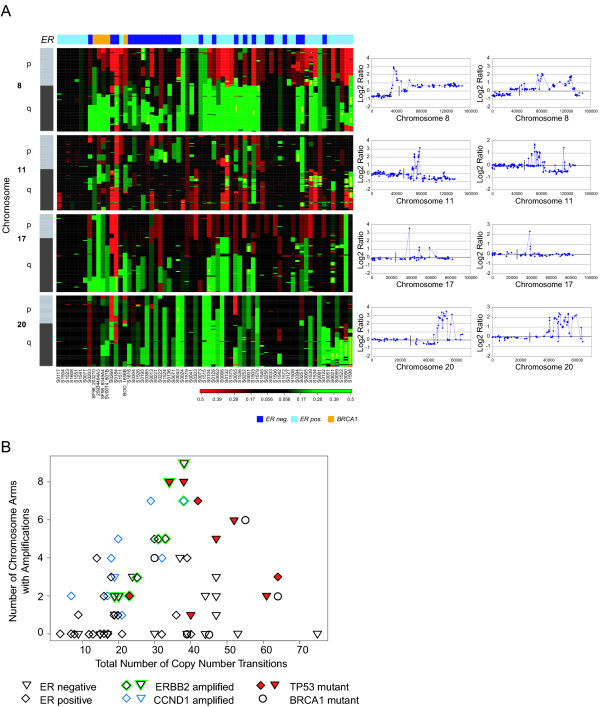
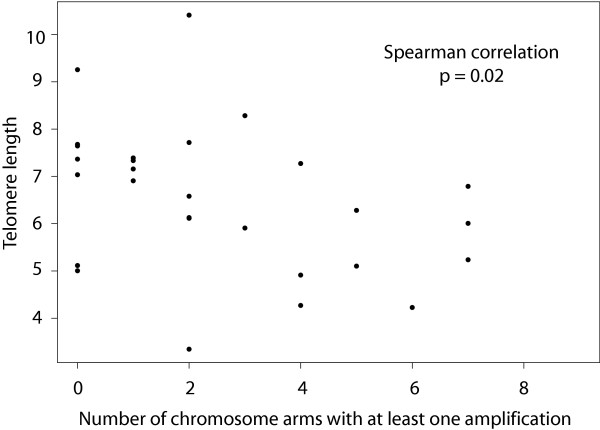
We discriminated three breast tumor subtypes based on genomic DNA copy number alterations. The subtypes varied with respect to level of genomic instability. We find that shorter telomeres and altered telomere related gene expression are associated with amplification, implicating telomere attrition as a promoter of this type of aberration in breast cancer. On the other hand, the numbers of chromosomal alterations, particularly low level changes, are associated with altered expression of genes in other functional classes (mitosis, cell cycle, DNA replication and repair). Further, although loss of function instability phenotypes have been demonstrated for many of the genes in model systems, we observed enhanced expression of most genes in tumors, indicating that over expression, rather than deficiency underlies instability.
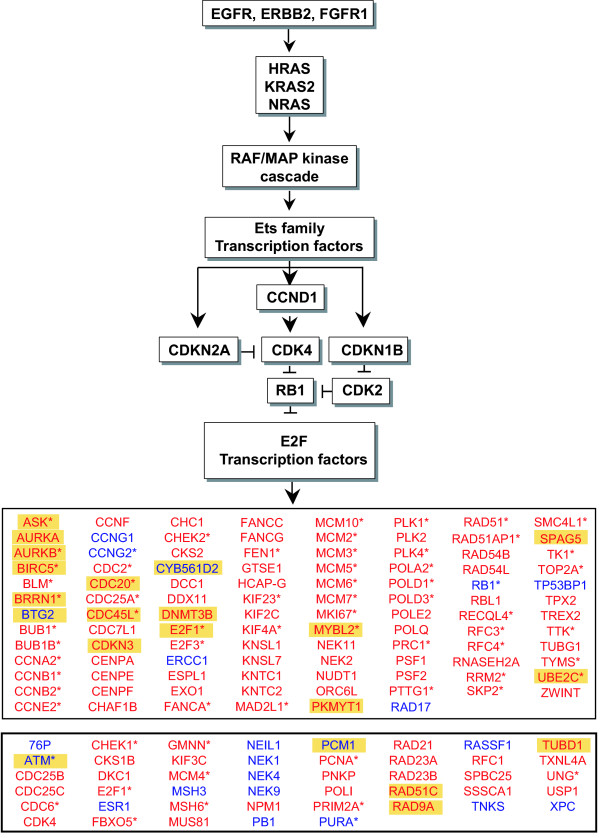
Many of the genes associated with higher frequency of copy number aberrations are direct targets of E2F, supporting the hypothesis that deregulation of the Rb pathway is a major contributor to chromosomal instability in breast tumors. These observations are consistent with failure to find mutations in sporadic tumors in genes that have roles in maintenance or manipulation of the genome.
基因组DNA拷贝数畸变在实体瘤中很常见,尽管肿瘤中染色体不稳定的潜在原因仍不清楚。那些在突变时可能具有基因组不稳定表型的基因(例如参与有丝分裂、复制、修复和端粒的基因)在染色体不稳定的散发性肿瘤中很少发生突变,尽管此类突变与一些遗传性癌症易感综合征相关。
我们将阵列比较基因组杂交(CGH)应用于乳腺肿瘤分析。肿瘤之间基因组不稳定水平的差异促使我们研究参与基因组维持和/或调控的过程/基因的改变是否与特定类型的基因组不稳定相关。
我们根据基因组DNA拷贝数改变区分出三种乳腺肿瘤亚型。这些亚型在基因组不稳定水平方面存在差异。我们发现较短的端粒和端粒相关基因表达的改变与扩增相关,这表明端粒损耗是乳腺癌中此类畸变的一个促进因素。另一方面,染色体改变的数量,尤其是低水平改变,与其他功能类别(有丝分裂、细胞周期、DNA复制和修复)中基因表达的改变相关。此外,尽管在模型系统中已证明许多基因具有功能丧失性不稳定表型,但我们观察到肿瘤中大多数基因的表达增强,这表明不稳定的基础是过表达而非缺陷。
许多与拷贝数畸变频率较高相关的基因是E2F的直接靶点,这支持了Rb通路失调是乳腺肿瘤染色体不稳定的主要促成因素这一假说。这些观察结果与在散发性肿瘤中未发现参与基因组维持或调控的基因突变一致。