Laboratory of Enzyme Chemistry, Faculty of Applied Biological Science, Hiroshima University, Kagamiyama, Higashi-Hiroshima, 724 Japan.
Plant Physiol. 1992 Sep;100(1):231-7. doi: 10.1104/pp.100.1.231.
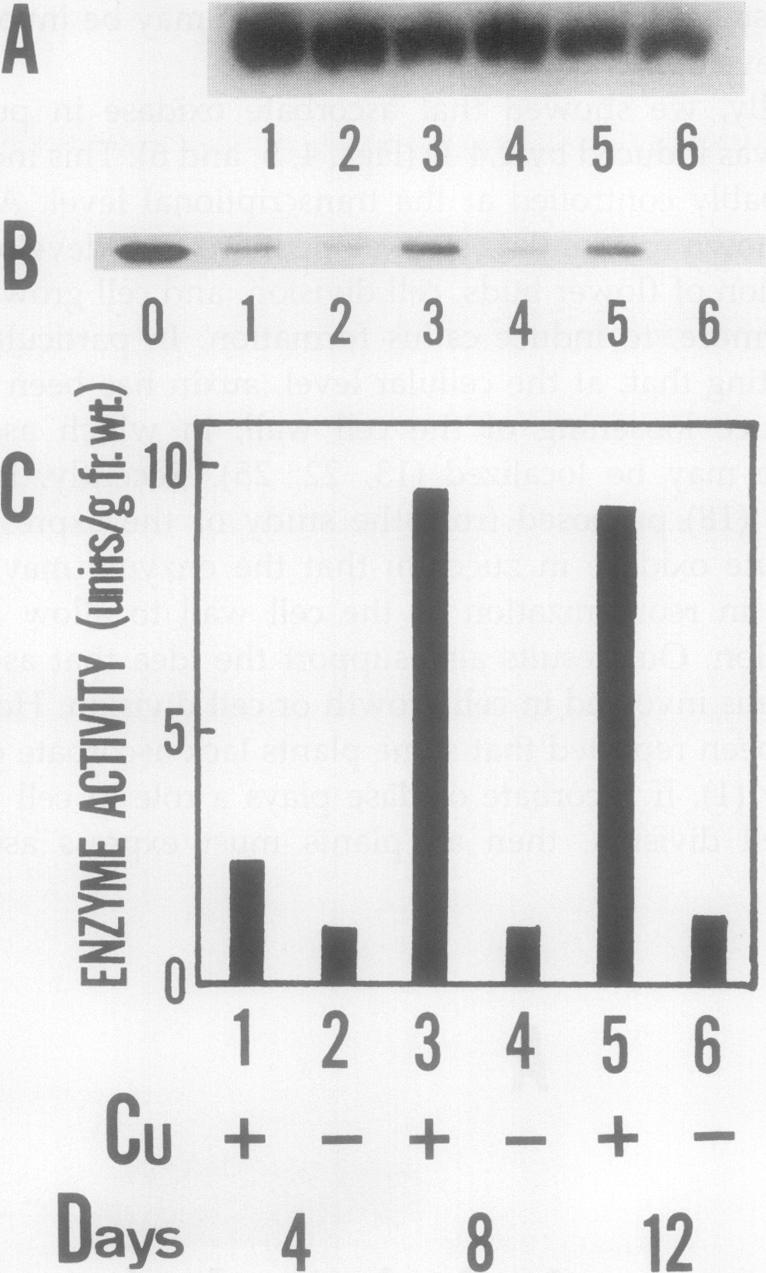
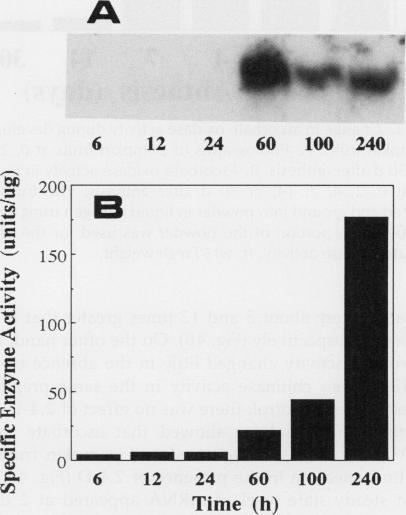
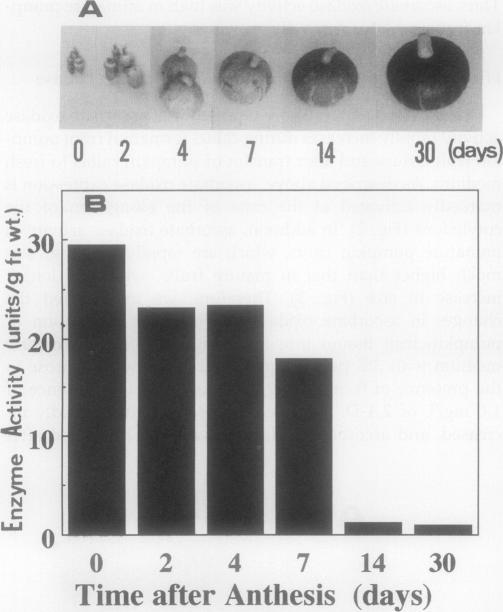
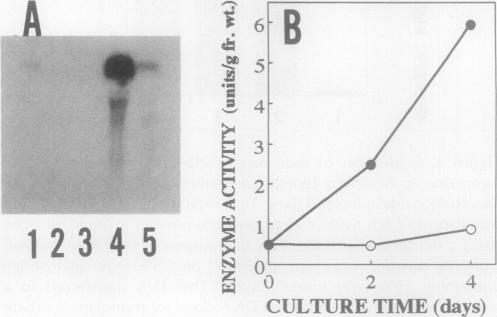
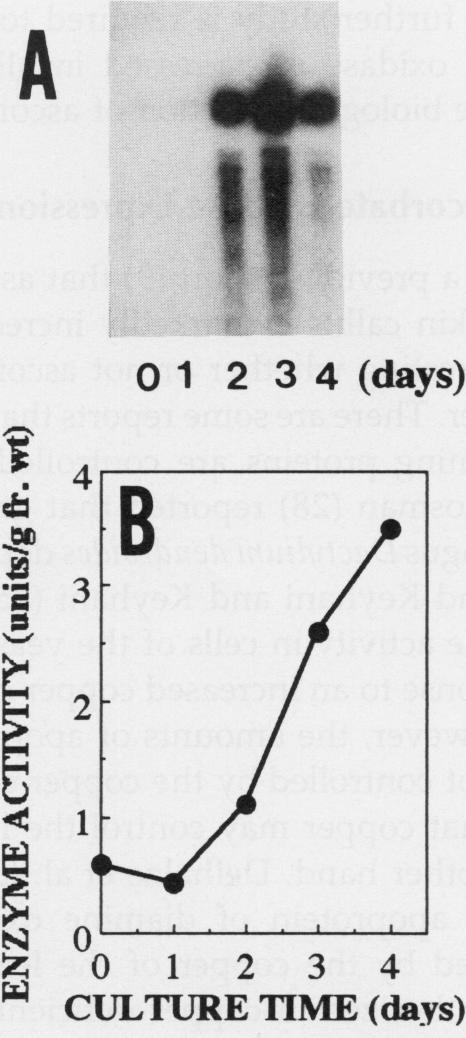
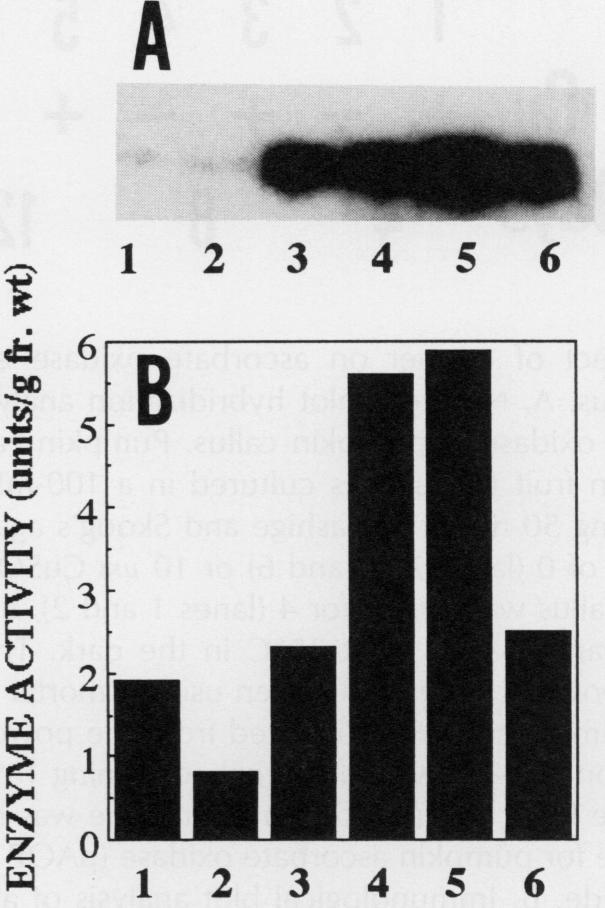
Ascorbate oxidase expression in pumpkin (Cucurbita spp.) tissues was studied. Specific ascorbate oxidase activities in pumpkin leaf and stem tissues were about 2 and 1.5 times that in the fruit tissues, respectively. In seeds, little ascorbate oxidase activity was detected. Northern blot analyses showed an abundant ascorbate oxidase mRNA in leaf and stem tissues. Fruit tissues had lower levels of ascorbate oxidase mRNA than leaf and stem tissues. Ascorbate oxidase mRNA was not detected in seeds. Specific ascorbate oxidase activity gradually increased during early seedling growth of pumpkin seeds. The increase was accompanied by an increase in ascorbate oxidase mRNA. When ascorbate oxidase activity in developing pumpkin fruits was investigated, the activities in immature fruits that are rapidly growing at 0, 2, 4, and 7 d after anthesis were much higher than those in mature fruits at 14 and 30 d after anthesis. The specific activity and mRNA of ascorbate oxidase markedly increased after inoculation of pumpkin fruit tissues into Murashige and Skoog's culture medium in the presence of an auxin such as 2,4-dichlorophenoxyacetic acid (2,4-D) but not in the absence of 2,4-D. In the presence of 10 mg/L of 2,4-D, ascorbate oxidase mRNA was the most abundant. Thus, ascorbate oxidase is induced by 2,4-D. These results indicate that ascorbate oxidase is involved in cell growth. In pumpkin callus, ascorbate oxidase activity could be markedly increased by adding copper. Furthermore, immunological blotting showed that the amount of ascorbate oxidase protein was also increased by adding copper. However, northern blot analyses showed that ascorbate oxidase mRNA was not increased by adding copper. We suggest that copper may control ascorbate oxidase expression at translation or at a site after translation.
研究了南瓜(Cucurbita spp.)组织中抗坏血酸氧化酶的表达。南瓜叶和茎组织中的特异性抗坏血酸氧化酶活性分别约为果实组织的 2 倍和 1.5 倍。在种子中,检测到的抗坏血酸氧化酶活性很小。Northern blot 分析显示,叶片和茎组织中存在丰富的抗坏血酸氧化酶 mRNA。果实组织中的抗坏血酸氧化酶 mRNA 水平低于叶片和茎组织。在种子中未检测到抗坏血酸氧化酶 mRNA。随着南瓜种子幼苗生长,特异性抗坏血酸氧化酶活性逐渐增加。这种增加伴随着抗坏血酸氧化酶 mRNA 的增加。当研究发育中的南瓜果实中抗坏血酸氧化酶的活性时,发现授粉后 0、2、4 和 7 天快速生长的未成熟果实中的活性远高于授粉后 14 和 30 天的成熟果实。在含有生长素(如 2,4-二氯苯氧乙酸(2,4-D))的 Murashige 和 Skoog 培养基中接种南瓜果实组织后,抗坏血酸氧化酶的比活性和 mRNA 明显增加,但在没有 2,4-D 的情况下则不然。在 10 mg/L 的 2,4-D 存在下,抗坏血酸氧化酶 mRNA 最为丰富。因此,抗坏血酸氧化酶被 2,4-D 诱导。这些结果表明,抗坏血酸氧化酶参与细胞生长。在南瓜愈伤组织中,添加铜可显著增加抗坏血酸氧化酶活性。此外,免疫印迹显示,添加铜也可增加抗坏血酸氧化酶蛋白的量。然而,Northern blot 分析显示,添加铜不会增加抗坏血酸氧化酶 mRNA 的量。我们认为,铜可能在翻译或翻译后位点控制抗坏血酸氧化酶的表达。