Department of Plant Genetics, The Weizmann Institute of Science, Rehovot 76100 Israel.
Plant Physiol. 1987 Jun;84(2):348-52. doi: 10.1104/pp.84.2.348.
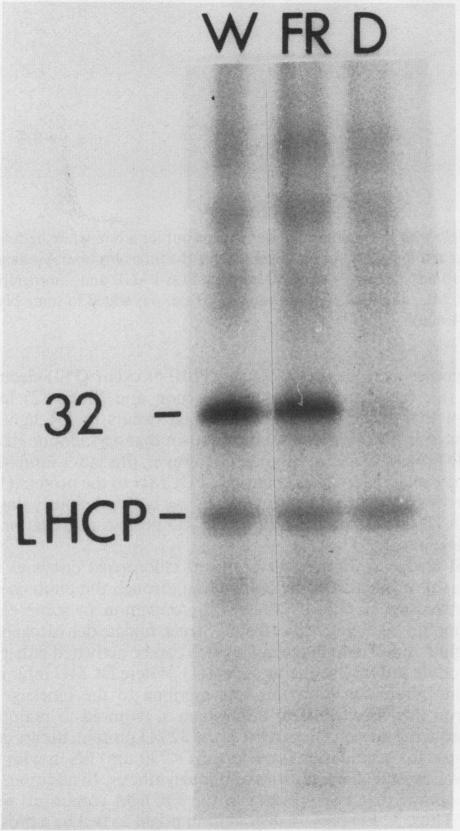
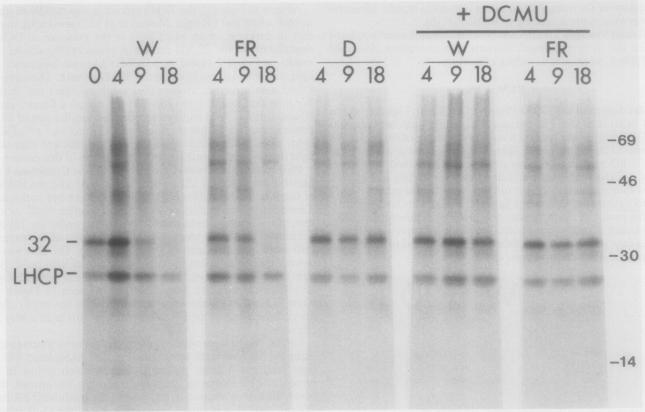
White light (400-700 nanometers) supports the activity of photosystem I (PSI) and photosystem II while far red light (>/=700 nanometers) supports PSI almost exclusively. In intact fronds of Spirodela oligorrhiza, turnover of the 32 kilodaltons herbicide binding protein is stimulated under both these light conditions, although not in the dark or at wavelengths >730 nanometers. As is the case in white light, the far red light induced degradation of the protein is inhibited by DCMU. The means by which far red light operates is unclear. Hypotheses considered include: PSI activated proteolysis, PSI-induced formation of semiquinone anions, and PSI-generated free radicals.
白光(400-700 纳米)支持光系统 I(PSI)和光系统 II 的活动,而远红光(>/=700 纳米)几乎仅支持 PSI。在完整的紫萍叶片中,32 千道尔顿的除草剂结合蛋白的周转在这两种光照条件下都受到刺激,尽管在黑暗中或波长 >730 纳米时不受刺激。与在白光中的情况一样,远红光诱导的蛋白质降解被 DCMU 抑制。远红光作用的方式尚不清楚。考虑的假设包括:PSI 激活的蛋白水解、PSI 诱导的半醌阴离子形成和 PSI 产生的自由基。