Department of Biology, Faculty of Science, Osaka City University, Sumiyoshi-ku, Osaka 558, Japan.
Plant Physiol. 1992 Apr;98(4):1298-303. doi: 10.1104/pp.98.4.1298.
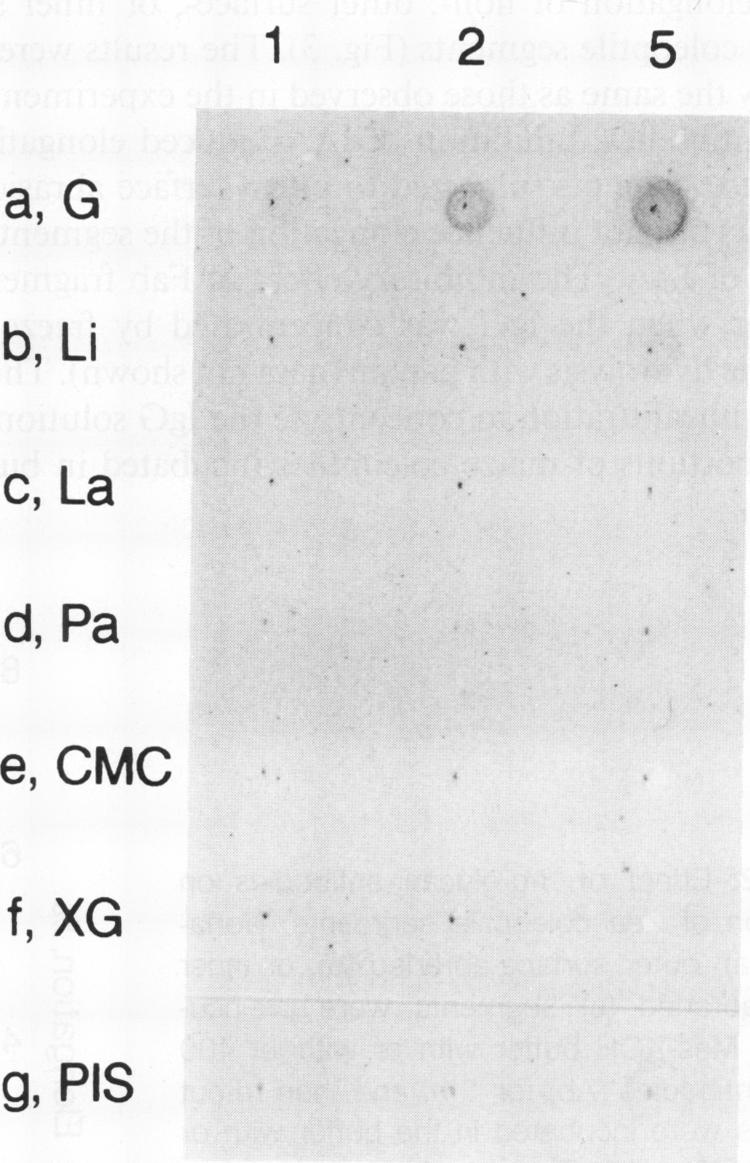
Polyclonal antibodies, raised against beta-d-glucans prepared from oat (Avena sativa L.) caryopses, cross-reacted specifically with (1-->3),(1-->4)-beta-d-glucans when challenged in a dot blot analysis of related polymers bound to a cellulose thin layer chromatography plate. The antibodies suppressed indoleacetic acid (IAA)-induced elongation of segments from maize (Zea mays L.) coleoptiles when the outer surface was abraded. However, IAA-induced elongation of nonabraded segments or segments with abrasion restricted to the interior of the cylinder was not influenced by the antibodies. Fab fragments prepared from the antibodies gave similar results. The capacity for IAA to overcome outward curvature of split coleoptile segments was partially reversed by treatment of the segments with the antibodies. Fluorescence microscopy revealed that antibody penetration was largely restricted to the epidermal cell wall region. These results support the view that the degradation of (1-->3),(1-->4)-beta-d-glucans in the outer epidermal cell wall serves an essential role in auxin-induced elongation of Poaceae coleoptiles.
多克隆抗体针对燕麦(Avena sativa L.)颖果中提取的β-D-葡聚糖制备,在点印迹分析相关聚合物与纤维素薄层色谱板结合时特异性地与(1-->3)、(1-->4)-β-D-葡聚糖发生交叉反应。当玉米(Zea mays L.)胚芽鞘外表面磨损时,这些抗体抑制吲哚乙酸(IAA)诱导的伸长。然而,抗体对非磨损段或仅磨损柱体内侧的段的 IAA 诱导伸长没有影响。抗体制备的 Fab 片段给出了类似的结果。用抗体处理可部分逆转 IAA 克服分裂胚芽鞘段向外弯曲的能力。荧光显微镜显示,抗体渗透主要局限于表皮细胞壁区域。这些结果支持以下观点,即在禾本科胚芽鞘中,(1-->3)、(1-->4)-β-D-葡聚糖在外表皮细胞壁中的降解在生长素诱导的伸长中起着重要作用。