Sundar S S, Zhang H, Brown P, Manek S, Han C, Kaur K, Charnock M F L, Jackson D, Ganesan T S
Ovarian Cancer Group, Cancer Research UK Molecular Oncology Laboratories, Weatherall Institute of Molecular Medicine, John Radcliffe Hospital, Oxford OX3 9DS, UK.
Br J Cancer. 2006 Jun 5;94(11):1650-7. doi: 10.1038/sj.bjc.6603144.
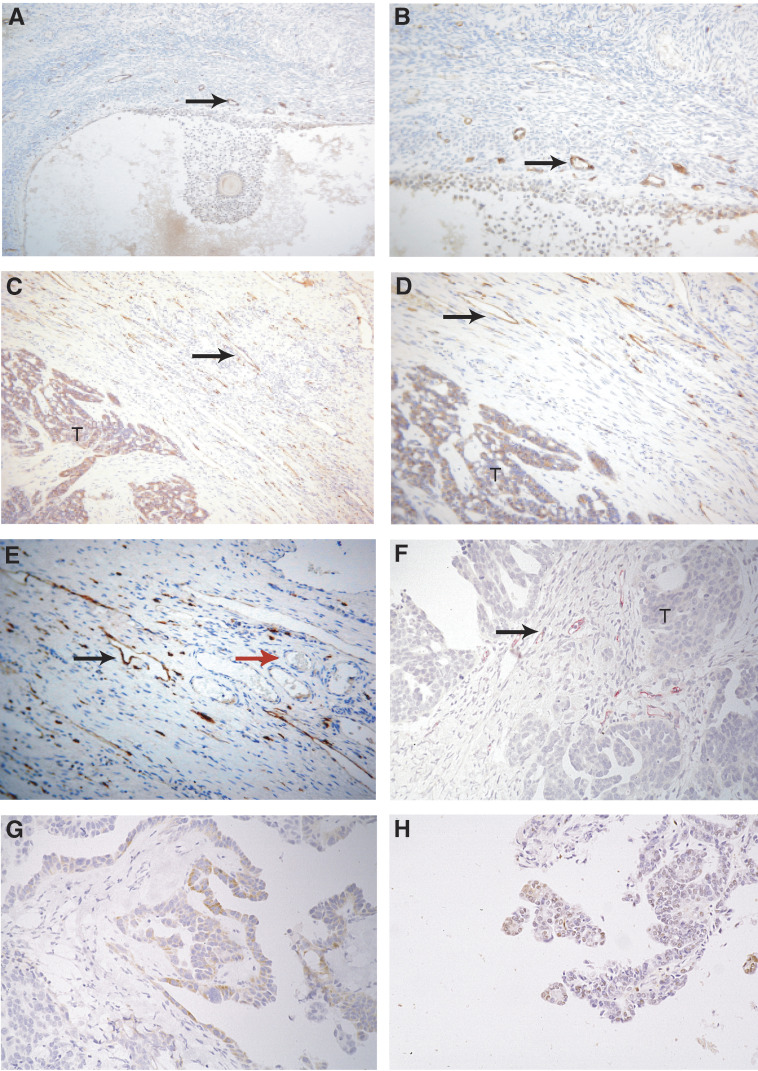
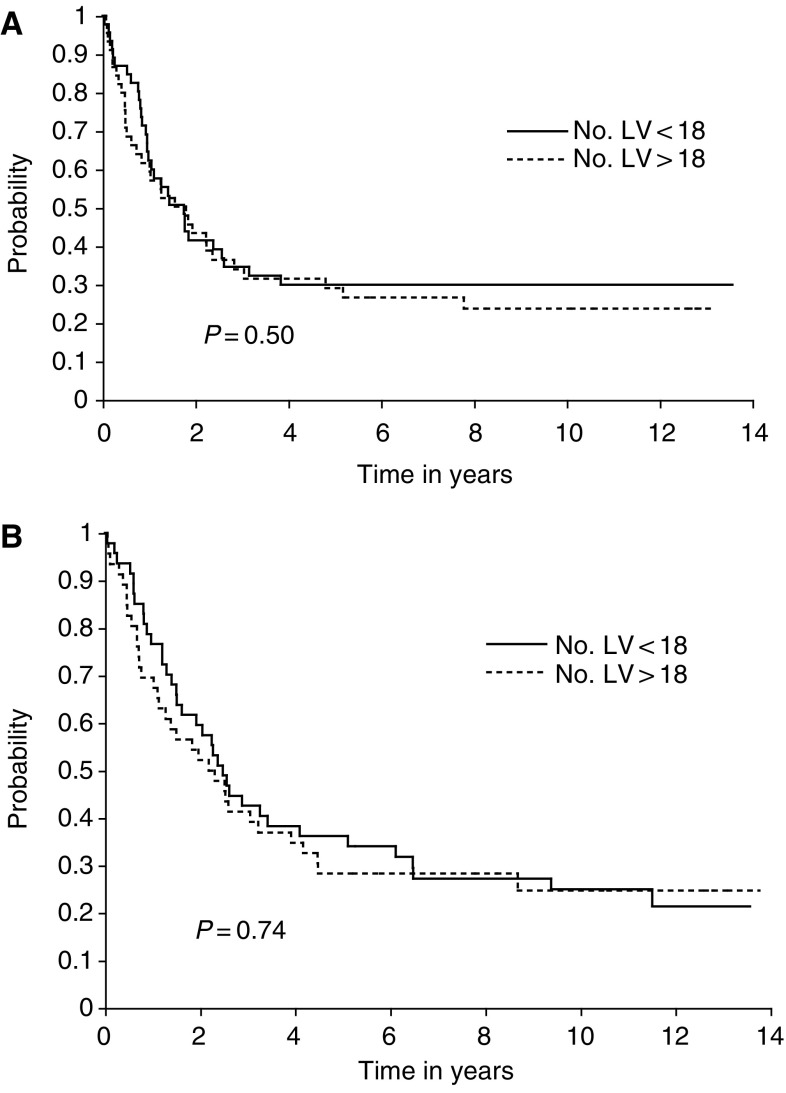
We investigated the significance of lymphatic count, vascular count and angiogenic growth factors using immunohistochemistry in 108 tumour specimens of epithelial ovarian cancer with antibodies to lymphatic vessel endothelial hyaluronan receptor (LYVE-1), platelet endothelial cell adhesion molecule CD31, vascular endothelial growth factor (VEGF) and thymidine phosphorylase (TP) in epithelial ovarian cancer to understand the pathogenesis of metastasis in ovarian cancer. The effect of prognostic variables on progression-free and overall survival was assessed. On multivariate analysis, bulky residual disease after surgery was the best prognostic indicator (P<0.001) for progression-free and overall survival (P<0.001). Lymphatic count was statistically significant as a prognostic factor for progression-free (P=0.05) and overall survival (P=0.04). However, lymphatic count did not impact on survival curves. No correlation was found between lymphatic count and age, histological subtype, FIGO stage or residual disease. Vascular count, VEGF or TP expressions were not significant in either analysis. Lymphatic spread may be significant in aiding metastases in ovarian cancer but requires other biological factors to act in conjunction, as it does not have clearcut prognostic significance. Dissemination of ovarian cancer does not occur primarily through vascular or lymphatic routes but may occur through direct intraperitoneal spread of disease.
我们采用免疫组织化学方法,使用针对淋巴管内皮透明质酸受体(LYVE-1)、血小板内皮细胞黏附分子CD31、血管内皮生长因子(VEGF)和胸苷磷酸化酶(TP)的抗体,对108例上皮性卵巢癌肿瘤标本进行研究,以探讨淋巴管计数、血管计数和血管生成生长因子在卵巢癌转移发病机制中的意义。评估了预后变量对无进展生存期和总生存期的影响。多因素分析显示,术后大块残留病灶是无进展生存期(P<0.001)和总生存期(P<0.001)的最佳预后指标。淋巴管计数作为无进展生存期(P=0.05)和总生存期(P=0.04)的预后因素具有统计学意义。然而,淋巴管计数并未影响生存曲线。淋巴管计数与年龄、组织学亚型、国际妇产科联盟(FIGO)分期或残留病灶之间未发现相关性。血管计数、VEGF或TP表达在任何一项分析中均无显著意义。淋巴管扩散在卵巢癌转移中可能具有重要意义,但需要其他生物学因素协同作用,因为其没有明确的预后意义。卵巢癌的播散并非主要通过血管或淋巴管途径,而是可能通过疾病的直接腹膜内扩散发生。