IFOM - The FIRC Institute of Molecular Oncology, Milano, Italy.
EMBO Mol Med. 2011 Aug;3(8):480-94. doi: 10.1002/emmm.201100152. Epub 2011 Jul 8.
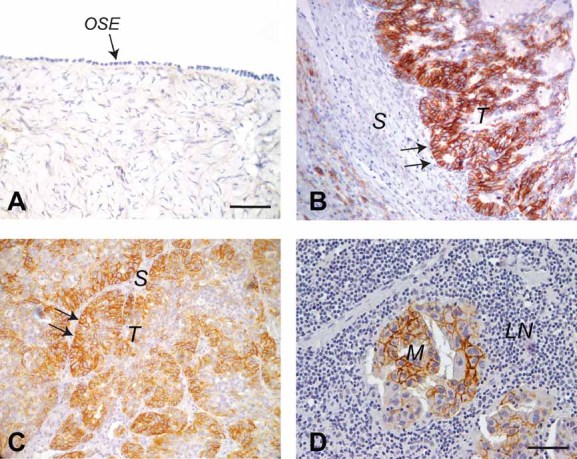
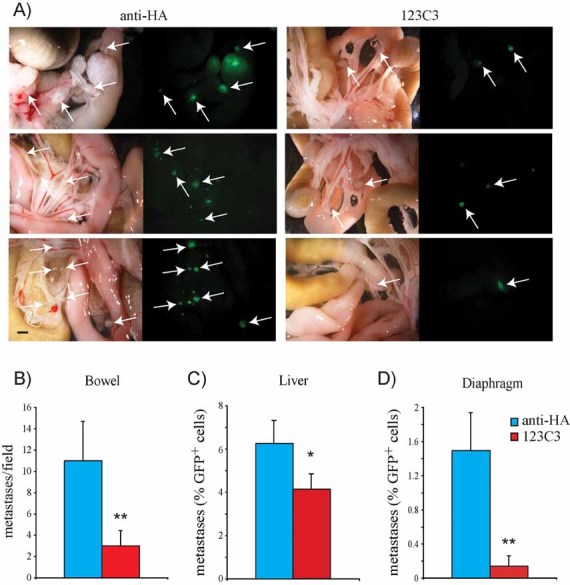
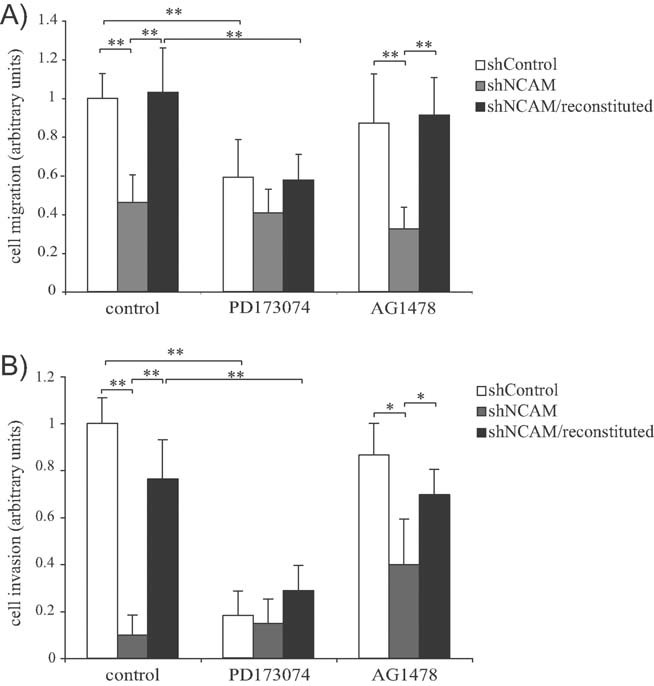
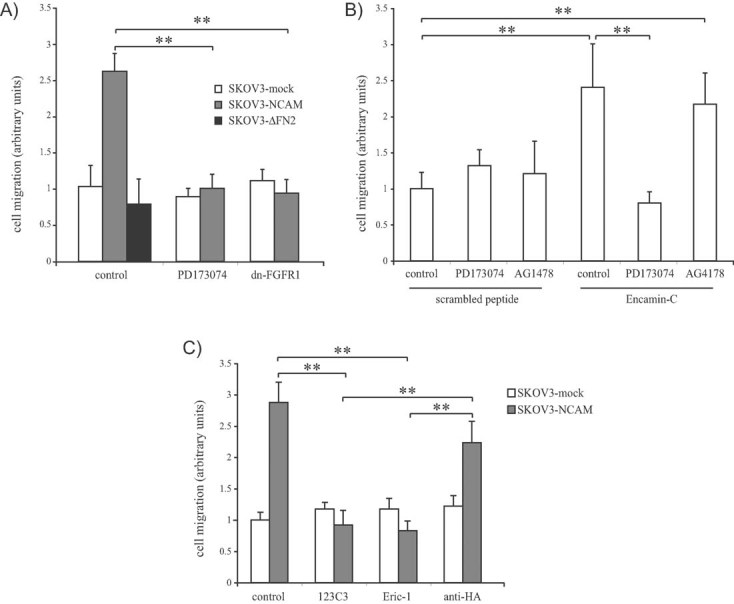
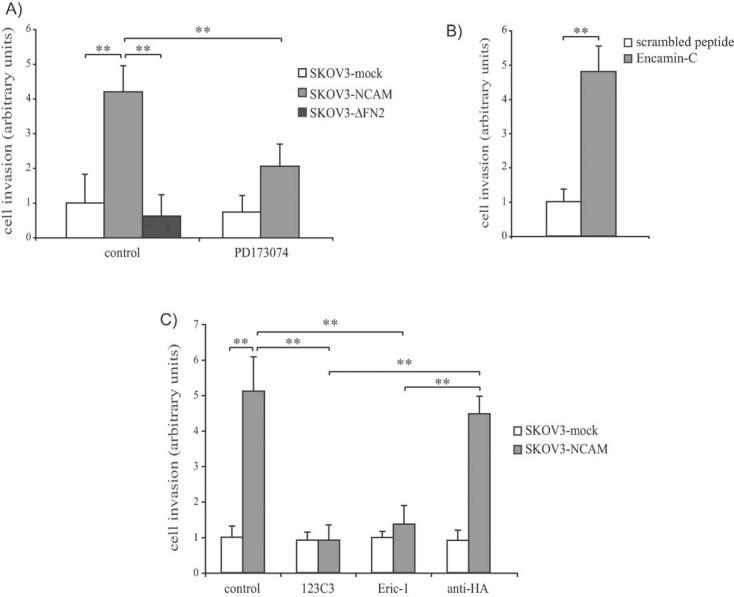
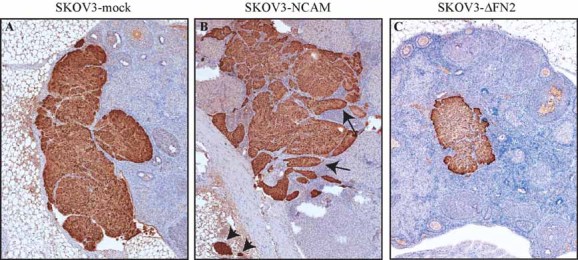
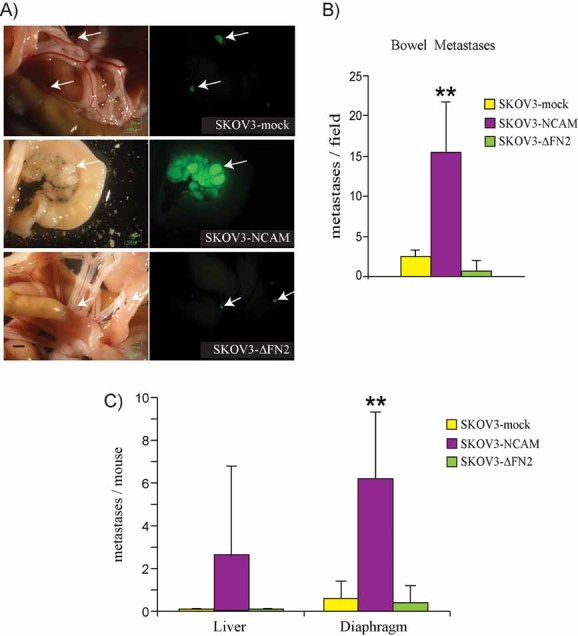
Epithelial ovarian carcinoma (EOC) is an aggressive neoplasm, which mainly disseminates to organs of the peritoneal cavity, an event mediated by molecular mechanisms that remain elusive. Here, we investigated the expression and functional role of neural cell adhesion molecule (NCAM), a cell surface glycoprotein involved in brain development and plasticity, in EOC. NCAM is absent from normal ovarian epithelium but becomes highly expressed in a subset of human EOC, in which NCAM expression is associated with high tumour grade, suggesting a causal role in cancer aggressiveness. We demonstrate that NCAM stimulates EOC cell migration and invasion in vitro and promotes metastatic dissemination in mice. This pro-malignant function of NCAM is mediated by its interaction with fibroblast growth factor receptor (FGFR). Indeed, not only FGFR signalling is required for NCAM-induced EOC cell motility, but targeting the NCAM/FGFR interplay with a monoclonal antibody abolishes the metastatic dissemination of EOC in mice. Our results point to NCAM-mediated stimulation of FGFR as a novel mechanism underlying EOC malignancy and indicate that this interplay may represent a valuable therapeutic target.
上皮性卵巢癌 (EOC) 是一种侵袭性肿瘤,主要播散至腹膜腔的器官,其介导事件的分子机制仍不清楚。在这里,我们研究了神经细胞粘附分子 (NCAM) 的表达和功能作用,NCAM 是一种参与大脑发育和可塑性的细胞表面糖蛋白,存在于正常卵巢上皮中,但在一部分人类 EOC 中高度表达,NCAM 表达与高肿瘤分级相关,提示其在癌症侵袭性中起因果作用。我们证明 NCAM 可刺激体外 EOC 细胞迁移和侵袭,并促进小鼠的转移性播散。NCAM 的这种促癌功能是通过其与成纤维细胞生长因子受体 (FGFR) 的相互作用介导的。事实上,不仅 NCAM 诱导的 EOC 细胞迁移需要 FGFR 信号,而且用单克隆抗体靶向 NCAM/FGFR 相互作用可消除小鼠中 EOC 的转移性播散。我们的研究结果表明,NCAM 介导的 FGFR 刺激是 EOC 恶性的一种新机制,并表明这种相互作用可能是一个有价值的治疗靶点。