Linial Michal
Dept of Biological Chemistry, The Hebrew University of Jerusalem, 91904, Israel.
BMC Bioinformatics. 2006 Mar 20;7 Suppl 1(Suppl 1):S6. doi: 10.1186/1471-2105-7-S1-S6.
Neuronal communication is tightly regulated in time and in space. The neuronal transmission takes place in the nerve terminal, at a specialized structure called the synapse. Following neuronal activation, an electrical signal triggers neurotransmitter (NT) release at the active zone. The process starts by the signal reaching the synapse followed by a fusion of the synaptic vesicle and diffusion of the released NT in the synaptic cleft; the NT then binds to the appropriate receptor, and as a result, a potential change at the target cell membrane is induced. The entire process lasts for only a fraction of a millisecond. An essential property of the synapse is its capacity to undergo biochemical and morphological changes, a phenomenon that is referred to as synaptic plasticity.
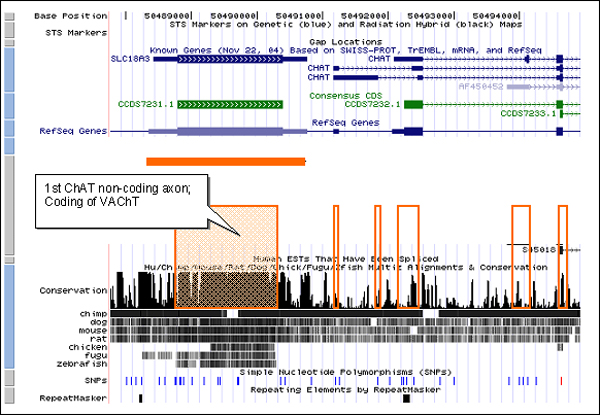
In this survey, we consider the mammalian brain synapse as our model. We take a cell biological and a molecular perspective to present fundamental properties of the synapse:(i) the accurate and efficient delivery of organelles and material to and from the synapse; (ii) the coordination of gene expression that underlies a particular NT phenotype; (iii) the induction of local protein expression in a subset of stimulated synapses. We describe the computational facet and the formulation of the problem for each of these topics.
Predicting the behavior of a synapse under changing conditions must incorporate genomics and proteomics information with new approaches in computational biology.
神经元通讯在时间和空间上受到严格调控。神经元传递发生在神经末梢,在一个称为突触的特殊结构处。神经元激活后,电信号在活性区触发神经递质(NT)释放。这个过程始于信号到达突触,随后是突触小泡融合以及释放的神经递质在突触间隙扩散;神经递质然后与相应受体结合,结果在靶细胞膜上诱导电位变化。整个过程仅持续几毫秒。突触的一个基本特性是其经历生化和形态变化的能力,这种现象被称为突触可塑性。
在本综述中,我们将哺乳动物脑突触作为我们的模型。我们从细胞生物学和分子角度呈现突触的基本特性:(i)细胞器和物质往返突触的准确高效运输;(ii)特定神经递质表型背后的基因表达协调;(iii)在一部分受刺激突触中诱导局部蛋白质表达。我们描述了这些主题中每个主题的计算方面和问题的表述。
预测突触在变化条件下的行为必须将基因组学和蛋白质组学信息与计算生物学的新方法相结合。