Hosseini-Asl Saied, Modarressi Mohammad H, Atri Morteza, Salhab Mohamed, Mokbel Kefah, Mehdipour Parvin
Department of Medical Genetics, Faculty of Medicine, Tehran University of Medical Sciences, Tehran, IR, Iran.
J Carcinog. 2006 Jun 2;5:17. doi: 10.1186/1477-3163-5-17.
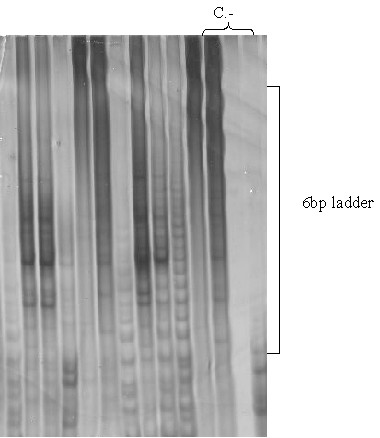
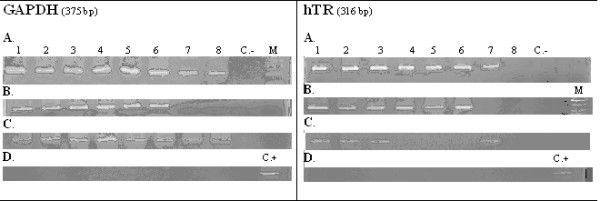
Telomerase is a ribonucleoprotein enzyme that compensates for the telomere length shortening which occurs during the cell cycle. Telomerase activity has been detected in most tumours but not in somatic cells. However, hTR; the RNA component of telomerase; has been reported to be universally expressed in both cancerous and non-cancerous tissues. Tumour samples from 50 patients with primary invasive breast cancer were collected. The TRAP assay was used to detect telomerase activity. RT-PCR on cDNA and DNased cDNA samples and control groups was used to detect the expression of hTR, GAPDH and PGM1 genes. Seventy-two percent of samples showed telomerase activity. DNA contamination was detected in 36 (72%) of RNA samples. Without performing DNase treatment, 49 (98%) of all samples showed hTR expression, but with the application of this strategy, hTR expression decreased from 98% to 64%. A significant association (p < 0.001) between hTR expression and telomerase activity was observed. Among the 32 hTR positive samples, 30 had telomerase activity and among the 18 hTR negative samples, telomerase activity was observed in 6 cases. Thus the application of this strategy could provide an applicable tool to use instead of the TRAP assay thus facilitating telomerase research in cancer genetic investigations.
端粒酶是一种核糖核蛋白酶,可补偿细胞周期中发生的端粒长度缩短。在大多数肿瘤中已检测到端粒酶活性,但在体细胞中未检测到。然而,据报道,端粒酶的RNA成分hTR在癌组织和非癌组织中均普遍表达。收集了50例原发性浸润性乳腺癌患者的肿瘤样本。采用端粒重复序列扩增法(TRAP)检测端粒酶活性。对cDNA、经DNA酶处理的cDNA样本和对照组进行逆转录聚合酶链反应(RT-PCR),以检测hTR、甘油醛-3-磷酸脱氢酶(GAPDH)和磷酸葡萄糖变位酶1(PGM1)基因的表达。72%的样本显示端粒酶活性。在36份(72%)RNA样本中检测到DNA污染。未进行DNA酶处理时,所有样本中有49份(98%)显示hTR表达,但应用该策略后,hTR表达从98%降至64%。观察到hTR表达与端粒酶活性之间存在显著关联(p<0.001)。在32份hTR阳性样本中,30份具有端粒酶活性,在18份hTR阴性样本中,有6份观察到端粒酶活性。因此,该策略的应用可以提供一种适用的工具来替代TRAP检测,从而促进癌症基因研究中的端粒酶研究。