Maudsley A A, Darkazanli A, Alger J R, Hall L O, Schuff N, Studholme C, Yu Y, Ebel A, Frew A, Goldgof D, Gu Y, Pagare R, Rousseau F, Sivasankaran K, Soher B J, Weber P, Young K, Zhu X
Department of Radiology, MR Center, Miller School of Medicine, University of Miami, Miami, FL 33136, USA.
NMR Biomed. 2006 Jun;19(4):492-503. doi: 10.1002/nbm.1025.
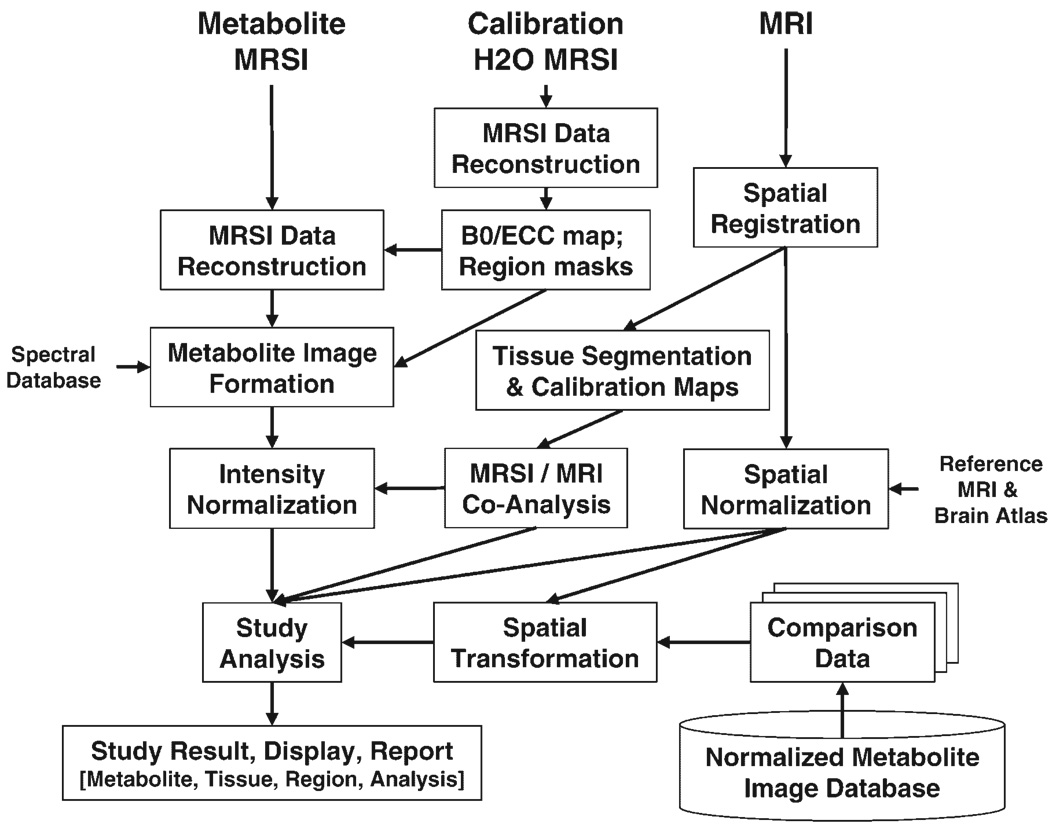
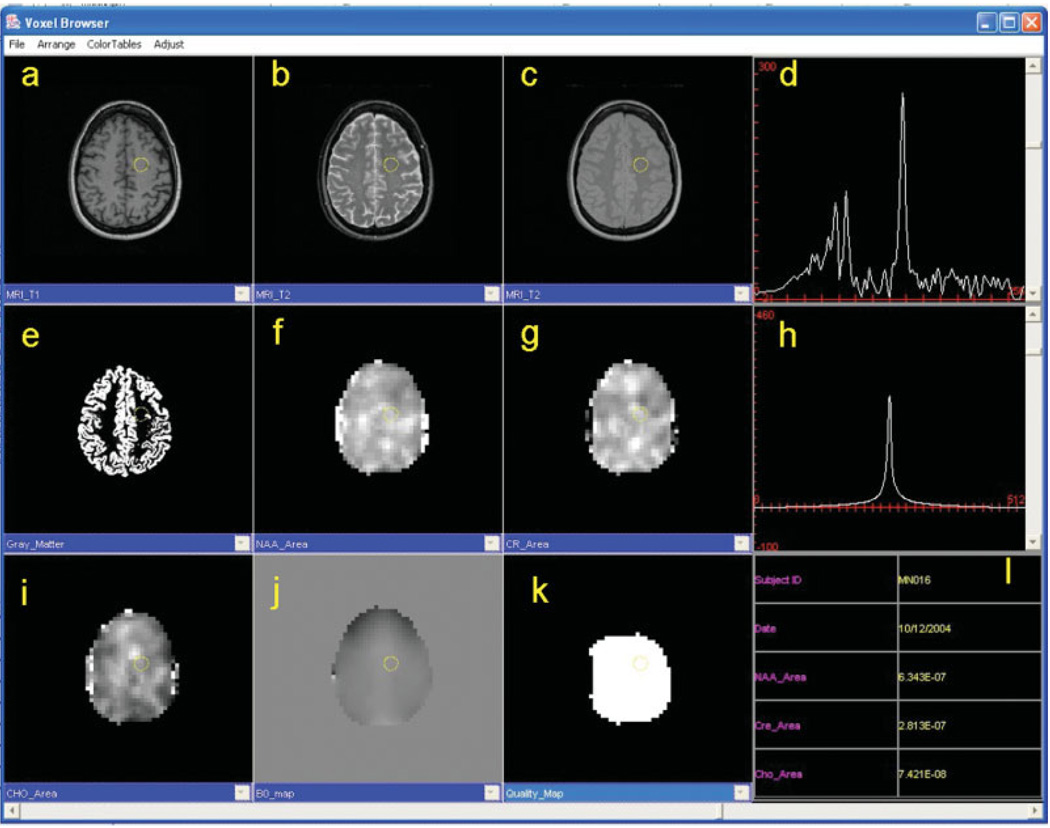
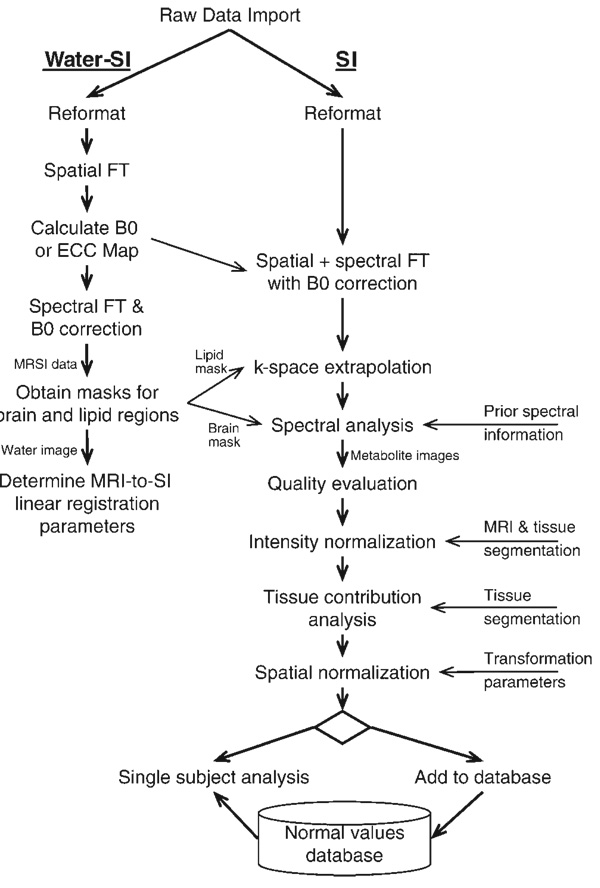
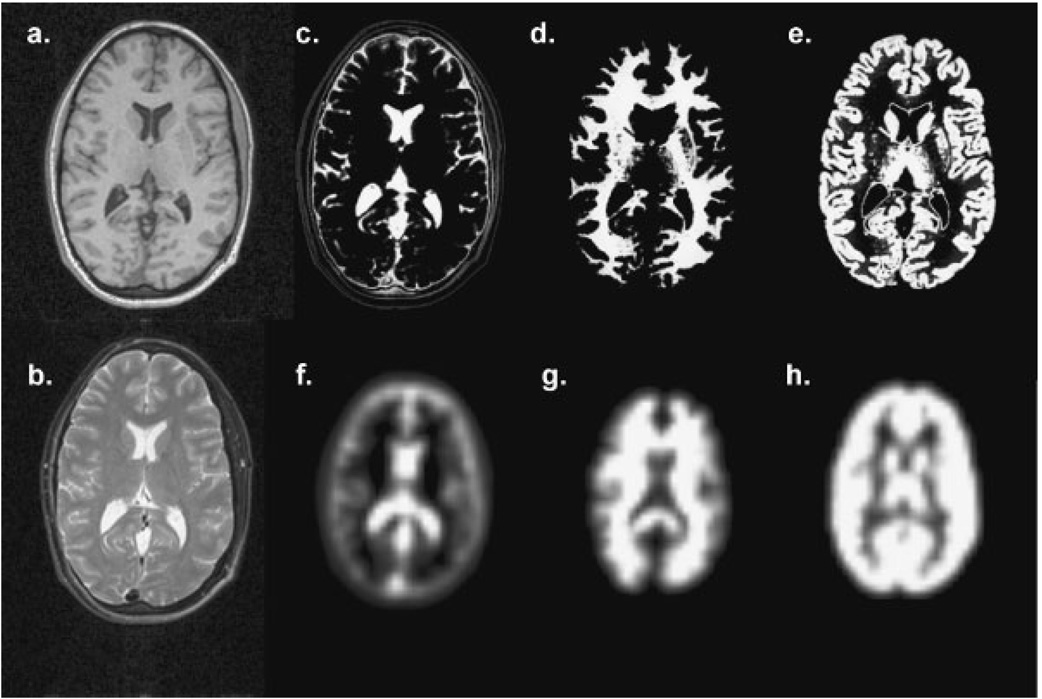
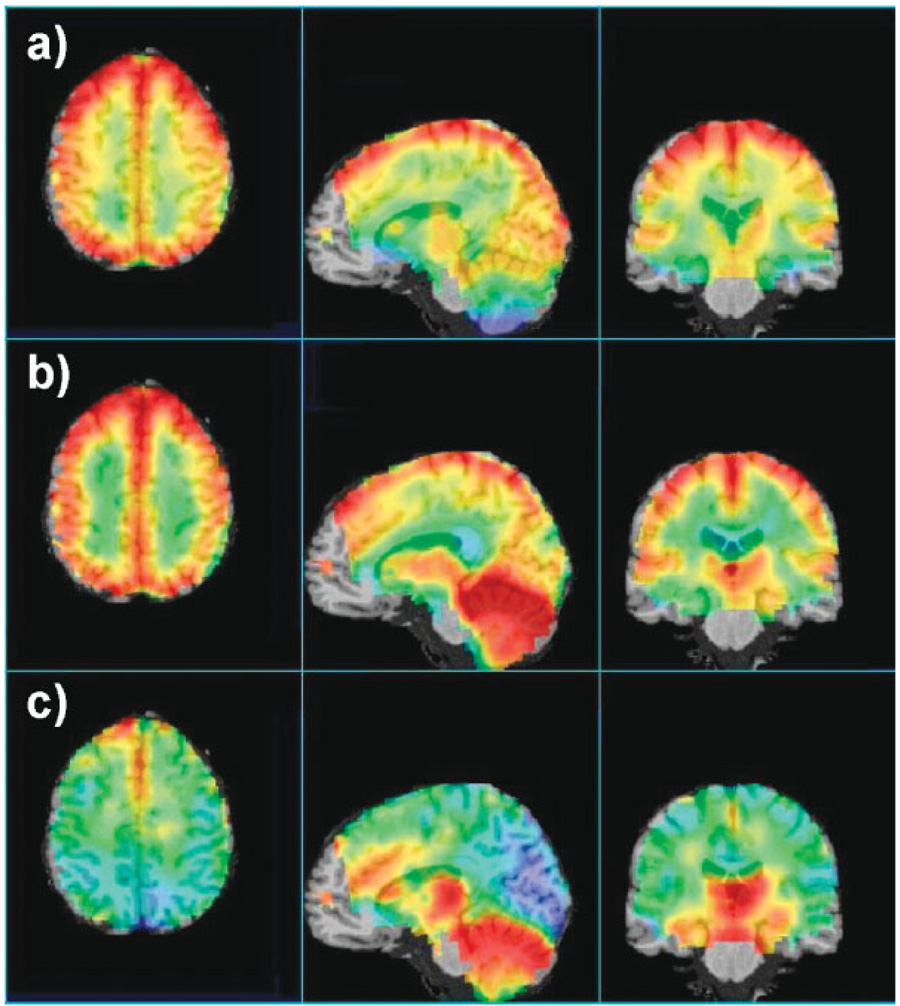
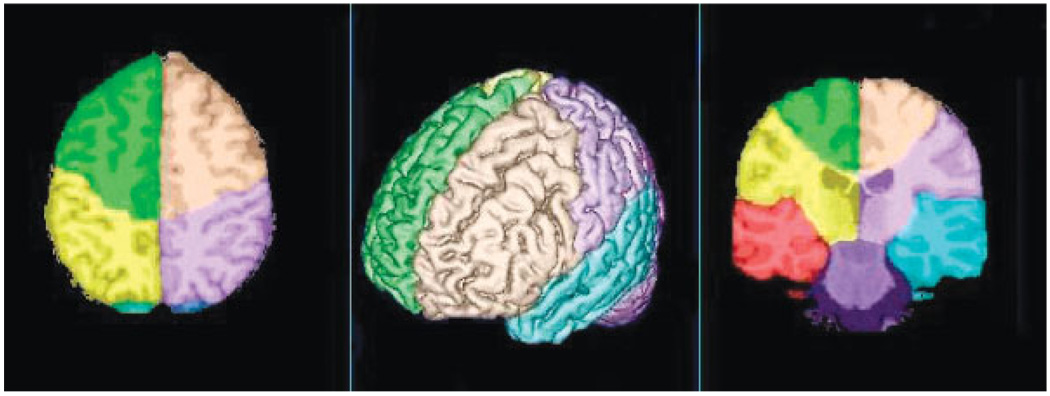
Image reconstruction for magnetic resonance spectroscopic imaging (MRSI) requires specialized spatial and spectral data processing methods and benefits from the use of several sources of prior information that are not commonly available, including MRI-derived tissue segmentation, morphological analysis and spectral characteristics of the observed metabolites. In addition, incorporating information obtained from MRI data can enhance the display of low-resolution metabolite images and multiparametric and regional statistical analysis methods can improve detection of altered metabolite distributions. As a result, full MRSI processing and analysis can involve multiple processing steps and several different data types. In this paper, a processing environment is described that integrates and automates these data processing and analysis functions for imaging of proton metabolite distributions in the normal human brain. The capabilities include normalization of metabolite signal intensities and transformation into a common spatial reference frame, thereby allowing the formation of a database of MR-measured human metabolite values as a function of acquisition, spatial and subject parameters. This development is carried out under the MIDAS project (Metabolite Imaging and Data Analysis System), which provides an integrated set of MRI and MRSI processing functions. It is anticipated that further development and distribution of these capabilities will facilitate more widespread use of MRSI for diagnostic imaging, encourage the development of standardized MRSI acquisition, processing and analysis methods and enable improved mapping of metabolite distributions in the human brain.
磁共振波谱成像(MRSI)的图像重建需要专门的空间和光谱数据处理方法,并且受益于使用一些通常无法获得的先验信息源,包括源自MRI的组织分割、形态学分析以及所观察代谢物的光谱特征。此外,纳入从MRI数据获得的信息可以增强低分辨率代谢物图像的显示效果,多参数和区域统计分析方法可以改善对代谢物分布变化的检测。因此,完整的MRSI处理和分析可能涉及多个处理步骤和几种不同的数据类型。本文描述了一种处理环境,该环境集成并自动化了这些数据处理和分析功能,用于对正常人类大脑中的质子代谢物分布进行成像。这些功能包括对代谢物信号强度进行归一化处理并转换到一个共同的空间参考框架,从而能够形成一个作为采集、空间和受试者参数函数的MR测量人类代谢物值数据库。这一开发工作是在MIDAS项目(代谢物成像与数据分析系统)下进行的,该项目提供了一套集成的MRI和MRSI处理功能。预计这些功能的进一步开发和推广将促进MRSI在诊断成像中的更广泛应用,鼓励标准化MRSI采集、处理和分析方法的发展,并能够改进人类大脑中代谢物分布的映射。