Kadota Koji, Ye Jiazhen, Nakai Yuji, Terada Tohru, Shimizu Kentaro
Graduate School of Agricultural and Life Sciences, The University of Tokyo, 1-1-1 Yayoi, Bunkyo-ku, Tokyo 113-8657, Japan.
BMC Bioinformatics. 2006 Jun 12;7:294. doi: 10.1186/1471-2105-7-294.
One of the important goals of microarray research is the identification of genes whose expression is considerably higher or lower in some tissues than in others. We would like to have ways of identifying such tissue-specific genes.
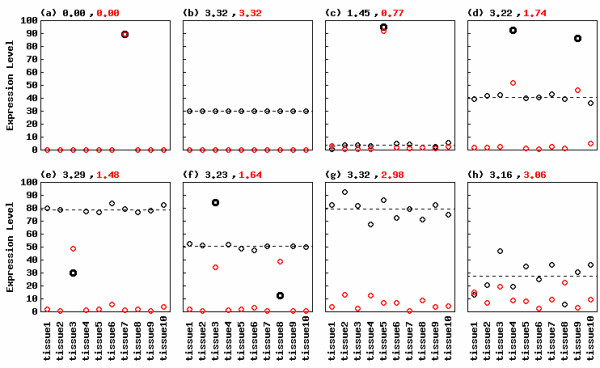
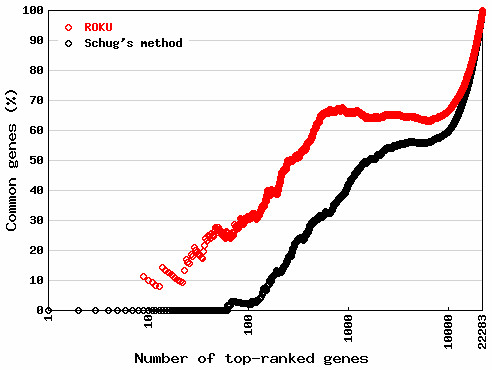
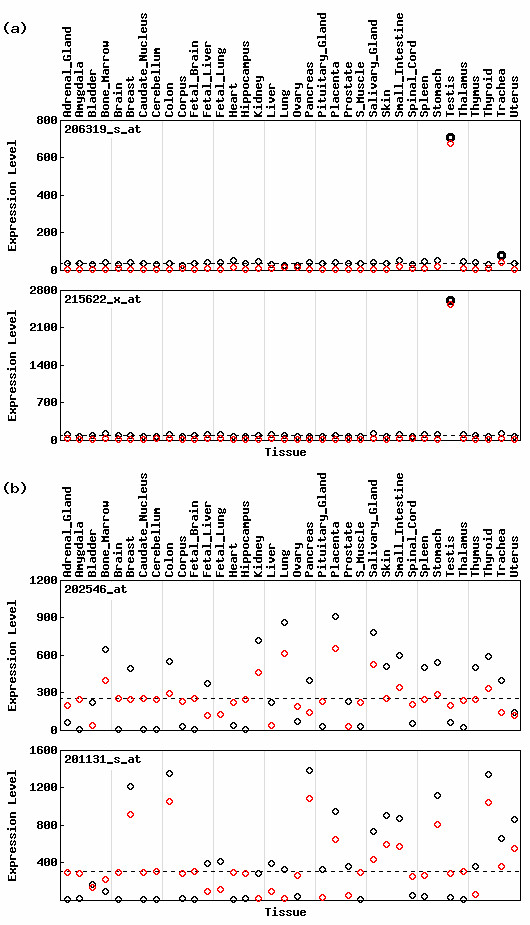
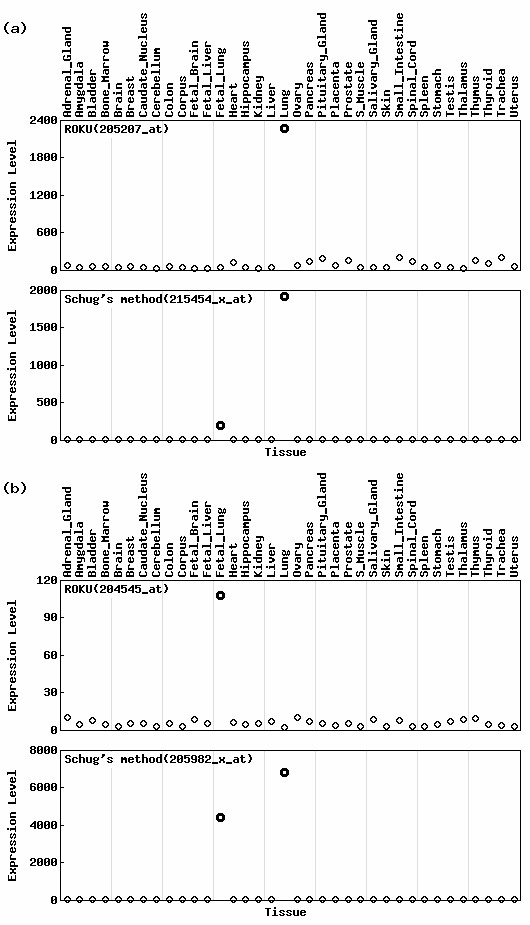
We describe a method, ROKU, which selects tissue-specific patterns from gene expression data for many tissues and thousands of genes. ROKU ranks genes according to their overall tissue specificity using Shannon entropy and detects tissues specific to each gene if any exist using an outlier detection method. We evaluated the capacity for the detection of various specific expression patterns using synthetic and real data. We observed that ROKU was superior to a conventional entropy-based method in its ability to rank genes according to overall tissue specificity and to detect genes whose expression pattern are specific only to objective tissues.
ROKU is useful for the detection of various tissue-specific expression patterns. The framework is also directly applicable to the selection of diagnostic markers for molecular classification of multiple classes.
微阵列研究的重要目标之一是识别那些在某些组织中表达水平明显高于或低于其他组织的基因。我们希望找到识别此类组织特异性基因的方法。
我们描述了一种名为ROKU的方法,它能从多个组织和数千个基因的基因表达数据中选择组织特异性模式。ROKU使用香农熵根据基因的整体组织特异性对基因进行排名,并使用异常值检测方法检测每个基因的特异性组织(如果存在的话)。我们使用合成数据和真实数据评估了检测各种特异性表达模式的能力。我们观察到,在根据整体组织特异性对基因进行排名以及检测那些仅在目标组织中具有特异性表达模式的基因方面,ROKU优于传统的基于熵的方法。
ROKU对于检测各种组织特异性表达模式很有用。该框架也可直接应用于多类分子分类诊断标志物的选择。