Castano Ana P, Mroz Pawel, Hamblin Michael R
Wellman Center for Photomedicine, Massachusetts General Hospital, Boston, Massachusetts, USA.
Nat Rev Cancer. 2006 Jul;6(7):535-45. doi: 10.1038/nrc1894.
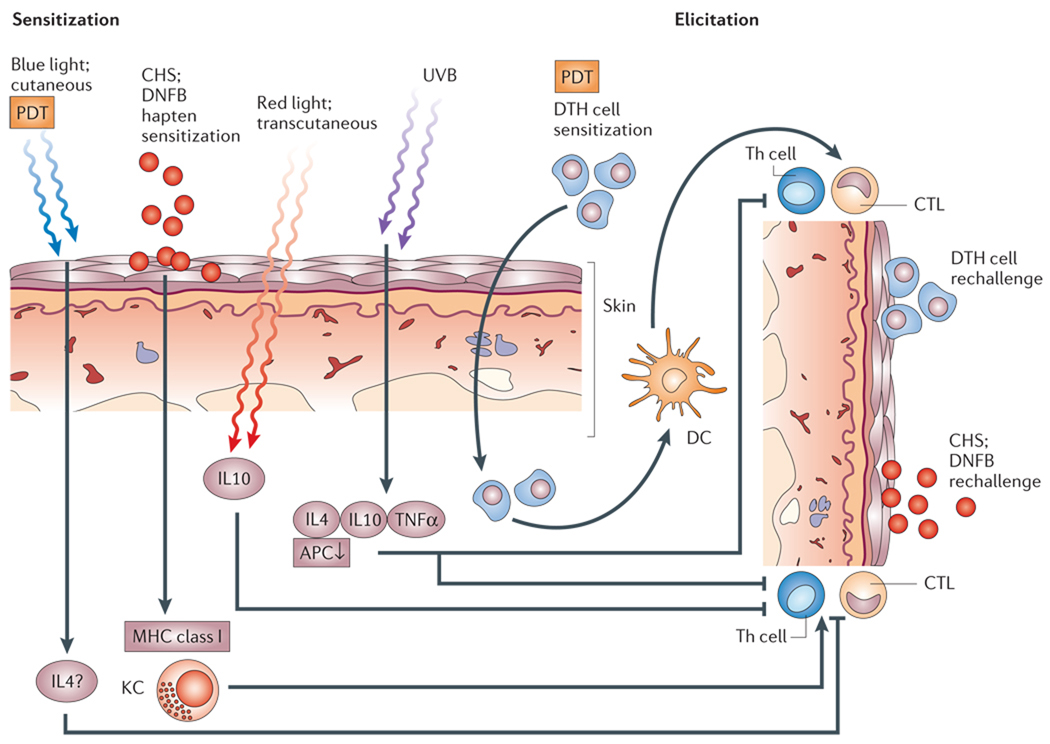
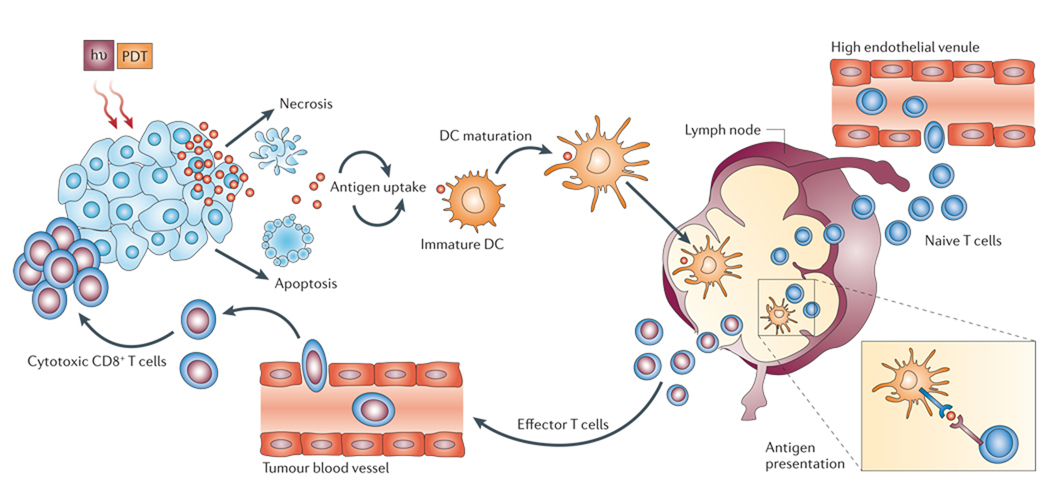
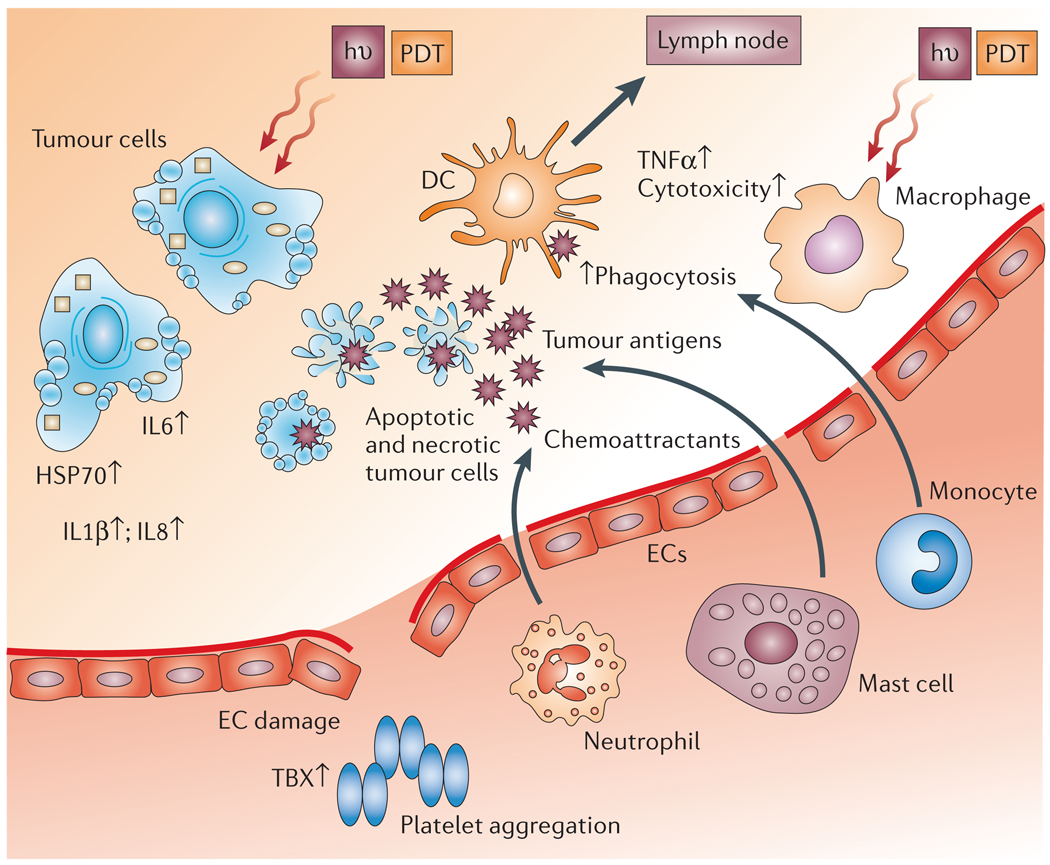
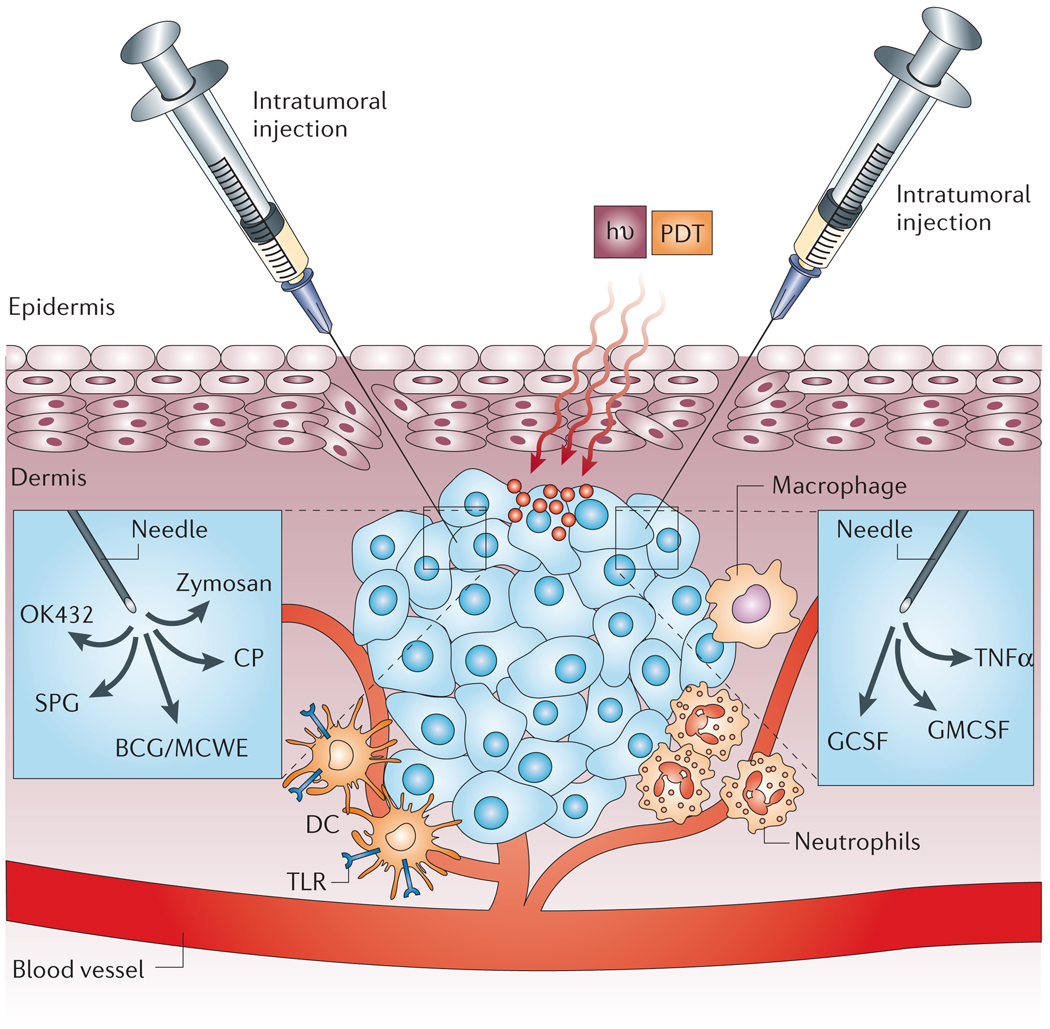
Photodynamic therapy (PDT) uses non-toxic photosensitizers and harmless visible light in combination with oxygen to produce cytotoxic reactive oxygen species that kill malignant cells by apoptosis and/or necrosis, shut down the tumour microvasculature and stimulate the host immune system. In contrast to surgery, radiotherapy and chemotherapy that are mostly immunosuppressive, PDT causes acute inflammation, expression of heat-shock proteins, invasion and infiltration of the tumour by leukocytes, and might increase the presentation of tumour-derived antigens to T cells.
光动力疗法(PDT)使用无毒的光敏剂和无害的可见光,并结合氧气来产生细胞毒性活性氧,这些活性氧通过凋亡和/或坏死杀死恶性细胞,关闭肿瘤微血管并刺激宿主免疫系统。与大多具有免疫抑制作用的手术、放疗和化疗不同,PDT会引发急性炎症、热休克蛋白表达、白细胞对肿瘤的侵袭和浸润,并且可能增加肿瘤衍生抗原向T细胞的呈递。