Tanaka Mamoru, Kataoka Hiromi, Yano Shigenobu, Sawada Takuya, Akashi Haruo, Inoue Masahiro, Suzuki Shugo, Inagaki Yusuke, Hayashi Noriyuki, Nishie Hirotada, Shimura Takaya, Mizoshita Tsutomu, Mori Yoshinori, Kubota Eiji, Tanida Satoshi, Takahashi Satoru, Joh Takashi
Departments of Gastroenterology and Metabolism, Nagoya City University Graduate School of Medical Sciences, Mizuho-cho, Mizuho-ku, Nagoya 467-8601, Japan.
Graduate School of Materials Science, Nara Institute of Science and Technology, Ikoma, Nara 630-0192, Japan.
Oncotarget. 2016 Jul 26;7(30):47242-47251. doi: 10.18632/oncotarget.9725.
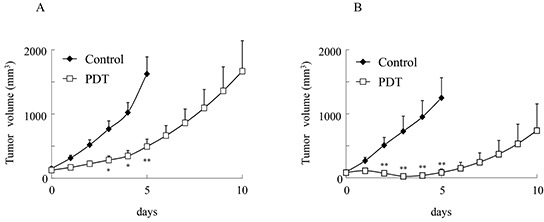
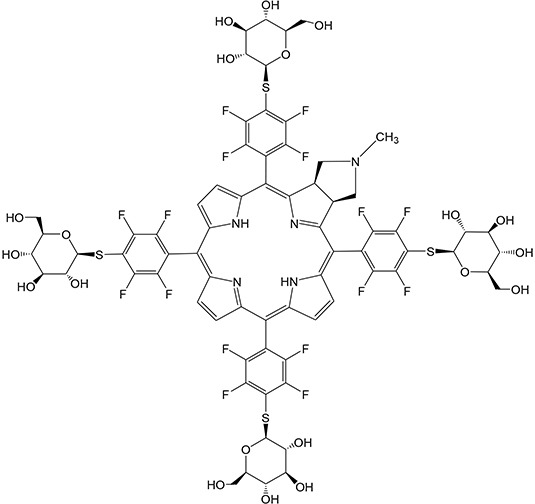
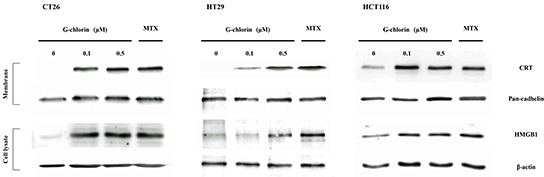
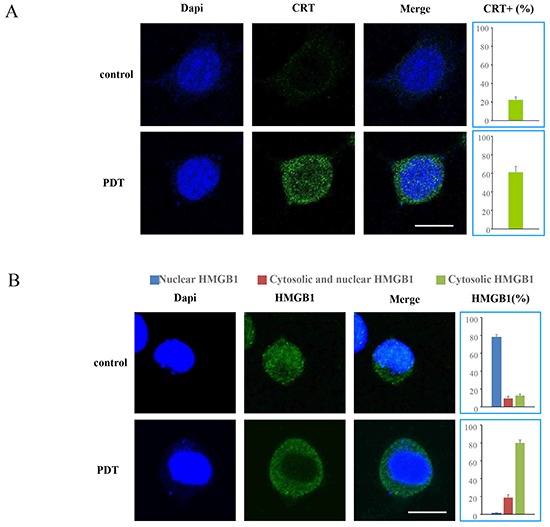
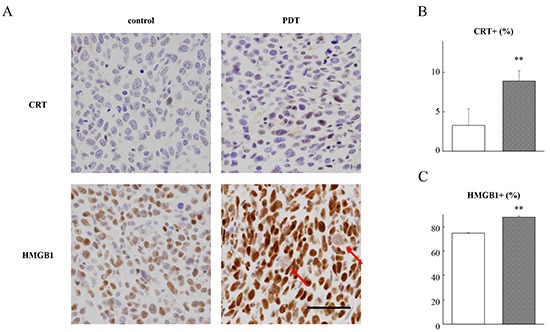
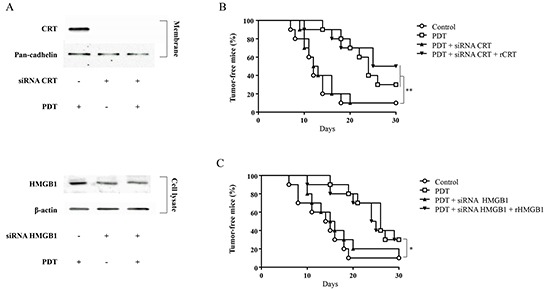
Both the pre-apoptotic exposure to calreticulin (CRT) and the post-apoptotic release of high-mobility group box 1 protein (HMGB1) are required for immunogenic cell death. Photodynamic therapy (PDT) uses non-toxic photosensitizers and visible light at a specific wavelength in combination with oxygen to produce cytotoxic reactive oxygen species that kill malignant cells by apoptosis and/or necrosis, shut down the tumor microvasculature, and stimulate the host immune system. We have previously shown that glycoconjugated chlorin (G-chlorin) has superior cancer cell selectivity and effectively suppresses the growth of xenograft tumors. In the present study, we evaluated the immunogenicity of PDT with G-chlorin treatment in colon cancer cells. PDT with G-chlorin suppressed CT26 (mouse colon cancer cells) tumor growth considerably more efficiently in immunocompetent mice (wild-type mice, allograft model) than in immune-deficient mice (nude mice, xenograft model), although control treatments were not different between the two. This treatment also induced CRT translocation and HMGB1 release in cells, as shown by western blot and immunofluorescence staining. To evaluate the use of PDT-treated cells as a tumor vaccine, we employed a syngeneic mouse tumor model (allograft model). Mice inoculated with PDT-treated CT26 cells were significantly protected against a subsequent challenge with live CT26 cells, and this protection was inhibited by siRNA for CRT or HMGB1. In conclusion, PDT with G-chlorin treatment induced immunogenic cell death in a mouse model, where the immunogenicity of this treatment was directed by CRT expression and HMGB1 release.
免疫原性细胞死亡既需要钙网蛋白(CRT)在细胞凋亡前的暴露,也需要高迁移率族蛋白B1(HMGB1)在细胞凋亡后的释放。光动力疗法(PDT)使用无毒的光敏剂和特定波长的可见光与氧气结合,产生细胞毒性活性氧,通过凋亡和/或坏死杀死恶性细胞,关闭肿瘤微血管,并刺激宿主免疫系统。我们之前已经表明,糖缀合物二氢卟吩(G-二氢卟吩)具有卓越的癌细胞选择性,并能有效抑制异种移植肿瘤的生长。在本研究中,我们评估了用G-二氢卟吩进行光动力疗法处理结肠癌细胞后的免疫原性。在免疫活性小鼠(野生型小鼠,同种异体移植模型)中,用G-二氢卟吩进行光动力疗法比在免疫缺陷小鼠(裸鼠,异种移植模型)中更有效地抑制了CT26(小鼠结肠癌细胞)肿瘤的生长,尽管两种模型中的对照处理没有差异。这种处理还诱导了细胞中CRT易位和HMGB1释放,蛋白质免疫印迹和免疫荧光染色结果表明了这一点。为了评估经光动力疗法处理的细胞作为肿瘤疫苗的用途,我们采用了同基因小鼠肿瘤模型(同种异体移植模型)。接种经光动力疗法处理的CT26细胞的小鼠对随后活CT26细胞的攻击具有显著的保护作用,并且这种保护作用被针对CRT或HMGB1的小干扰RNA所抑制。总之,用G-二氢卟吩进行光动力疗法处理在小鼠模型中诱导了免疫原性细胞死亡,该处理的免疫原性由CRT表达和HMGB1释放所介导。