Maker Ajay V, Yang James C, Sherry Richard M, Topalian Suzanne L, Kammula Udai S, Royal Richard E, Hughes Marybeth, Yellin Michael J, Haworth Leah R, Levy Catherine, Allen Tamika, Mavroukakis Sharon A, Attia Peter, Rosenberg Steven A
Surgery Branch, National Cancer Institute, National Institutes of Health, Bethesda, MD 20814, USA.
J Immunother. 2006 Jul-Aug;29(4):455-63. doi: 10.1097/01.cji.0000208259.73167.58.
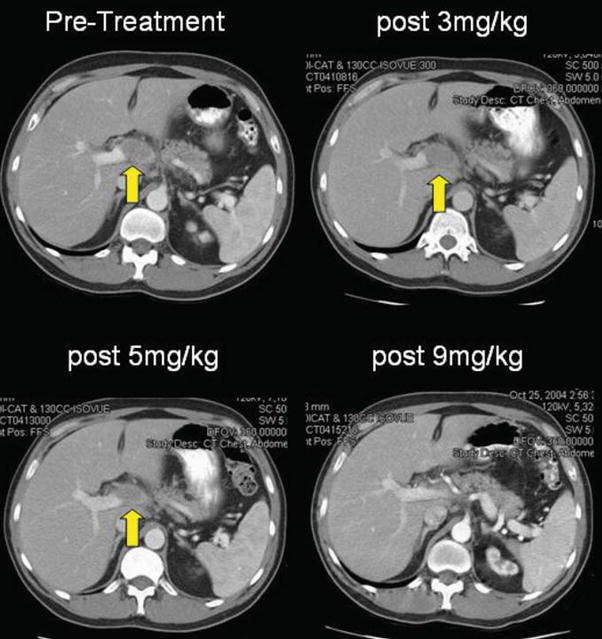
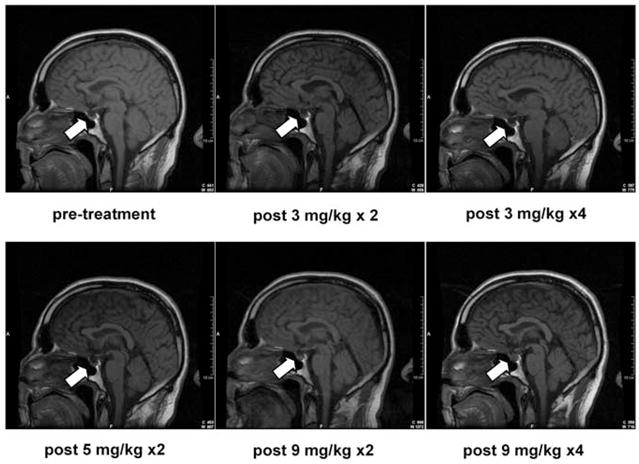
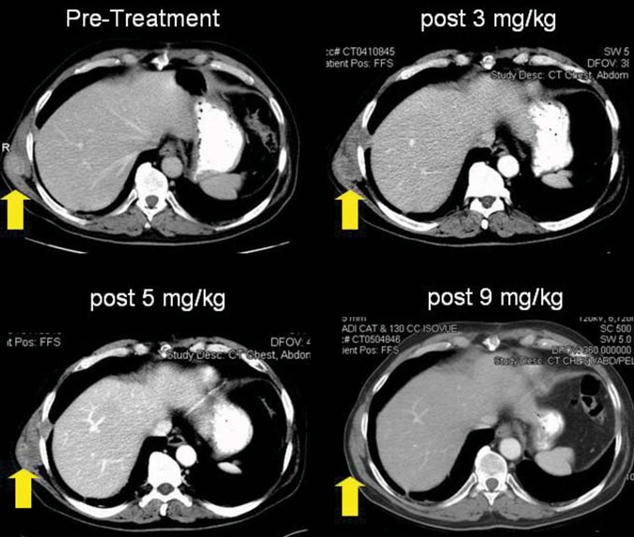
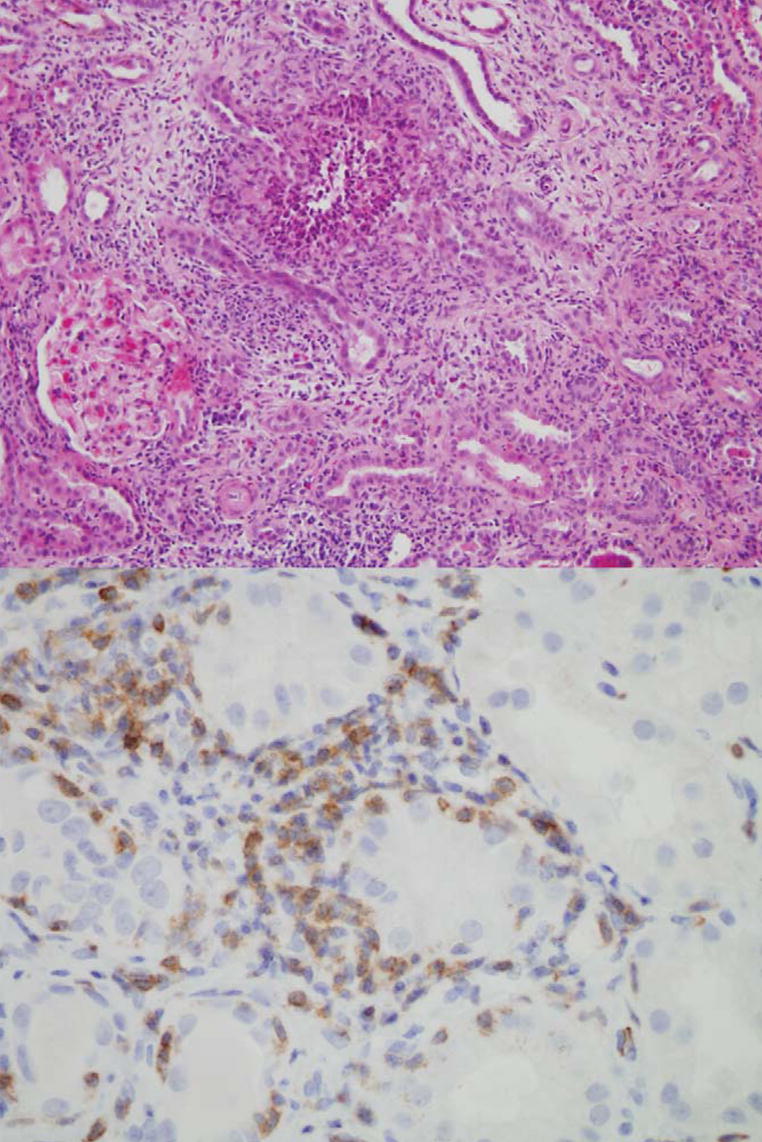
We previously reported our experience in treating 56 patients with metastatic melanoma using a human anti-cytotoxic T-lymphocyte antigen 4 (CTLA-4) antibody. Durable tumor regressions were seen that correlated with the induction of autoimmune toxicities. In this study, we treated 46 additional patients using an intrapatient dose escalation schema to test whether higher doses of anti-CTLA-4 antibody would induce increased autoimmunity and concomitant tumor regression. Twenty-three patients started anti-CTLA-4 antibody administration at 3 mg/kg and 23 patients started treatment at 5 mg/kg, receiving doses every 3 weeks. Patients were dose-escalated every other dose to a maximum of 9 mg/kg or until objective clinical responses or grade III/IV autoimmune toxicity were seen. Escalating doses of antibody resulted in proportionally higher plasma concentrations. Sixteen patients (35%) experienced a grade III/IV autoimmune toxicity. Five patients (11%) achieved an objective clinical response. Two of the responses are ongoing at 13 and 16 months, respectively. Flow cytometric analysis of peripheral blood revealed significant increases in both T-cell surface markers of activation and memory phenotype. Thus, higher serum levels and prolonged administration of anti-CTLA-4 antibody resulted in a trend toward a greater incidence of grade III/IV autoimmune toxicity than previously reported, but did not seem to increase objective response rates.
我们之前报告了使用人抗细胞毒性T淋巴细胞抗原4(CTLA-4)抗体治疗56例转移性黑色素瘤患者的经验。观察到持久的肿瘤消退,这与自身免疫毒性的诱导相关。在本研究中,我们使用患者内剂量递增方案治疗了另外46例患者,以测试更高剂量的抗CTLA-4抗体是否会诱导自身免疫增加和伴随的肿瘤消退。23例患者以3mg/kg开始抗CTLA-4抗体给药,23例患者以5mg/kg开始治疗,每3周给药一次。患者每隔一次剂量递增至最大9mg/kg,或直至出现客观临床反应或III/IV级自身免疫毒性。递增剂量的抗体导致血浆浓度成比例升高。16例患者(35%)出现III/IV级自身免疫毒性。5例患者(11%)获得客观临床反应。其中2例反应分别持续了13个月和16个月。外周血的流式细胞术分析显示,活化和记忆表型的T细胞表面标志物均显著增加。因此,更高的血清水平和更长时间的抗CTLA-4抗体给药导致III/IV级自身免疫毒性的发生率有高于先前报道的趋势,但似乎并未提高客观缓解率。