Hong Young Bin, Kim Eun Young, Jung Sung-Chul
Department of Biomedical Sciences, National Institute of Health, Korea.
J Korean Med Sci. 2006 Aug;21(4):733-8. doi: 10.3346/jkms.2006.21.4.733.
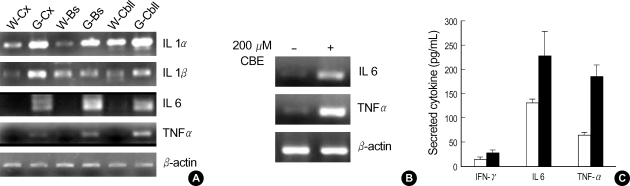
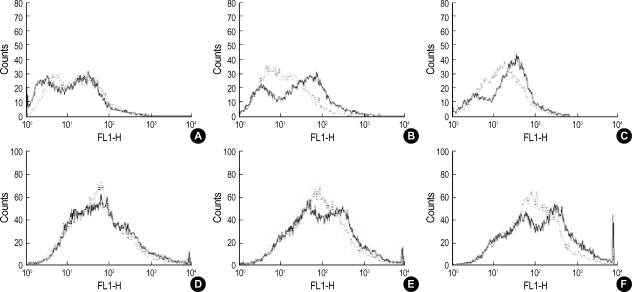
Gaucher disease is caused by a deficiency of glucocerebrosidase. Patients with Gaucher disease are divided into three major phenotypes: chronic nonneuronopathic, acute neuronopathic, and chronic neuronopathic, based on symptoms of the nervous system, the severity of symptoms, and the age of disease onset. The characteristics of patients with acute neuronopathic- and chronic neuronopathic-type Gaucher disease include oculomotor abnormalities, bulbar signs, limb rigidity, seizures and occasional choreoathetoid movements, and neuronal loss. However, the mechanisms leading to the neurodegeneration of this disorder remain unknown. To investigate brain dysfunction in Gaucher disease, we studied the possible role of inflammation in neurodegeneration during development of Gaucher disease in a mouse model. Elevated levels of the proinflammatory cytokines, IL-1alpha, IL-1beta, IL-6, and TNF-alpha, were detected in the fetal brains of Gaucher mice. Moreover, the levels of secreted nitric oxide and reactive oxygen species in the brains of Gaucher mice were higher than in wild-type mice. Thus, accumulated glucocerebroside or glucosylsphingosine, caused by glucocerebrosidase deficiency, may mediate brain inflammation in the Gaucher mouse via the elevation of proinflammatory cytokines, nitric oxide, and reactive oxygen species.
戈谢病是由葡糖脑苷脂酶缺乏引起的。根据神经系统症状、症状严重程度和发病年龄,戈谢病患者分为三种主要表型:慢性非神经病变型、急性神经病变型和慢性神经病变型。急性神经病变型和慢性神经病变型戈谢病患者的特征包括眼球运动异常、延髓体征、肢体僵硬、癫痫发作和偶尔的舞蹈手足徐动症样运动以及神经元丧失。然而,导致这种疾病神经退行性变的机制仍不清楚。为了研究戈谢病中的脑功能障碍,我们在小鼠模型中研究了炎症在戈谢病发展过程中神经退行性变中的可能作用。在戈谢病小鼠的胎脑中检测到促炎细胞因子白细胞介素-1α、白细胞介素-1β、白细胞介素-6和肿瘤坏死因子-α水平升高。此外,戈谢病小鼠脑中分泌的一氧化氮和活性氧水平高于野生型小鼠。因此,由葡糖脑苷脂酶缺乏引起的葡糖脑苷脂或葡萄糖神经酰胺积累,可能通过促炎细胞因子、一氧化氮和活性氧的升高介导戈谢病小鼠的脑部炎症。