Dell'Accio Francesco, De Bari Cosimo, El Tawil Noha M F, Barone Francesca, Mitsiadis Thimios A, O'Dowd John, Pitzalis Costantino
Department of Rheumatology, King's College London, London, UK.
Arthritis Res Ther. 2006;8(5):R139. doi: 10.1186/ar2029.
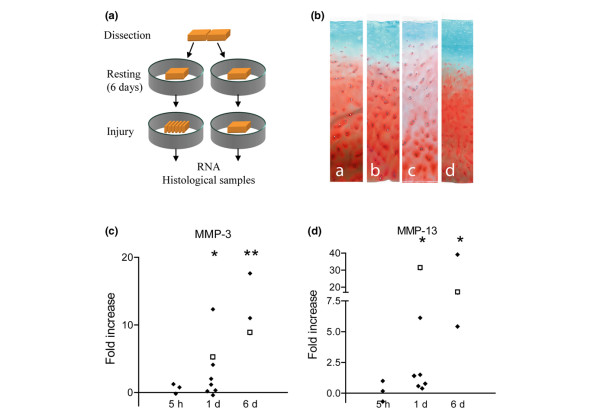
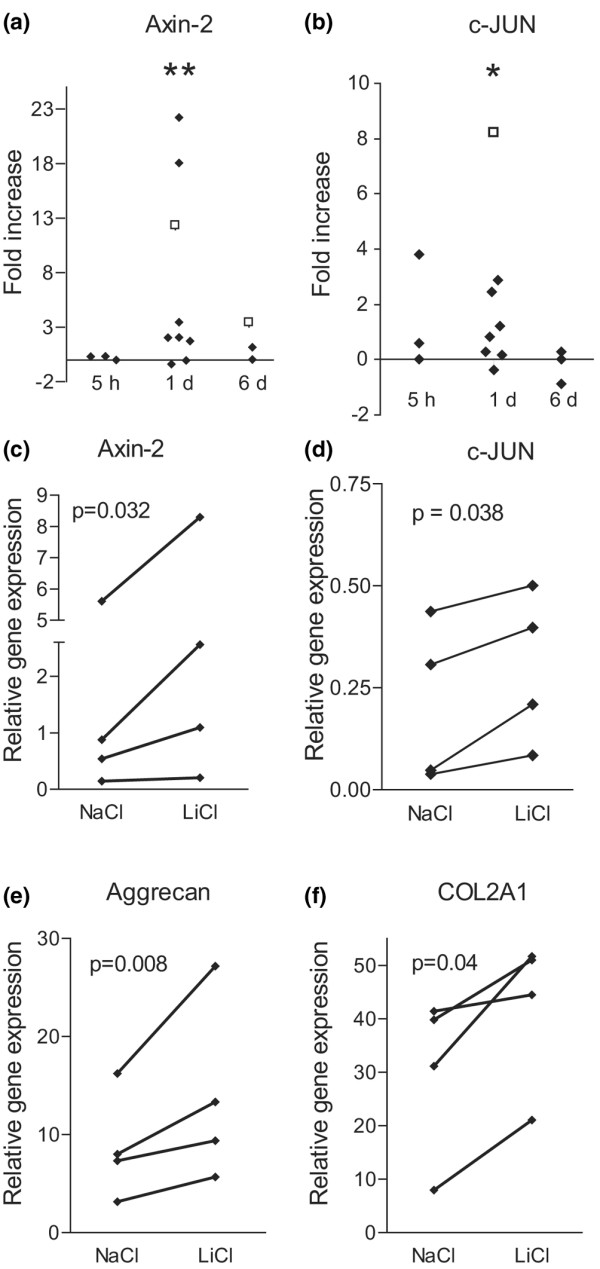
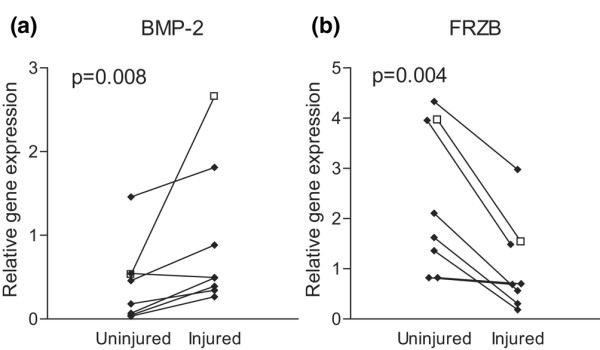
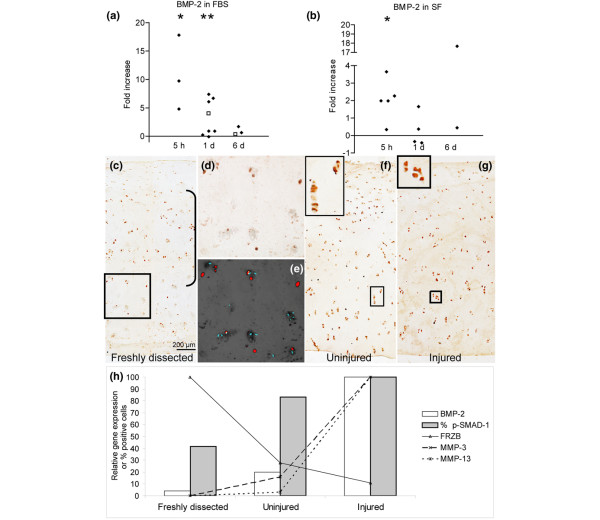
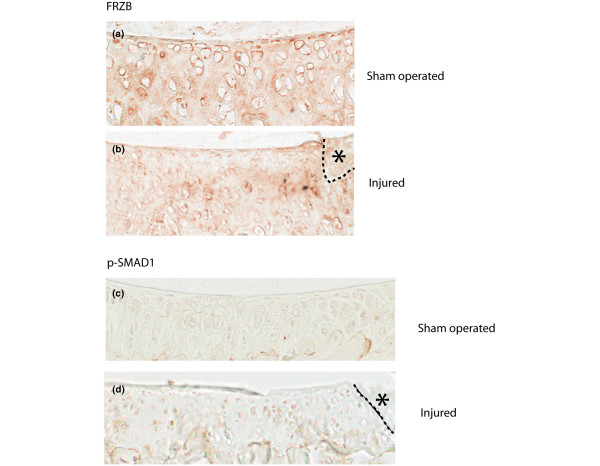
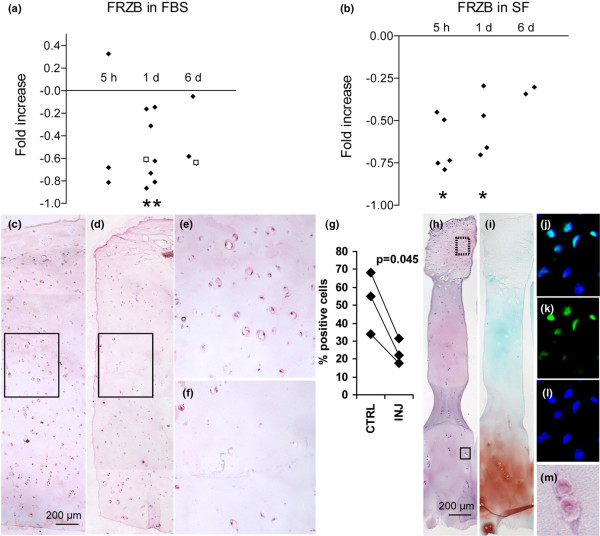
Acute full thickness joint surface defects can undergo repair, which involves tissue patterning and endochondral bone formation. Molecular signals regulating this process may contribute to the repair outcome, chronic evolution and, eventually, the onset of osteoarthritis. We tested the hypothesis that mechanical injury modulates morphogenetic pathways in adult human articular cartilage explants. Adjacent articular cartilage explants were obtained from preserved areas of the femoral condyles of patients undergoing arthroplasty for osteoarthritis, or from a normal joint of a patient undergoing lower limb amputation. Paired explants were individually maintained in explant culture. From each pair, one explant was mechanically injured and the other left uninjured as a control. Cultures were terminated at different time points for histochemistry, immunohistochemistry and gene expression analysis by reverse transcription real time PCR. Bone morphogenetic protein 2 (BMP-2) mRNA was upregulated in the injured explants. We detected phosphorylation of SMAD-1 and SMAD-5, consistent with activation of the bone morphogenetic protein (BMP) pathway. FRZB-1 mRNA was downregulated in the injured explants, suggesting de-repression of WNT signaling. Accordingly, expression of the canonical WNT target genes Axin-2 and c-JUN was upregulated in the injured explants. Activation of the canonical WNT signaling pathway by LiCl treatment induced upregulation of COL2A1 and Aggrecan mRNA, suggesting an anabolic effect. Phosphorylation of SMAD-1/-5 and downregulation of FRZB were confirmed in vivo in a mouse model of joint surface injury. Taken together, these data show modulation of the BMP and WNT pathways following mechanical injury in vitro and in vivo, which may play a role in the reparative response of the joint surface. These pathways may, therefore, represent potential targets in protocols of biological joint surface defect repair.
急性全层关节面缺损可进行修复,这涉及组织模式形成和软骨内成骨。调节这一过程的分子信号可能影响修复结果、慢性演变,并最终导致骨关节炎的发生。我们检验了这样一个假设:机械损伤会调节成人人类关节软骨外植体中的形态发生途径。相邻的关节软骨外植体取自因骨关节炎接受关节置换术患者股骨髁的保留区域,或取自接受下肢截肢患者的正常关节。将配对的外植体分别置于外植体培养中。从每对中,一个外植体受到机械损伤,另一个作为对照未受伤。在不同时间点终止培养,用于组织化学、免疫组织化学和通过逆转录实时PCR进行基因表达分析。骨形态发生蛋白2(BMP - 2)mRNA在受伤的外植体中上调。我们检测到SMAD - 1和SMAD - 5的磷酸化,这与骨形态发生蛋白(BMP)途径的激活一致。FRZB - 1 mRNA在受伤的外植体中下调,表明WNT信号通路的去抑制。相应地,经典WNT靶基因Axin - 2和c - JUN的表达在受伤的外植体中上调。用LiCl处理激活经典WNT信号通路可诱导COL2A1和聚集蛋白聚糖mRNA上调,提示有合成代谢作用。在关节面损伤的小鼠模型中,体内证实了SMAD - 1/-5的磷酸化和FRZB的下调。综上所述,这些数据表明在体外和体内机械损伤后BMP和WNT途径发生了调节,这可能在关节面的修复反应中起作用。因此,这些途径可能代表生物性关节面缺损修复方案中的潜在靶点。