Sharma Divyesh, Agrawal Anant, Matchette L Stephanie, Pfefer T Joshua
Food and Drug Administration, Center for Devices and Radiological Health, Rockville, Maryland, USA.
Biomed Eng Online. 2006 Aug 23;5:49. doi: 10.1186/1475-925X-5-49.
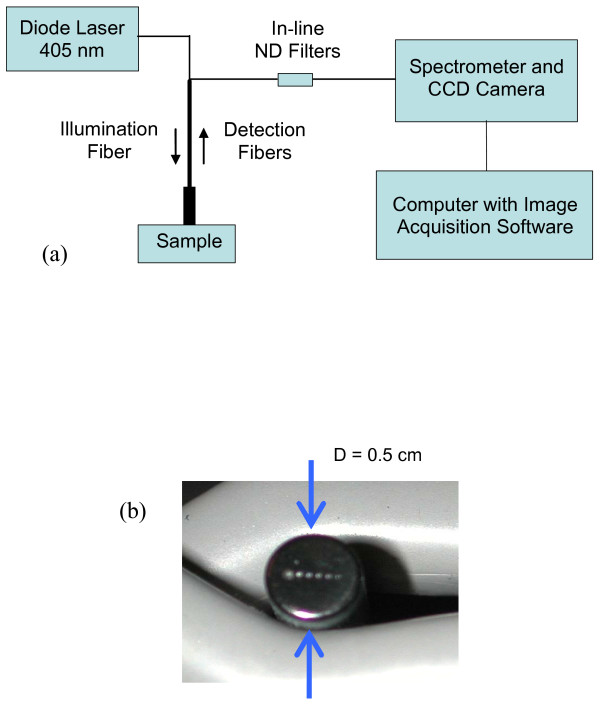
Accurate measurements of the optical properties of biological tissue in the ultraviolet A and short visible wavelengths are needed to achieve a quantitative understanding of novel optical diagnostic devices. Currently, there is minimal information on optical property measurement approaches that are appropriate for in vivo measurements in highly absorbing and scattering tissues. We describe a novel fiberoptic-based reflectance system for measurement of optical properties in highly attenuating turbid media and provide an extensive in vitro evaluation of its accuracy. The influence of collecting reflectance at the illumination fiber on estimation accuracy is also investigated.
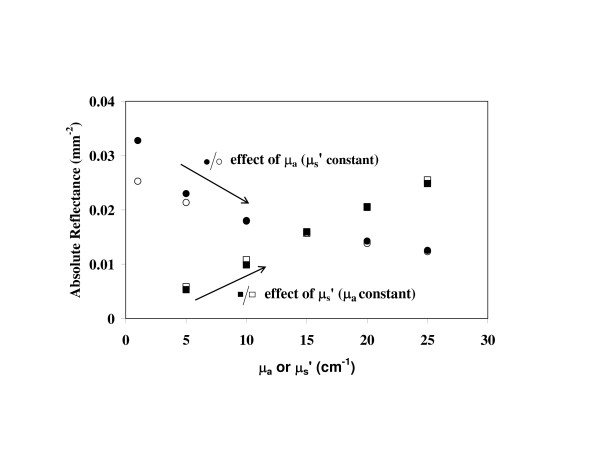
A neural network algorithm and reflectance distributions from Monte Carlo simulations were used to generate predictive models based on the two geometries. Absolute measurements of diffuse reflectance were enabled through calibration of the reflectance system. Spatially-resolved reflectance distributions were measured in tissue phantoms at 405 nm for absorption coefficients (mu(a)) from 1 to 25 cm-1 and reduced scattering coefficients (mu'(s)) from 5 to 25 cm-1. These data and predictive models were used to estimate the optical properties of tissue-simulating phantoms.
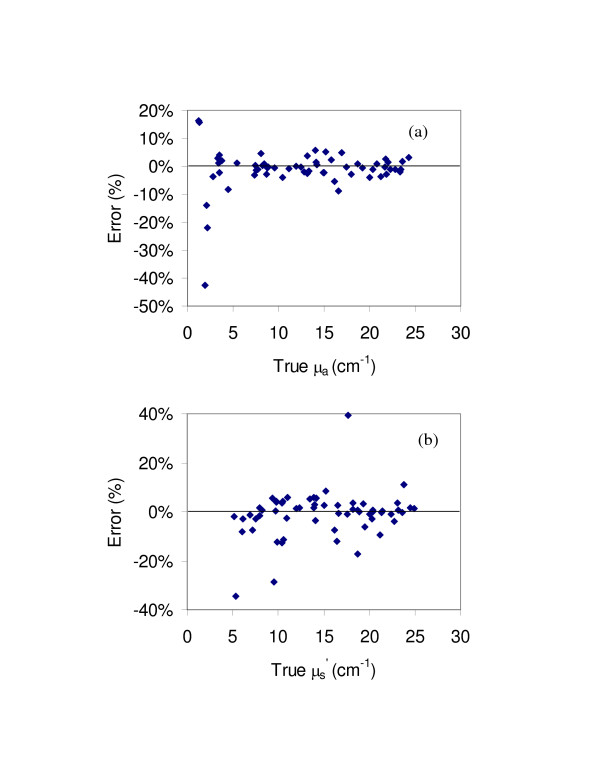
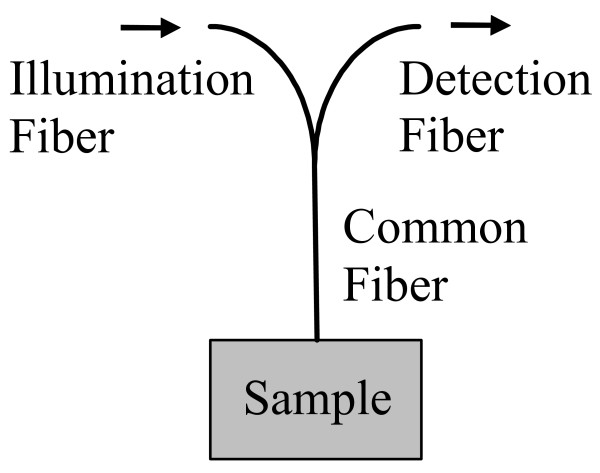
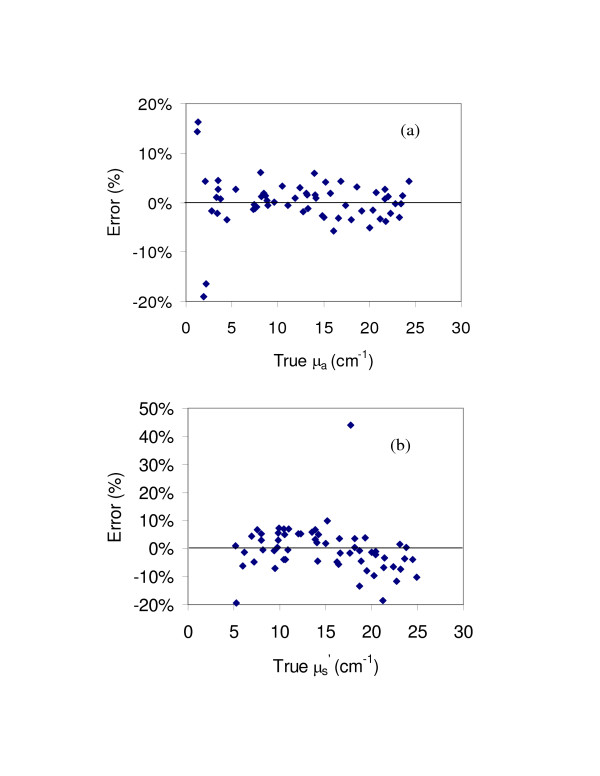
By comparing predicted and known optical properties, the average errors for mu(a) and mu'(s) were found to be 3.0% and 4.6%, respectively, for a linear probe approach. When bifurcated probe data was included and samples with mu(a) values less than 5 cm-1 were excluded, predictive errors for mu(a) and mu'(s) were further reduced to 1.8% and 3.5%.
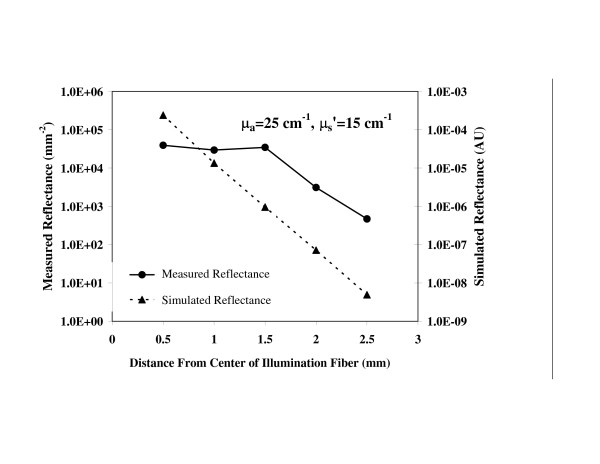
Improvements in system design have led to significant reductions in optical property estimation error. While the incorporation of a bifurcated illumination fiber shows promise for improving the accuracy of mu's estimates, further study of this approach is needed to elucidate the source of discrepancies between measurements and simulation results at low mu(a) values.
为了对新型光学诊断设备有定量的理解,需要准确测量生物组织在紫外线A和短可见光波长下的光学特性。目前,关于适用于高吸收和散射组织体内测量的光学特性测量方法的信息极少。我们描述了一种用于测量高衰减混浊介质中光学特性的新型光纤反射系统,并对其准确性进行了广泛的体外评估。还研究了在照明光纤处收集反射率对估计准确性的影响。
使用神经网络算法和蒙特卡罗模拟的反射率分布,基于两种几何结构生成预测模型。通过对反射系统进行校准,实现了漫反射率的绝对测量。在组织模拟体模中,于405nm波长下测量空间分辨反射率分布,吸收系数(μ(a))范围为1至25cm-1,约化散射系数(μ'(s))范围为5至25cm-1。这些数据和预测模型用于估计组织模拟体模的光学特性。
通过比较预测的和已知的光学特性,发现线性探头方法中μ(a)和μ'(s)的平均误差分别为3.0%和4.6%。当纳入分叉探头数据并排除μ(a)值小于5cm-1的样本时,μ(a)和μ'(s)的预测误差进一步降至1.8%和3.5%。
系统设计的改进显著降低了光学特性估计误差。虽然采用分叉照明光纤有望提高μ's估计的准确性,但需要对该方法进行进一步研究,以阐明在低μ(a)值下测量结果与模拟结果之间差异的来源。