Bird Gary C, Han Jeong S, Fu Yu, Adwanikar Hita, Willis William D, Neugebauer Volker
Department of Neuroscience and Cell Biology, The University of Texas Medical Branch, Galveston, Texas 77555-1069, USA.
Mol Pain. 2006 Sep 26;2:31. doi: 10.1186/1744-8069-2-31.
The synaptic and cellular mechanisms of pain-related central sensitization in the spinal cord are not fully understood yet. Calcitonin gene-related peptide (CGRP) has been identified as an important molecule in spinal nociceptive processing and ensuing behavioral responses, but its contribution to synaptic plasticity, cellular mechanisms and site of action in the spinal cord remain to be determined. Here we address the role of CGRP in synaptic plasticity in the spinal dorsal horn in a model of arthritic pain.
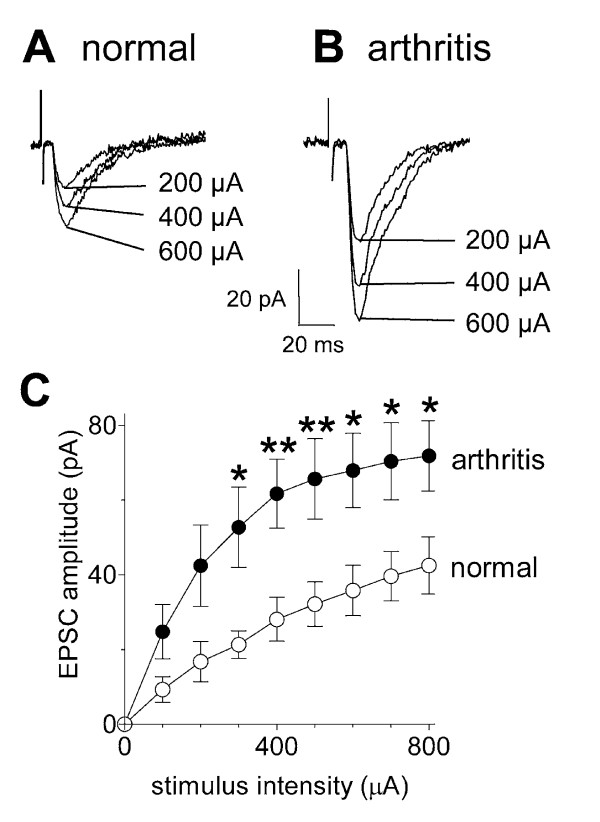
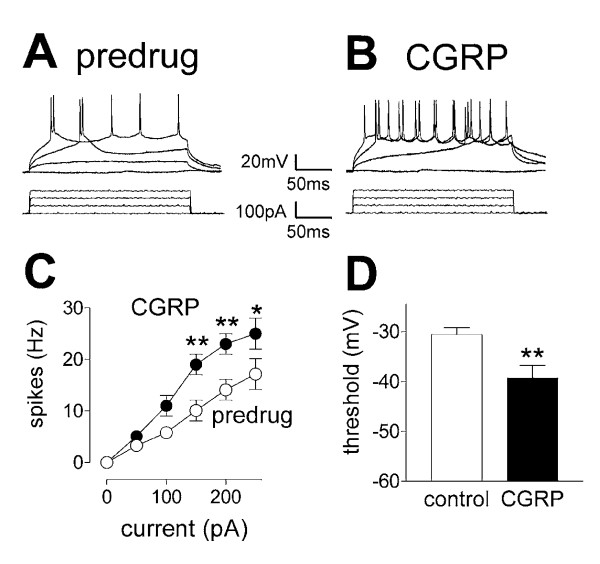
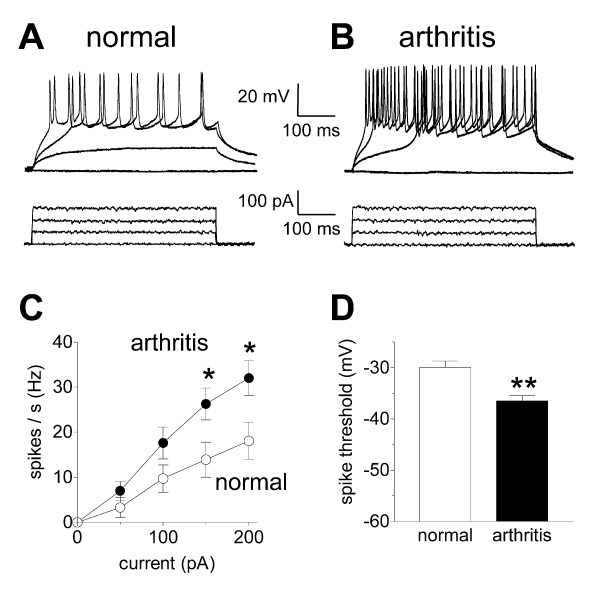
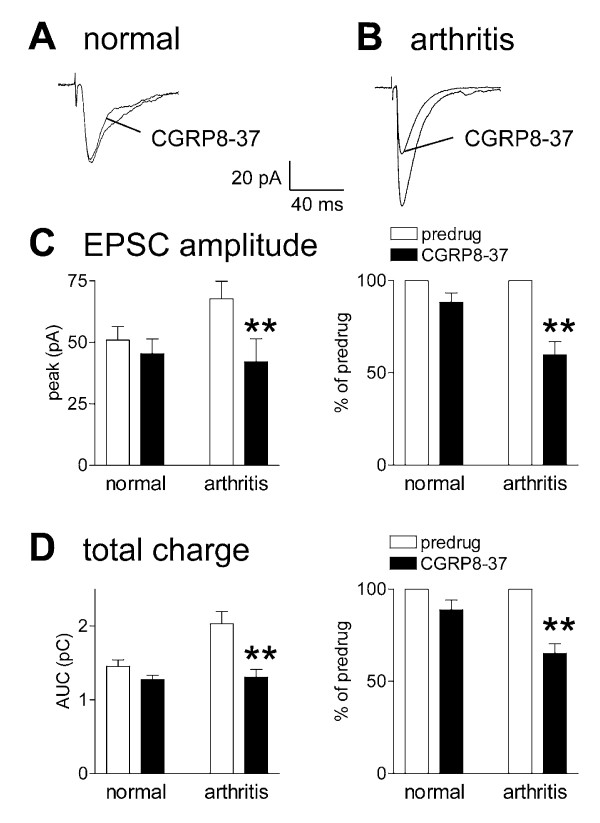
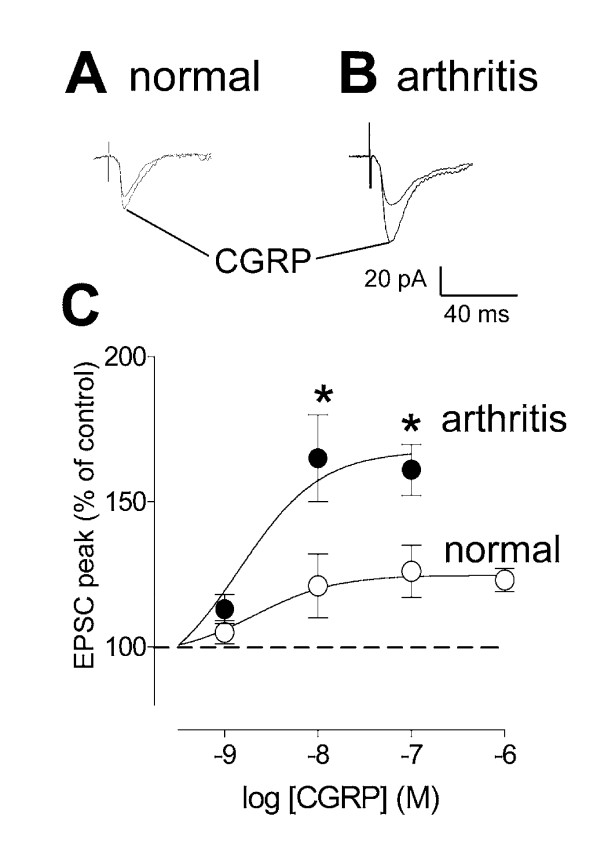
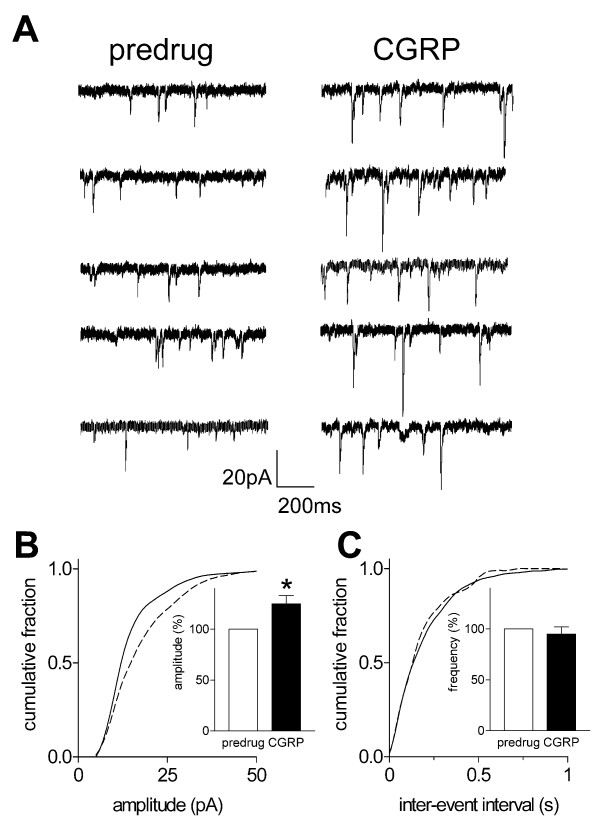
Whole-cell current- and voltage-clamp recordings were made from substantia gelatinosa (SG) neurons in spinal cord slices from control rats and arthritic rats (> 6 h postinjection of kaolin/carrageenan into the knee). Monosynaptic excitatory postsynaptic currents (EPSCs) were evoked by electrical stimulation of afferents in the dorsal root near the dorsal root entry zone. Neurons in slices from arthritic rats showed increased synaptic transmission and excitability compared to controls. A selective CGRP1 receptor antagonist (CGRP8-37) reversed synaptic plasticity in neurons from arthritic rats but had no significant effect on normal transmission. CGRP facilitated synaptic transmission in the arthritis pain model more strongly than under normal conditions where both facilitatory and inhibitory effects were observed. CGRP also increased neuronal excitability. Miniature EPSC analysis suggested a post- rather than pre-synaptic mechanism of CGRP action.
This study is the first to show synaptic plasticity in the spinal dorsal horn in a model of arthritic pain that involves a postsynaptic action of CGRP on SG neurons.
脊髓中与疼痛相关的中枢敏化的突触和细胞机制尚未完全阐明。降钙素基因相关肽(CGRP)已被确定为脊髓伤害性处理及后续行为反应中的重要分子,但其对脊髓突触可塑性、细胞机制及作用位点仍有待确定。在此,我们在关节炎疼痛模型中研究CGRP在脊髓背角突触可塑性中的作用。
对来自对照大鼠和关节炎大鼠(向膝关节注射高岭土/角叉菜胶后>6小时)脊髓切片中的胶状质(SG)神经元进行全细胞电流钳和电压钳记录。通过电刺激背根进入区附近的背根传入神经诱发单突触兴奋性突触后电流(EPSC)。与对照组相比,来自关节炎大鼠切片中的神经元表现出突触传递增加和兴奋性增强。选择性CGRP1受体拮抗剂(CGRP8 - 37)逆转了来自关节炎大鼠神经元的突触可塑性,但对正常传递无显著影响。在关节炎疼痛模型中,CGRP促进突触传递的作用比在同时观察到促进和抑制作用的正常条件下更强。CGRP还增加了神经元兴奋性。微小EPSC分析表明CGRP的作用机制是突触后而非突触前机制。
本研究首次在关节炎疼痛模型中显示脊髓背角的突触可塑性,这涉及CGRP对SG神经元的突触后作用。