Besteiro Sébastien, Coombs Graham H, Mottram Jeremy C
Wellcome Centre for Molecular Parasitology and Division of Infection & Immunity, Institute of Biomedical and Life Sciences, University of Glasgow, G12 8TA, UK.
BMC Genomics. 2006 Oct 6;7:250. doi: 10.1186/1471-2164-7-250.
Leishmania major is a protozoan parasite with a highly polarised cell shape that depends upon endocytosis and exocytosis from a single area of the plasma membrane, the flagellar pocket. SNAREs (soluble N-ethylmaleimide-sensitive factor adaptor proteins receptors) are key components of the intracellular vesicle-mediated transports that take place in all eukaryotic cells. They are membrane-bound proteins that facilitate the docking and fusion of vesicles with organelles. The recent availability of the genome sequence of L. major has allowed us to assess the complement of SNAREs in the parasite and to investigate their location in comparison with metazoans.
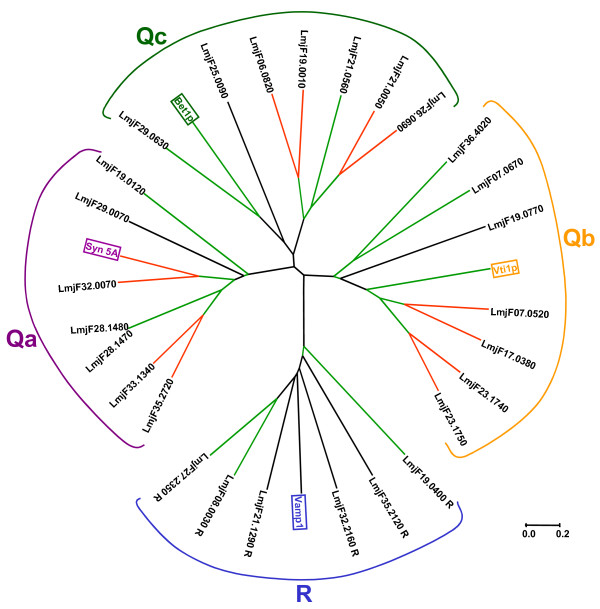
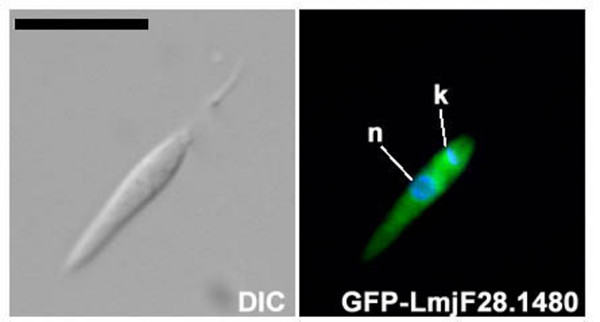
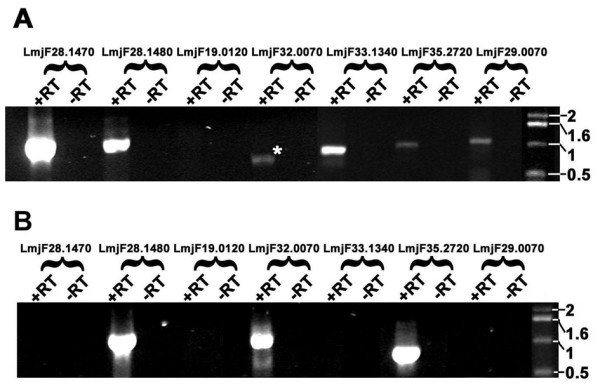
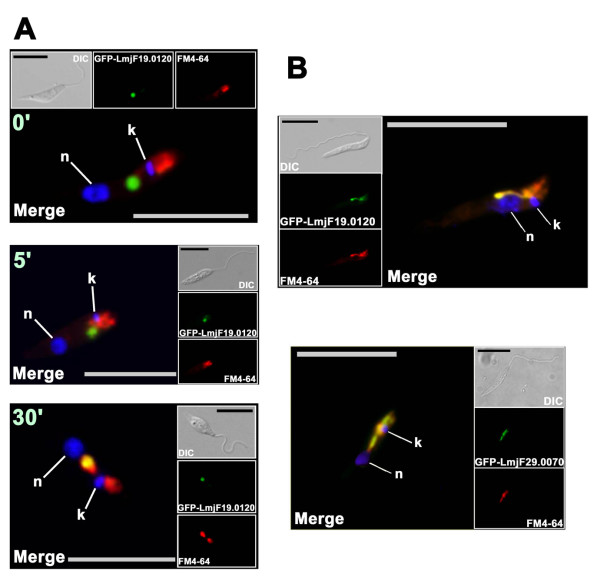
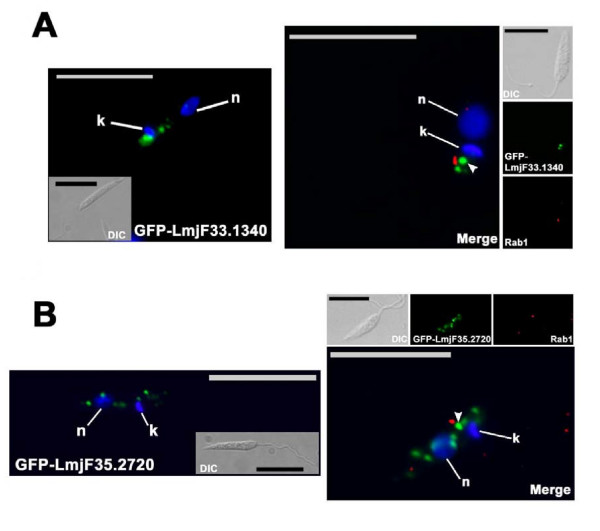
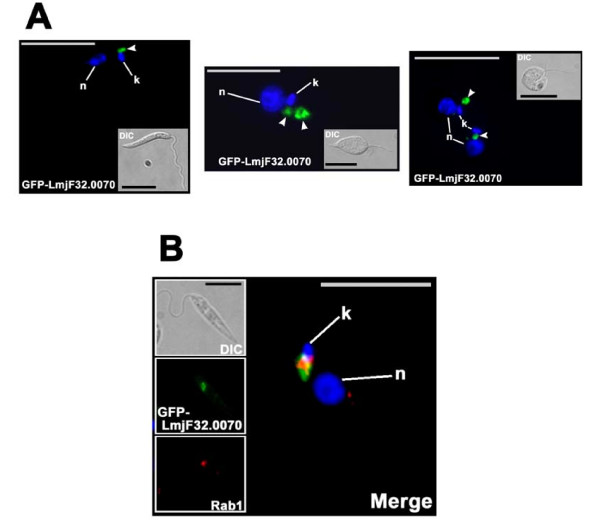
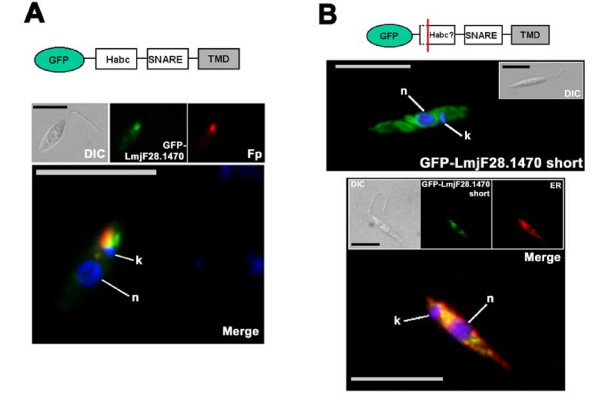
Bioinformatic searches of the L. major genome revealed a total of 27 SNARE domain-containing proteins that could be classified in structural groups by phylogenetic analysis. 25 of these possessed the expected features of functional SNAREs, whereas the other two could represent kinetoplastid-specific proteins that might act as regulators of the SNARE complexes. Other differences of Leishmania SNAREs were the absence of double SNARE domain-containing and of the brevin classes of these proteins. Members of the Qa group of Leishmania SNAREs showed differential expressions profiles in the two main parasite forms whereas their GFP-tagging and in vivo expression revealed localisations in the Golgi, late endosome/lysosome and near the flagellar pocket.
The early-branching eukaryote L. major apparently possess a SNARE repertoire that equals in number the one of metazoans such as Drosophila, showing that the machinery for vesicle fusion is well conserved throughout the eukaryotes. However, the analysis revealed the absence of certain types of SNAREs found in metazoans and yeast, while suggesting the presence of original SNAREs as well as others with unusual localisation. This study also presented the intracellular localisation of the L. major SNAREs from the Qa group and reveals that these proteins could be useful as organelle markers in this parasitic protozoon.
硕大利什曼原虫是一种原生动物寄生虫,具有高度极化的细胞形态,这依赖于从质膜的单个区域即鞭毛袋进行的内吞作用和胞吐作用。可溶性N - 乙基马来酰亚胺敏感因子附着蛋白受体(SNAREs)是所有真核细胞中发生的细胞内囊泡介导运输的关键组成部分。它们是膜结合蛋白,促进囊泡与细胞器的对接和融合。硕大利什曼原虫基因组序列的近期可得性使我们能够评估该寄生虫中SNAREs的组成,并与后生动物相比研究它们的定位。
对硕大利什曼原虫基因组的生物信息学搜索揭示了总共27种含有SNARE结构域的蛋白质,通过系统发育分析可将其分类为不同的结构组。其中25种具有功能性SNAREs的预期特征,而另外两种可能代表动基体特异性蛋白质,它们可能作为SNARE复合物的调节因子。利什曼原虫SNAREs的其他差异在于不存在含有双SNARE结构域的蛋白质以及该类蛋白质中的布雷文蛋白。利什曼原虫SNAREs的Qa组成员在两种主要寄生虫形式中表现出不同的表达谱,而它们的绿色荧光蛋白标记和体内表达揭示了其在高尔基体、晚期内体/溶酶体以及鞭毛袋附近的定位。
早期分支的真核生物硕大利什曼原虫显然拥有数量与果蝇等后生动物相当的SNARE蛋白库,这表明囊泡融合机制在整个真核生物中高度保守。然而,分析显示后生动物和酵母中存在的某些类型的SNAREs在利什曼原虫中不存在,同时表明存在原始的SNAREs以及其他定位异常的SNAREs。本研究还展示了利什曼原虫Qa组SNAREs的细胞内定位,并揭示这些蛋白质可作为这种寄生原生动物中细胞器的标记物。